
Chandra Grahan, or lunar eclipse, is a fascinating celestial event that has captivated people for millennia. In India, it's often called Chandra Grahan (meaning "seizure of the Moon") and holds both scientific and deep cultural/religious significance, especially in Hinduism. Let's break it down clearly.
The Science Behind Chandra Grahan
A lunar eclipse occurs when the Earth comes directly between the Sun and the Moon, casting its shadow on the Moon's surface. This alignment can only happen during a full moon phase (Purnima), when the Moon is opposite the Sun in the sky.
How It Happens (Step-by-Step)
- Alignment: Sun → Earth → Moon line up almost perfectly.
- Earth's Shadow: Earth casts two types of shadows on the Moon:
- Umbra (dark central shadow) — causes total or partial darkening.
- Penumbra (faint outer shadow) — causes subtle dimming.
- Types of Lunar Eclipse:
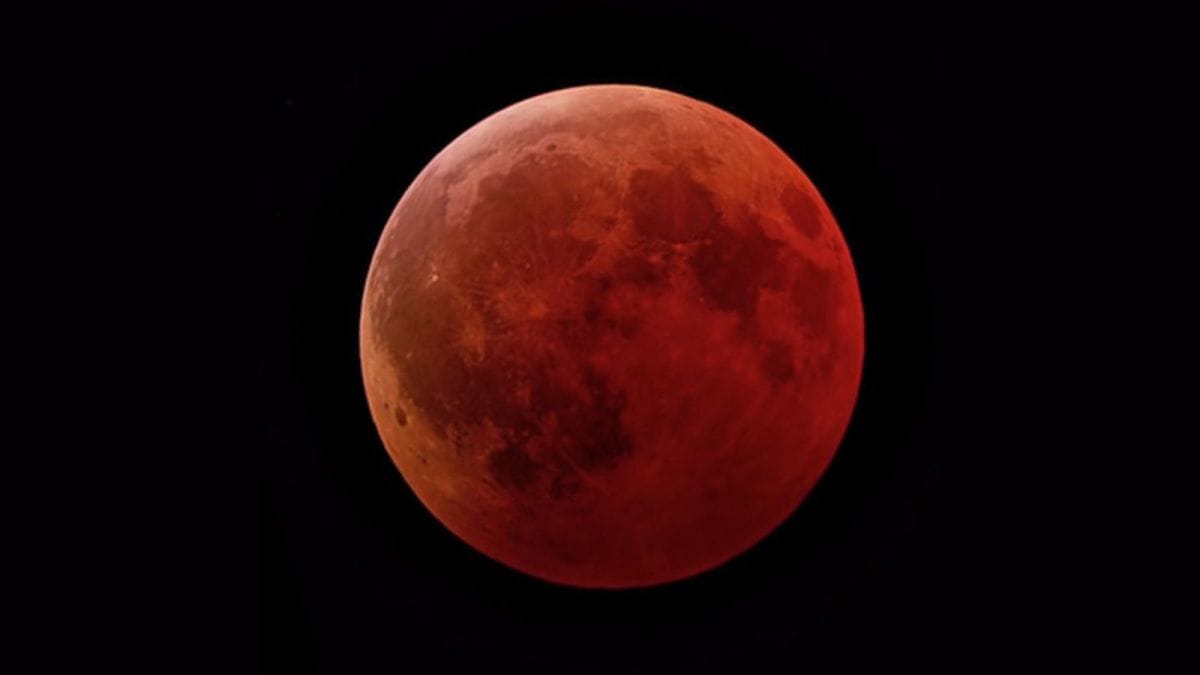
- Total (Chandra Grahan): Moon fully enters the umbra → turns reddish (Blood Moon).
- Partial: Only part of the Moon enters the umbra.
- Penumbral: Moon passes through the penumbra only → faint dimming, harder to notice.
- Why the Moon Turns Red (Blood Moon Effect):
- During a total eclipse, direct sunlight is blocked.
- Sunlight still reaches the Moon by bending (refracting) through Earth's atmosphere.
- Shorter blue/violet wavelengths scatter away (like why sunsets are red).
- Longer red/orange wavelengths pass through → bathe the Moon in a coppery-red glow.
- Intensity varies with atmospheric dust, pollution, or volcanic ash (redder if more particles).
This is a safe event to watch with the naked eye (unlike solar eclipses). It lasts several hours, unlike solar eclipses (minutes).
Cultural and Religious Significance in Hinduism
In Hindu tradition, Chandra Grahan is viewed as a spiritually powerful time with astrological and karmic implications. It's not just astronomy—it's tied to mythology, energy shifts, and rituals.
Mythological Stories
- Rahu & Ketu Legend (from Samudra Manthan): During the churning of the ocean, demon Svarbhanu (later split into Rahu and Ketu) drank nectar of immortality. Sun and Moon alerted Vishnu, who beheaded him. Rahu's head became Rahu (swallows Sun/Moon during eclipses), Ketu the tail. Eclipses symbolize Rahu/Ketu "swallowing" the Moon → temporary darkness and chaos.
- Curse on Chandra (Moon God): Chandra was cursed by Daksha (for favoring one wife over others), causing him to wane. Shiva mitigated it, but eclipses remind of cyclical karma and impermanence.
Spiritual & Astrological Importance
- Considered an inauspicious period (especially during Sutak Kaal — 9–12 hours before eclipse, extending after).
- Energies are intense: Moon rules mind, emotions, and subconscious → eclipse amplifies emotional/karmic influences.
- Many believe negative energies rise → rituals for protection, purification, and positivity.
- Common practices (Do's & Don'ts):
- Do: Chant mantras (e.g., Chandra Mantra, Gayatri), meditate, pray, donate, fast (or eat sattvic/light food after eclipse ends), perform charity.
- Don't: Cook/eat during eclipse (food believed to absorb negative energy), start new work, cut hair/nails, sleep (some avoid), or go outside unprotected.
- Pregnant women often take extra precautions (e.g., avoid certain foods, stay indoors) as per tradition (no scientific basis, but cultural belief for protection).
Modern View
Science sees it as a natural, predictable event (no health risks, no radiation harm). Myths and rituals are cultural ways to mark cosmic cycles, reflect, and maintain harmony.
Chandra Grahan reminds us of the universe's vastness, Earth's place in it, and humanity's timeless awe at celestial wonders. Whether you view it scientifically or spiritually, it's a beautiful phenomenon!
Comments
Write Comment