International
What are Double Taxation Avoidance Agreements or DTAAs?
As the world is getting more globalised, individuals and companies are working and earning in more than one country. It also means that they will have to pay taxes in all the countries from where they have earned incomes.
The problem occurs when a person or company has to pay taxes twice on the same income earned in two different countries.
For example, an Indian professional works and earns in USA for 3 months and returns to India and on his income earned in USA, both India and USA levy tax. It is double taxation and it looks unfair and illogical.
It also demotivates the people and companies from working in multiple countries and also demotivates the investment climate. This problem is known as double taxation and it’s solution is Double Taxation Avoidance Agreements (DTAAs).
Let's understand how DTAA works with the help of an example. Let's say you are a resident of India who has invested in a company located in the United States (US stocks).
When you receive dividend or any income from these investments, both USA and India would claim their share of the taxes. But if India and US have a DTAA agreement, you will not have to pay double taxes. This income earned by you from the US will be taxed in either India or the US, depending on the terms of the agreement.
The Double Tax Avoidance Agreement (DTAA) is a tax treaty signed between two or more countries to help tax avoid paying taxes twice on the same income.
This agreement can either be comprehensive, which covers all income sources, or may be limited to certain areas. Incomes from services, salary, property, capital gains, and savings deposits, fixed deposit and other sources are covered under the DTAA.
The intent behind this agreement is to make a country appear as an attractive investment destination by providing relief on dual taxation.
India has Double Taxation Avoidance Agreements with more than 90 countries, such as China, Bangladesh, Mauritius and others. DTAA provisions are added to the Income tax Act 1961.
About author

Zinkpot — We Inform, You Perform.
Ask Anything, Know Better
अपना प्रश्न पूछें
-
Difference between FTA and BTA in trade
July 23 WHAT? The terms Free Trade Agreement (FTA) and Bilateral Trade Agreement (BTA) are often used in the context of international trade, but they have distinct meanings and implications. Below is a clear explanation of the differences based on their definitions, scope, and application. Free Trade Agreement (FTA) An FTA is a treaty between two or more countries to reduce or eliminate trade barriers, such as tariffs and quotas, to facilitate the free flow of goods and services. FTAs aim to create a free trade...
-
State of the Economy. Why are GST collections soaring—and will it last?
June 05 SUMMARY India's Goods and Services Tax (GST) collections have been on an upward trajectory, with April 2025 witnessing a record high of ₹2.37 lakh crore—a 12.6% year-on-year increase. This surge is attributed to several key factors: Key Drivers of Rising GST Collections Robust Import Activity: A significant 20.8% increase in GST revenue from imported goods, particularly high-value items like electronics and gold, has bolstered overall collections. Enhanced Domestic...
-

What is Agreement on Safeguards under WTO?
June 04 WHAT? The Agreement on Safeguards (AoS) is a World Trade Organization (WTO) agreement that governs the use of safeguard measures — temporary import restrictions that a country can impose when a sudden surge in imports causes serious injury to its domestic industry. It is one of the key agreements under the Uruguay Round (1995) of WTO. Purpose of the Agreement To ensure that the safeguard measures: Are applied transparently and fairly Are temporary and non-protectionist Are based on clear...
-
FDI at an all-time low: Reasons for downfall and why experts predict a turnaround soon
May 28 SUMMARY Net FDI means the difference of FDI received in India and the FDI sent from India. India's net Foreign Direct Investment (FDI) experienced a significant decline of 96.5% in the fiscal year 2024–25, dropping to just $353 million from $10 billion the previous year, marking the lowest level on record. India received a gross FDI of $81 billion in FY25. Key Reasons for the Decline Increased Repatriation and Outward Investments: While gross FDI inflows rose to $81.1 billion, up...
-
What is Tariff Rate Quota (TRQ)?
May 20 DEFINITION Tariff Rate Quota (TRQ) is a trade policy tool that allows a specified quantity of a product to be imported at a lower tariff rate, while quantities above that threshold are subject to higher tariffs. Example: India allows import of 100,000 tonnes of maize at 15% tariff (TRQ). Any import beyond 100,000 tonnes is charged 60% tariff. Directorate General of Foreign Trade (DGFT) issues TRQ licenses and Customs authorities enforce tariffs at the borders. Purpose of TRQs Protect...
-
What is World Trade Uncertainty (WTU) Index?
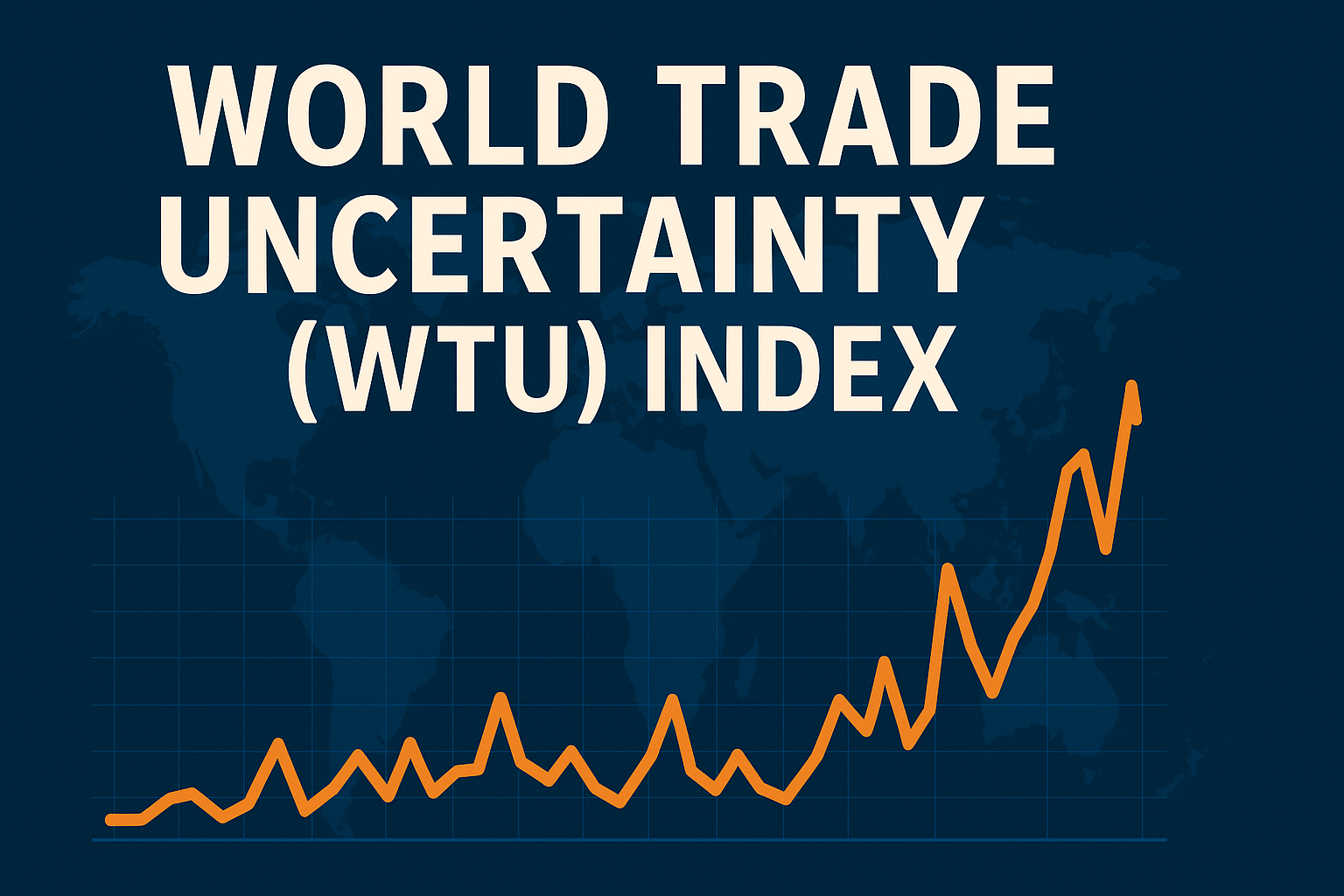
May 13 WHAT? The World Trade Uncertainty Index is a global economic indicator developed by the International Monetary Fund (IMF) to measure uncertainty related to trade policy across countries and over time. It is published by International Monetary Fund (IMF) and Updated quarterly, available on the IMF's official website. What Does It Measure? The WTU Index quantifies trade-related uncertainty by analyzing the frequency of terms related to "trade" and "uncertainty" in the Economist...
-

Complete details of INDIA-UK Free Trade Agreement signed in 2025
May 09 WHAT India and the United Kingdom have finalized a landmark Free Trade Agreement (FTA) on May 6, 2025, after over three years of negotiations. This agreement is poised to significantly enhance bilateral trade, aiming to boost annual trade by £25.5 billion by 2040. Trade between the two nations totalled £42.6 billion in 2024. Total UK exports to India amounted to £17.1 billion, while total UK imports from India amounted to £25.5 billion in 2024. India was Britain's 11th-largest trading partner last...
-

What is Inverted Duty Structure (IDS)?
May 21 Inverted tax structure simply refers to a condition where the tax rate on import of inputs used is higher than the tax rate on the outputs or final products for sale or exports. Usually, tax policies promote domestic manufacturing and therefore imports of finished products are made costlier by applying custom duty or tax and import of it's raw materials or components is made cheaper. But the reverse occurs in the inverted duty structure. For example : Duty on the import of tyres (Finished...
-

What is an inheritance tax? Should India have such a tax?
April 24 Inheritance is acquisition of a person's property by the close family members after the person’s death. Inheritance tax would mean a tax to be paid by those who inherit property from their parents/grand parents or other relatives. Inheritance tax is also known as estate tax, is levied on the total value of money and property of a deceased person before it is distributed to their legal heirs. The tax is typically calculated based on the value of the assets left behind. The purpose of inheritance tax is often...
-
What is Agreement on Agriculture (AoA) of WTO?
January 12 The Agreement on Agriculture (AoA) is a significant international treaty that is part of the agreements established during the Uruguay Round of multilateral trade negotiations conducted under the General Agreement on Tariffs and Trade (GATT). The Agreement on Agriculture addresses issues related to trade in agricultural products and aims to establish a fair and market-oriented agricultural trading system. It introduced disciplines and rules to address various aspects of agricultural trade, including market access, domestic...
Comments
Write Comment