International
What are Trade-Related Investment Measures (TRIMs) of WTO?
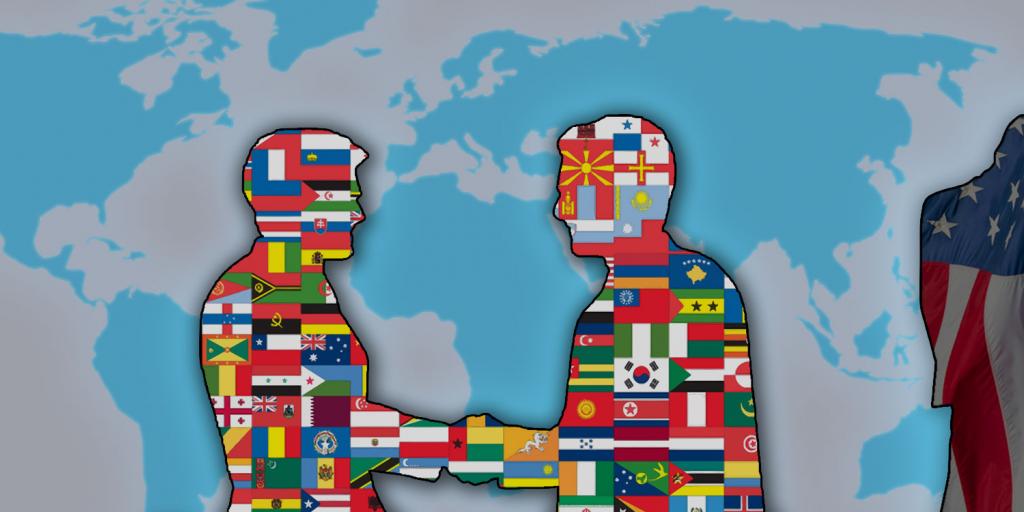
Trade-Related Investment Measures (TRIMs) are a set of rules laid down by the World Trade Organisation that controls certain investment-related measures that may impact global trade. These investment-related measures can have trade-restrictive and distorting effects.
Under TRIMS, WTO names the list of investment measures which member countries adopt and that discriminates with the foreign investment when compared to domestic ones and hence violate the basic WTO principle of National Treatment. National treatment demands that the same treatment should be given to foreign goods,services and investment which is being given to the domestic ones.
The restrictive measures adopted by countries include:
- The requirements to achieve a certain level of local content or raw material, compelling foreign investors to buy a certain amount of local inputs. This forces the investors to buy from local sources and not procure from abroad, even if it is cheaper abroad.
- Produce locally and export a given level/percentage of goods to earn FOREX for the country.
- Balance the amount/percentage of imports with the amount/percentage of exports, and
- Transfer their technology, patent or proprietary business information to local industries.
Hence, TRIMS provide the rules that restrict the preference of domestic firms and thereby enable international firms to operate more easily within foreign markets.
In order to bring all these measures under modulation, an agreement was signed between all the WTO members.
The TRIMs agreement’s overall goal is to urge nations to implement open, non-discriminatory investment policies that support trade and economic growth.
About author

Zinkpot — We Inform, You Perform.
Ask Anything, Know Better
अपना प्रश्न पूछें
-
What is Pax Silica? What are opportunities and Challenges before India?
January 26 Background Pax Silica is a U.S.-led international initiative focused on building secure, resilient, and innovation-driven supply chains for technologies essential to the AI era, particularly those involving silicon, critical minerals, semiconductors, and advanced computing. The name draws from "Pax" (Latin for peace, stability, and prosperity) and "Silica" (referring to silicon dioxide, the foundational material for semiconductors). It represents the U.S. Department...
-
Is the Dollar’s Dominance Coming to an End?
November 19 What does the Dollar Dominance Mean? For nearly eight decades, the U.S. dollar (USD) has been the world’s reserve currency and has been used for Global trade and oil payments (the “petrodollar” system) Central bank reserves International loans and debt Safe-haven investment in crises The dollar has been the backbone of the global financial system. About 58–60% of all global foreign exchange reserves are still held in dollars (IMF, 2025). How did the Dollar become...
-
Lucknow Becomes UNESCO Creative City of Gastronomy!
November 10 Context Lucknow, the capital city of Uttar Pradesh in India, has just been named a UNESCO Creative City of Gastronomy. This happened on October 31, 2025, which is World Cities Day. It's a big honor for the city known for its tasty food. Lucknow is now the second Indian city to get this title, after Hyderabad in 2019. The news has made people excited, including Prime Minister Narendra Modi, who congratulated the city. What is UNESCO's Creative Cities Network? UNESCO is a part of the United Nations that works on...
-
What is the G2?
November 05 Background The G2 is a simple idea in world politics. It stands for "Group of Two." It means the United States (US) and China working together as the two biggest powers on Earth. They could team up to solve big global problems like climate change, trade, or wars. But it's not an official group like the United Nations. It's just a way to think about how these two countries can shape the world. The History of the G2 Idea The G2 idea started around 2009. Back then, the world was facing a big money crisis....
-
What Is ASIA PACIFIC ECO COOPERATION (APEC)?
November 04 What is APEC? APEC is more like a forum where countries meet to share ideas and agree on ways to help each other. The main goal is to create more jobs and better lives for people in the Asia-Pacific area by making trade free and fair.It started with the idea that if countries trade more openly, everyone wins. APEC helps reduce taxes on goods (tariffs), make rules simpler for businesses, and share new tech. It's all about "cooperation" – working together for everyone's good. History of APEC APEC...
-
NPT vs CTBT: The Global Effort to Control Nuclear Power
November 04 Background Nuclear weapons are very dangerous. To control them, countries made two big treaties: the NPT and the CTBT. NPT means Treaty on the Non-Proliferation of Nuclear Weapons. CTBT means Comprehensive Nuclear-Test-Ban Treaty. They both help stop the spread of nuclear bombs, but they are different. This article explains what they are, their history, differences, and more – all in easy words. What is the NPT? The Nuclear Non-Proliferation Treaty (NPT) is a global agreement made to stop the spread of nuclear weapons...
-
How Fed’s Rate Cuts Impact the World Economy
October 31 Introduction The US Federal Reserve, often called the Fed, is USA's main bank. It helps control the economy by setting rules for money and banking. One big tool it uses is changing interest rates. The key rate is called the federal funds rate. This is the rate banks charge each other for short-term loans. When people talk about the Fed cutting rates, they usually mean lowering this federal funds rate. Why Does the Fed Cut Interest Rates? The Fed cuts rates when the economy needs a boost. For example, if...
-
What is Saudi Arabia’s Data Embassy? An emerging concept!
October 31 What is a Data Embassy? A data embassy is like a special safe place for storing important computer data. Imagine it as an embassy building for a country, but instead of people, it's for digital information. It is a data center located in one country, but it follows the laws of another country. This means the host country can't access or control the data inside it. The idea helps countries keep their data secure even if it's stored abroad.This concept started as a way to back up government data in case of disasters or attacks....
-
About East Timor's New Membership in ASEAN
October 28 Introduction East Timor, officially known as Timor-Leste, has just become the 11th member of the Association of Southeast Asian Nations (ASEAN). This happened on October 26, 2025, at a big meeting in Kuala Lumpur, Malaysia. It's the first time ASEAN has added a new member since the 1990s, and it's a big deal for this small country. Adding East Timor shows ASEAN is open and inclusive, even in tough global times. It brings new energy and helps the group stay united. But ASEAN must support its new members to make sure everyone...
-
EU’s Carbon Border Adjustment Mechanism (CBAM)
October 28 Introduction The Carbon Border Adjustment Mechanism, or CBAM, is a new policy from the European Union (EU) to help fight climate change. It puts a price on the carbon pollution created when making certain goods that are imported into the EU. This encourages countries outside the EU to make their industries cleaner. CBAM is a smart step by the EU to make global trade greener and fairer. By pricing carbon on imports, it pushes everyone toward cleaner ways of making things. As it moves from testing to full action in 2026, businesses worldwide...
- 1 RBI Digital Rupee e₹ क्या है? बिना Internet पेमेंट! कैसे इस्तेमाल करें Digital Rupee vs UPI April 15
- 2 About Trade Policy Uncertainty (TPU) Index and Global Economic Policy Uncertainty (GEPU) Index April 08
- 3 What is Food Credit and Non Food Credit? April 08
- 4 SARFAESI Act, 2002 Vs Insolvency & Bankruptcy Code (IBC), 2016 : Main Differences April 08
- 5 IN Skip navigation Search Sign in Transgender Bill 2026: क्या अब डॉक्टर तय करेंगे आपकी पहचान? NALSA से अब तक पूरा मामला April 01
- 6 80 लाख लोग सड़कों पर March 31
- 7 Iran US War: Strait of Hormuz के बाद Bab al-Mandeb Strait बंद हुआ तो दुनिया रोएगी | Zinkpot March 28
- 8 LPG vs CNG vs PNG | कौन सी गैस सबसे SAFE? Gas Crisis | Iran War | Zinkpot March 27
- 9 IPL 2026 सबसे बड़ा महामुकाबला । Maximum Teams, Prizes and Matches l Zinkpot March 26
- 10 Iran War 2026: ट्रंप की 48 घंटे की डेडलाइन खत्म… अब क्या होगा? March 25
- 11 USA LOST Dubai Trust? | Dubai अब Safe नहीं? | Iran War | ZINKPOT March 25
- 12 “मैं जिंदा हूं” – Netanyahu | Iran Nuclear Power खत्म? | IRAN War Update March 21
- 13 Iran war: Larijani killing Revenge | Iran Bombards Saudi Oil Refineries | Is this World War - 3 March 20
- 14 Israel–Iran Conflict Explained | क्या ये धर्म की लड़ाई है? | Middle East War Analysis March 19
- 15 IRAN WAR: TRUMP बेबस | Trump ने China से मांगी मदद | Strait of Hormuz संकट । Geopolitics March 17
- 16 Iran vs USA War: Operation Epic Fury पर उठे सवाल | Trump की बड़ी रणनीतिक गलती? March 16
- 17 IRAN WAR: Mojtaba Khamenei’s First Message | “हर मौत का बदला होगा” US-Israel को खुली चेतावनी March 14
- 18 IRAN WAR: जंग की लपटें रसोई तक | LPG CRISIS का संकट ! आख़िर कब तक March 13
- 19 IRAN WAR: AMERICA BLIND | क्या US Radar अब बेकार? March 12
- 20 What does Trump want from Iran? March 11
Comments
Write Comment