International
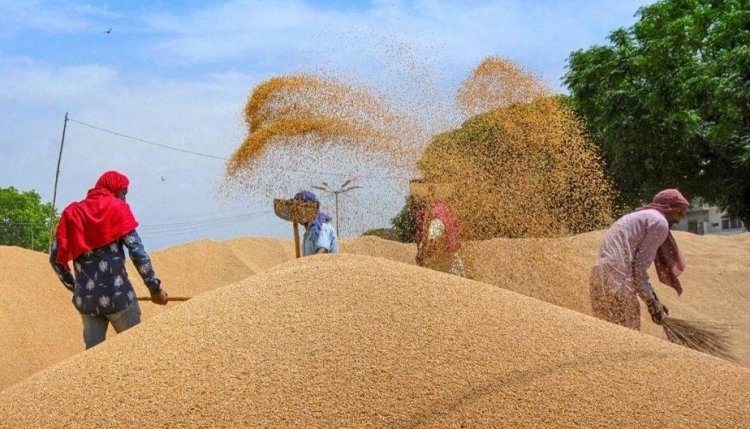
What is Agreement on Agriculture (AoA) of WTO?
The Agreement on Agriculture (AoA) is a significant international treaty that is part of the agreements established during the Uruguay Round of multilateral trade negotiations conducted under the General Agreement on Tariffs and Trade (GATT).
The Agreement on Agriculture addresses issues related to trade in agricultural products and aims to establish a fair and market-oriented agricultural trading system. It introduced disciplines and rules to address various aspects of agricultural trade, including market access, domestic support, and export subsidies.
Key elements of the Agreement on Agriculture include:
- Market Access: The agreement seeks to improve market access by reducing and removing tariff barriers and quotas on agricultural products.
- Domestic Support: The AoA establishes rules to limit domestic support programs that distort trade. It categorizes domestic support into three "boxes" - the Green Box (non-trade-distorting measures), the Amber Box (trade-distorting measures with limits), and the Blue Box (less trade-distorting measures with conditions).
- Export Subsidies: The agreement aims to reduce and eventually eliminate export subsidies on agricultural products, as they can distort international trade by providing unfair advantages to exporting countries.
- Special and Differential Treatment: Recognizing the diverse nature of agricultural economies, the AoA allows for special and differential treatment for developing countries, providing them with more flexibility and longer time frames for implementing certain commitments.
- Review and Monitoring Mechanism: The WTO's Committee on Agriculture oversees the implementation of the AoA. Regular reviews and monitoring are conducted to ensure that member countries are adhering to their commitments and to address any concerns or disputes that may arise.
- Tariffication: The agreement encourages the conversion of non-tariff barriers into equivalent tariffs, making trade measures more transparent and predictable.
- Tariff Reduction Commitments: Member countries commit to reducing and binding their tariff rates on agricultural products, providing a framework for the gradual reduction of trade barriers.
- Peace Clause: The AoA includes a "peace clause," which protects developing countries from legal challenges regarding their domestic support programs until a permanent solution is found.
The Agreement on Agriculture was a significant step in addressing the challenges and distortions in global agricultural trade. It reflects efforts to create a more level playing field for agricultural producers worldwide and to promote a fair and open trading system.
The Uruguay Round took place between 1986 and 1994, and it led to the creation of the World Trade Organization (WTO) in 1995.
About author

Zinkpot — We Inform, You Perform.
Ask Anything, Know Better
अपना प्रश्न पूछें
-
Difference between FTA and BTA in trade
July 23 WHAT? The terms Free Trade Agreement (FTA) and Bilateral Trade Agreement (BTA) are often used in the context of international trade, but they have distinct meanings and implications. Below is a clear explanation of the differences based on their definitions, scope, and application. Free Trade Agreement (FTA) An FTA is a treaty between two or more countries to reduce or eliminate trade barriers, such as tariffs and quotas, to facilitate the free flow of goods and services. FTAs aim to create a free trade...
-

What is Agreement on Safeguards under WTO?
June 04 WHAT? The Agreement on Safeguards (AoS) is a World Trade Organization (WTO) agreement that governs the use of safeguard measures — temporary import restrictions that a country can impose when a sudden surge in imports causes serious injury to its domestic industry. It is one of the key agreements under the Uruguay Round (1995) of WTO. Purpose of the Agreement To ensure that the safeguard measures: Are applied transparently and fairly Are temporary and non-protectionist Are based on clear...
-
FDI at an all-time low: Reasons for downfall and why experts predict a turnaround soon
May 28 SUMMARY Net FDI means the difference of FDI received in India and the FDI sent from India. India's net Foreign Direct Investment (FDI) experienced a significant decline of 96.5% in the fiscal year 2024–25, dropping to just $353 million from $10 billion the previous year, marking the lowest level on record. India received a gross FDI of $81 billion in FY25. Key Reasons for the Decline Increased Repatriation and Outward Investments: While gross FDI inflows rose to $81.1 billion, up...
-
What is Tariff Rate Quota (TRQ)?
May 20 DEFINITION Tariff Rate Quota (TRQ) is a trade policy tool that allows a specified quantity of a product to be imported at a lower tariff rate, while quantities above that threshold are subject to higher tariffs. Example: India allows import of 100,000 tonnes of maize at 15% tariff (TRQ). Any import beyond 100,000 tonnes is charged 60% tariff. Directorate General of Foreign Trade (DGFT) issues TRQ licenses and Customs authorities enforce tariffs at the borders. Purpose of TRQs Protect...
-
What is World Trade Uncertainty (WTU) Index?
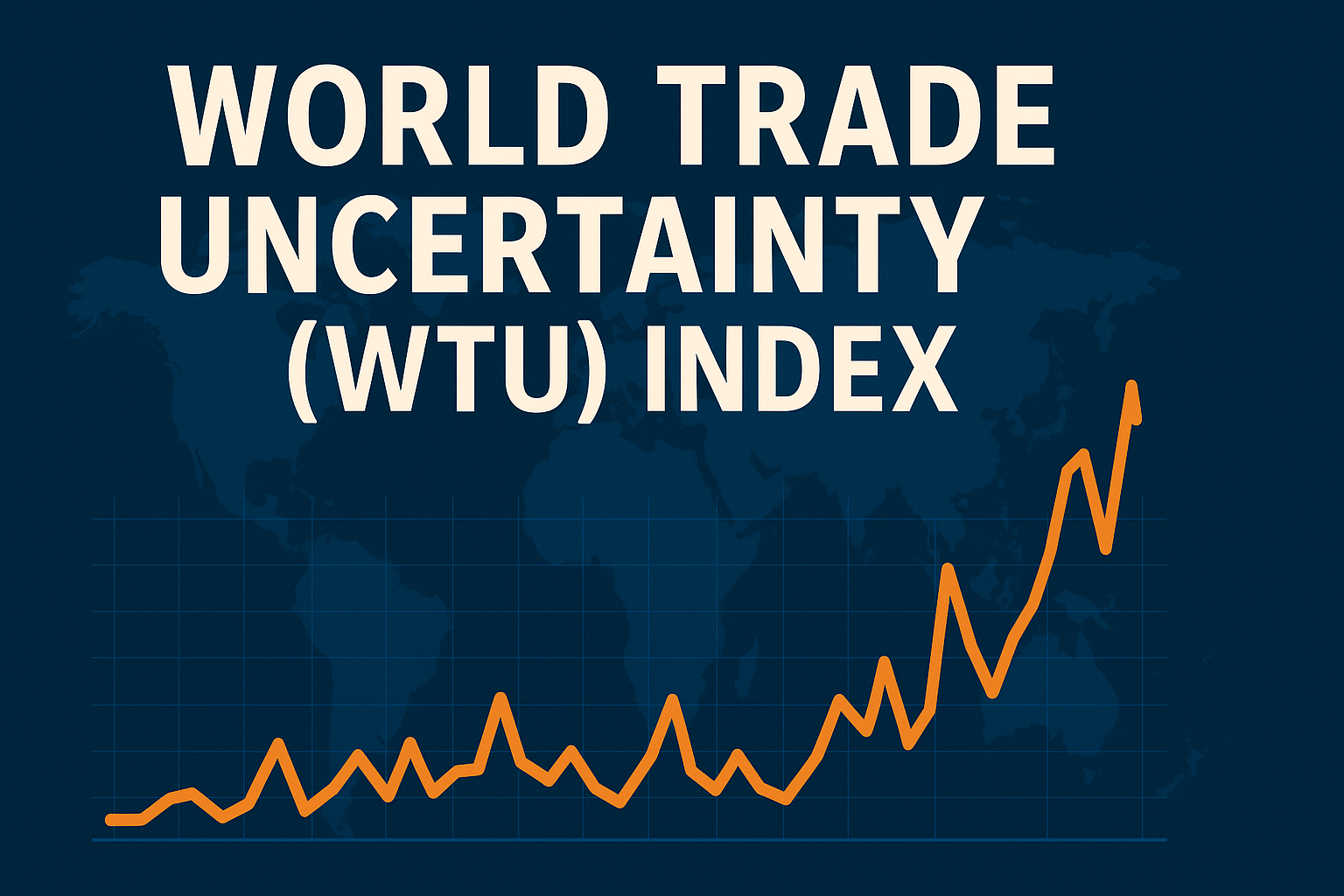
May 13 WHAT? The World Trade Uncertainty Index is a global economic indicator developed by the International Monetary Fund (IMF) to measure uncertainty related to trade policy across countries and over time. It is published by International Monetary Fund (IMF) and Updated quarterly, available on the IMF's official website. What Does It Measure? The WTU Index quantifies trade-related uncertainty by analyzing the frequency of terms related to "trade" and "uncertainty" in the Economist...
-
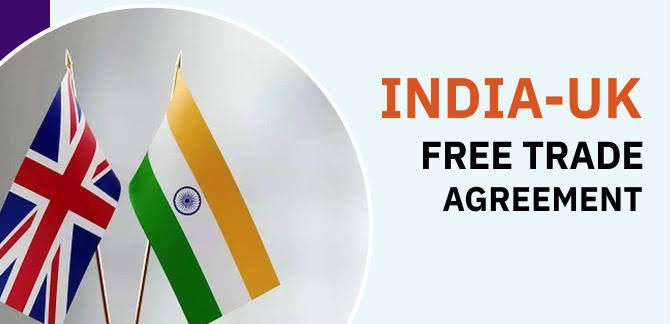
Complete details of INDIA-UK Free Trade Agreement signed in 2025
May 09 WHAT India and the United Kingdom have finalized a landmark Free Trade Agreement (FTA) on May 6, 2025, after over three years of negotiations. This agreement is poised to significantly enhance bilateral trade, aiming to boost annual trade by £25.5 billion by 2040. Trade between the two nations totalled £42.6 billion in 2024. Total UK exports to India amounted to £17.1 billion, while total UK imports from India amounted to £25.5 billion in 2024. India was Britain's 11th-largest trading partner last...
-

General Agreement on Trade in Services (GATS)
January 12 The General Agreement on Trade in Services (GATS) is an international treaty that is part of the World Trade Organization (WTO) agreements. GATS came into force on January 1, 1995, along with the establishment of the WTO. The agreement aims to create a framework for the liberalization of trade in services among WTO member countries. Key features of the GATS agreement include: Wide Scope : GATS covers a wide range of services, including business, communication, construction, education, environmental, financial,...
-
INDIA-EU WTO Trade Dispute of 2019
November 20 India has had the most contentious trade dispute with its second-largest partner, the European Union involving information communications technology (ICT) products since 2019. Brussels, the capital city of Belgium, dragged New Delhi to the WTO’s dispute settlement mechanism in 2019, challenging its levying of import duty on a wide range of ICT products including mobile phones and components, base stations, integrated circuits, and optical instruments. It claims that the duty was inconsistent with global trade norms and...
-
What are Trade-Related Investment Measures (TRIMs) of WTO?
July 19 Trade-Related Investment Measures (TRIMs) are a set of rules laid down by the World Trade Organisation that controls certain investment-related measures that may impact global trade. These investment-related measures can have trade-restrictive and distorting effects. Under TRIMS, WTO names the list of investment measures which member countries adopt and that discriminates with the foreign investment when compared to domestic ones and hence violate the basic WTO principle of National Treatment. National treatment demands that...
-
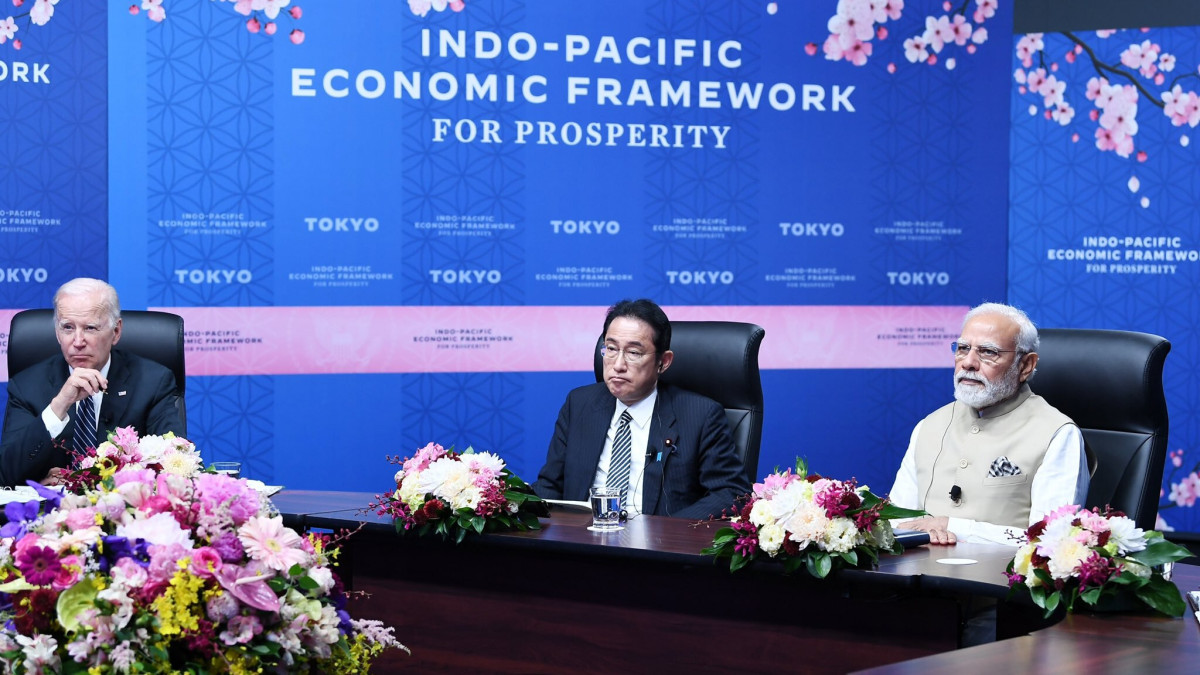
What is the Indo-Pacific Economic Framework for Prosperity (IPEF)?
July 19 Indo-Pacific Economic Framework (IPEF) was launched by the US in 2022 as a significant step towards establishing free and fair trade with the nations of the Indo-Pacific region. Presently, there are 13 member countries in this framework including India which account for 40% of the global GDP and 28% of the global trade. Through this initiative, the IPEF partners aim to contribute to cooperation capability, prosperity, development, and peace within the region. Moreover, it is aiming towards advancing resilience, sustainability,...
Comments
Write Comment