
Economy and Finance
What are Currency Derivatives?
Derivatives are contracts that get their value from an underlying asset – equities, bonds, commodities, and currencies, among many. In layman terms, if the cost of raw material of a particular product increase, the price of that product will also rise. The same principle applies to derivatives.
What are Currency Derivatives?
Currency Derivatives are exchange-traded contracts deriving their value from their underlying asset, i.e., the currency. The investor buys or sells specific units of fixed currency on a pre-specified date and rate.
These contracts are actively traded on the stock exchanges and are mainly used by importers and exporters to hedge against domestic currency fluctuation. Currency derivative contracts are standardised through a foreign regulatory exchange .
Types of Currency Derivatives
Currency Futures: Like Stock Future, Currency Futures are contracts that allows you to buy and sell an underlying currency at a pre-determined date. Moreover, the buy and seller can lock in the exchange rate in the present time itself. Therefore, both the buyers and sellers can avoid currency depreciation. Currency Futures is more frequently used by banks, importers, and exporters.
Currency Options: They are similar to Currency Futures when it comes to trading the underlying currency. The difference, however, is that it is not mandatory for you to buy or sell the underlying currency pairs on expiry. Therefore, Currency Options are flexible than Futures, where you must trade the derivatives on a specified date. Currency Options are classified into two types:
Subscribe to Zinkpot Capital on YouTube for videos on Finance and Economy
About author

Zinkpot — We Inform, You Perform.
Ask Anything, Know Better
अपना प्रश्न पूछें
-
INDIA'S GOLD RUSH! इतना की सबके पास ₹2.25 लाख!
October 13
-
India’s forex reserves surge by $6.99 billion to $692.72 billion in week-long rally
May 31 SUMMARY India's foreign exchange reserves experienced a significant increase of $6.99 billion, reaching a total of $692.72 billion for the week ending May 23, 2025, according to data released by the Reserve Bank of India (RBI) . Key Components of the Increase Foreign Currency Assets (FCA): The largest component of the reserves, FCAs rose by $4.52 billion to $586.17 billion. These assets are influenced by the valuation changes of major currencies like the euro, pound, and yen against the US...
-

What is a Currency Swap and it's benefits?
May 06 A currency swap is a transaction in which two parties exchange an equivalent amount of money with each other but in different currencies. The parties are essentially loaning each other money and will repay the amounts at a specified date and exchange rate. Currency swap is a financial instrument used by companies and institutions to secure better loan rates in foreign currencies than they might be able to obtain directly in the foreign market. They involve the exchange of principal and interest payments in one currency for...
-
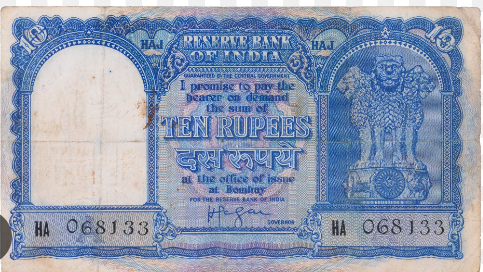
What was Haj Rupee or External Rupee?
April 02 The Indian rupee has been the legal tender in the Gulf countries, including Kuwait, Bahrain, Qatar and UAE, till the early 1970s. In 1959, the Centre allowed the RBI to issue special notes only for the Gulf region. The currency had the same value as the Indian rupee and was known as the Gulf rupee or external rupee. Indians could also take the Indian rupee notes when they went on the Haj pilgrimage and exchange them freely for Saudi riyals. Later, the Centre introduced special notes for the pilgrimage with the word "HAJ"...
-
RBI कैसे कमाता है ?
April 01 RBI एक गैर-लाभकारी संस्था है, फिर उसने 2.3 लाख करोड़ का मुनाफ़ा कैसे कमाया?
-

What is Emerging Market (EM) Index?
February 15 The Emerging Markets (EM) Index is a significant benchmark used to track the performance of local-currency-denominated Sovereign Bonds issued by emerging market countries. The EM Index is designed to provide investors with a representative measure of the fixed-income market within emerging market economies. It includes government bonds issued by various emerging market countries, and its composition may change over time based on eligibility criteria. One of the widely followed indices for emerging markets is the MSCI Emerging...
Comments
Write Comment