Equity Market
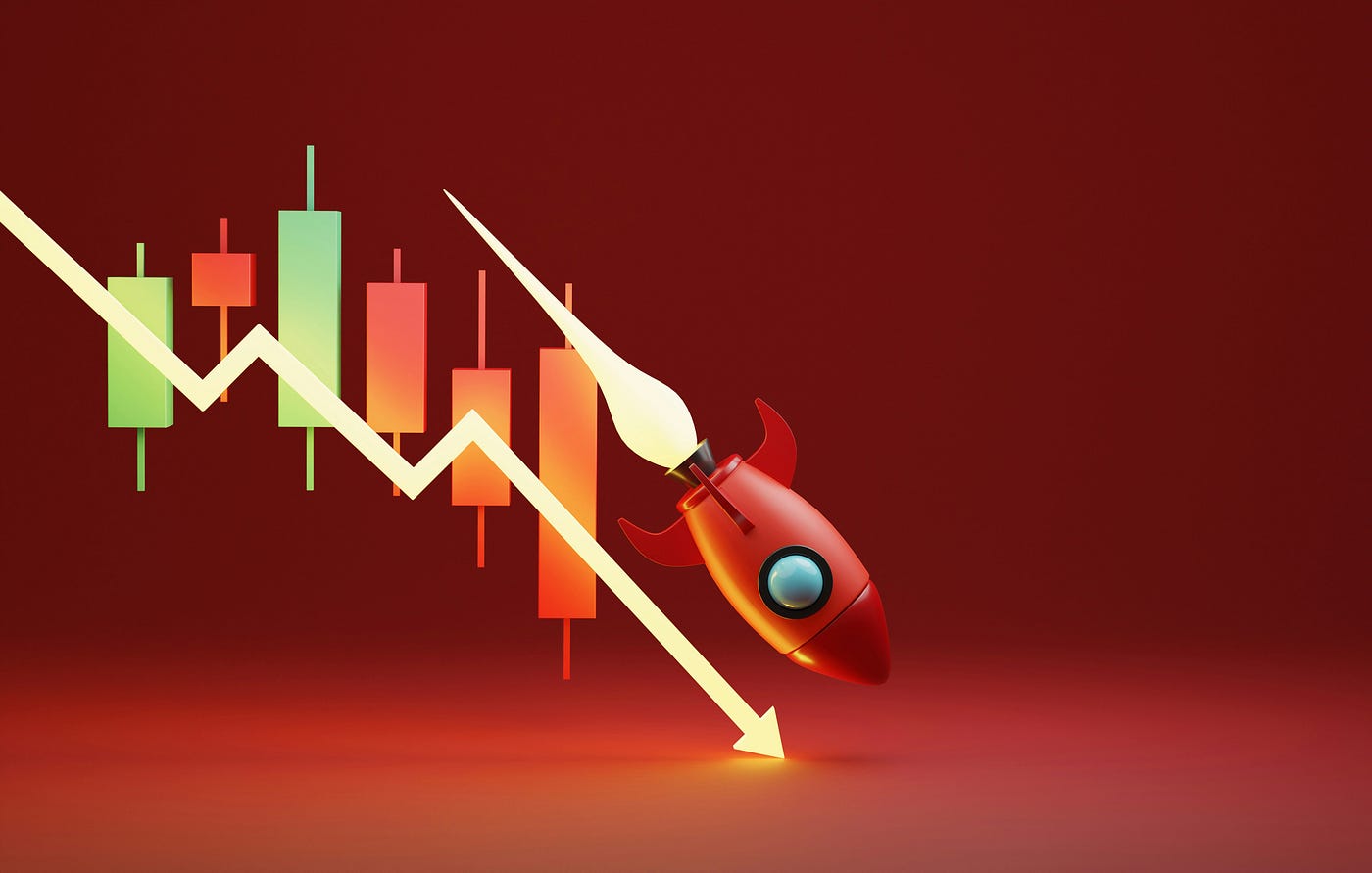
Why Indian stock markets are shivering?
Indian Stock investors are having a tough time since last few days due to frequent falling of the SENSEX and the NIFTY. Foreign Institutional Investors (FIIs) have been aggressive sellers in Indian shares for the last four months.
As per data available from NSE, FIIs have net sold stocks to the tune of Rs 19,000 crore so far in January. Over the last four months, starting October 2024 they have offloaded shares worth Rs 1.97 lakh crore. But the question is why are the selling stocks? There are many reasons to this.
One is the impact of globalization. Indian stock markets are linked to the markets and economy of other countries like the USA and the China. If economic situations in these countries improve, then many of foreign investors dump Indian shares and invest in these markets. Hence Indian markets fall. Few months ago, Chinese stocks were found attractive due to cheaper valuations. it led to Indian investors and FIIs moving towards Chinese markets, leading to a fall in Indian markets. Now strong US macroecnomic data is shifting Investors towards USA.
Recently US’s job report was released which shows a strong US jobs situation. The recent data shows that US has added 256,000 jobs in December where as the expected number was 160,000. The unemployment in the US is also down to 4.1%. It also means a higher domestic demand in the US economy which in turn means high production and high GDP. This has attracted investors towards US over India. As a result dollars has also become stronger. Which has weakened currencies of other countries. The rupee has fallen to it’s lowest level of rupees 85 per dollar.
Moreover the uncertainty about upcoming President Donald Trump's economic strategies such as protectionism measures have intensified bearish sentiments in India. He has been announcing tariffs on products from countries like China, Canada and groups like BRICS and others. The continued sanctions on Russia would also impact India as the import of cheap Russian crude would decline affecting prices in India. And there is no surprise if he imposes some tariffs on selective Indian products as well. His inauguration is scheduled for January 20, 2025.
Further, The Indian economy's growth is projected to slow to a four-year low of 6.4 per cent in 2024 -25. The Q3 data for Indian industries have been disappointing. Since then the investors have been fleeing from India. Experts suggested that volatility will persist in the near term and that stock markets could fall further. Domestic markets might remain weak until March, with stability expected from April as earnings outlooks improve and FII selling subsides.
WATCH VIDEO HERE
About author

Zinkpot — We Inform, You Perform.
Ask Anything, Know Better
अपना प्रश्न पूछें
-
What is the G2?
November 05 Background The G2 is a simple idea in world politics. It stands for "Group of Two." It means the United States (US) and China working together as the two biggest powers on Earth. They could team up to solve big global problems like climate change, trade, or wars. But it's not an official group like the United Nations. It's just a way to think about how these two countries can shape the world. The History of the G2 Idea The G2 idea started around 2009. Back then, the world was facing a big money crisis....
-
The Longest U.S. Government Shutdown: Why It Matters for India?
October 25 Background What is a US government shutdown? click here Context The United States has had many government shutdowns over the years when leaders can't agree on spending money. The longest one happened from December 22, 2018, to January 25, 2019. It lasted 35 days and affected millions of people. This shutdown was during President Donald Trump's time and was about funding for a border wall. Today, there's an ongoing shutdown that started on October 1, 2025, and it's already the second-longest at over 23 days. But...
-
China की Monopoly तोड़ने निकला अमेरिका !
October 22
-
India welcomes Taliban!
October 11 Context In a major shift in its foreign policy, India has announced it will upgrade its presence in Afghanistan by turning its "technical mission" in Kabul into a full embassy. This move comes after a high-level visit by Taliban Foreign Minister Amir Khan Muttaqi to New Delhi—the first such trip by a senior Taliban leader since they took power in 2021. While India hasn't officially said it "recognizes" the Taliban government yet, experts call this a clear sign of closer...
-
How Allotment of Shares Works in an IPO?
September 07 Key Steps in the Allotment Process Setting a price band : The issuer sets a price band (with the cap price at least 5% above the floor, up to a maximum 20% premium). Investors place bids within this band during the bidding window. Once the window closes, the cut-off price is finalized—it's the highest price at which the entire issue is fully subscribed. Determining Eligibility: Only bids at or above the cut-off price qualify for allotment. Retail investors (those applying for up to ₹2 lakh worth of shares) have an...
-

What are Currency Swap Agreements?
August 20 WHAT? A currency swap involves two parties exchanging a specified amount of one currency for another at an agreed exchange rate, with a commitment to reverse the transaction at a future date, often at the same rate plus interest. Currency swap agreements are financial arrangements between two central banks or monetary authorities to exchange their respective currencies up to a pre-agreed amount, typically to provide liquidity, stabilize exchange rates, or support trade and investment. Swaps are typically short-term...
-
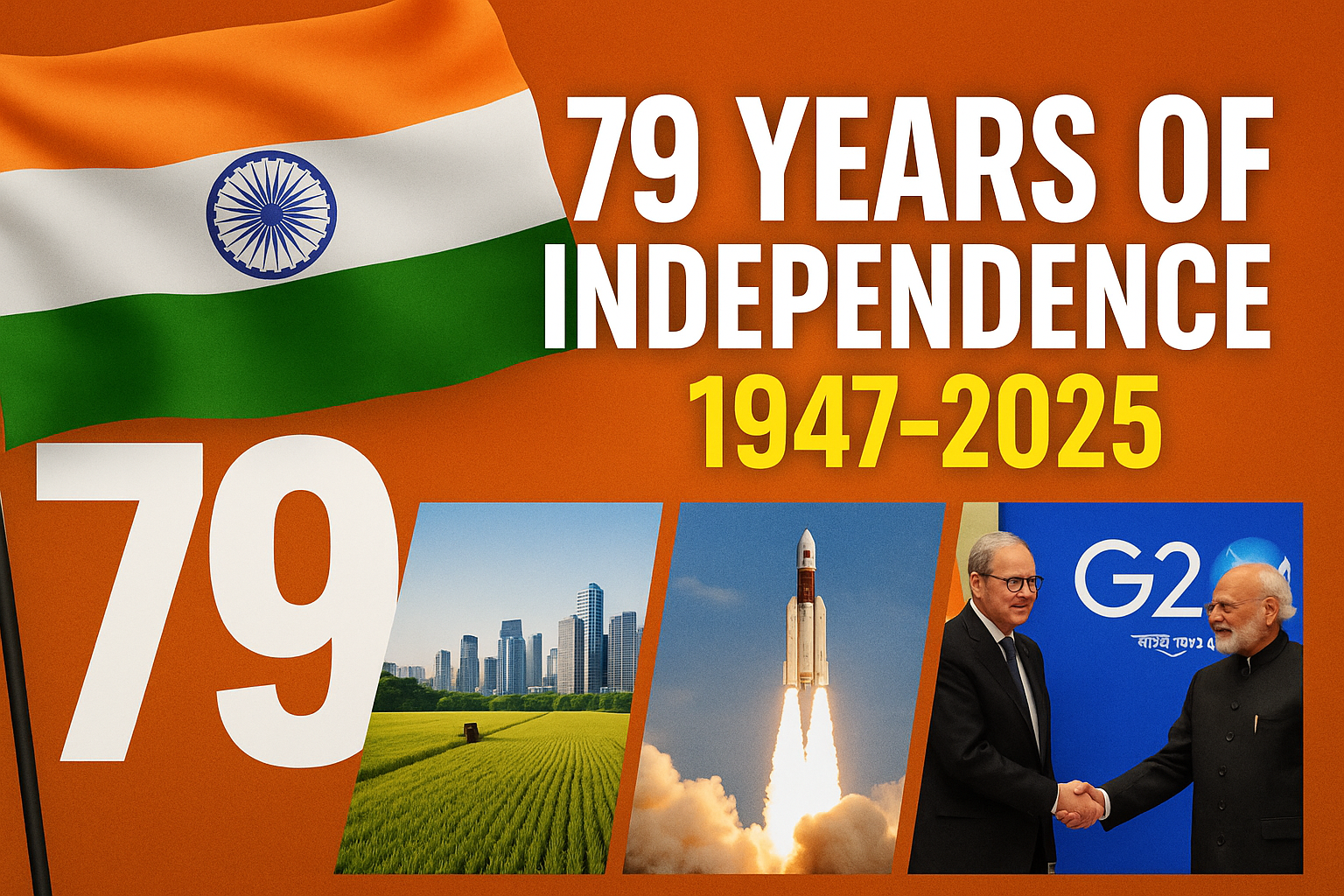
79th INDEPENDENCE DAY : What has INDIA achieved so far?
August 15 CONTEXT India gained independence from British rule on August 15, 1947, marking the beginning of a transformative journey from a colonized nation grappling with poverty, partition trauma, and economic fragility to a global powerhouse. Over the past 79 years (up to August 2025), India has made remarkable strides across multiple sectors, overcoming challenges like famines, wars, and internal conflicts while building a vibrant democracy. Key milestones include economic growth, scientific advancements, social...
-
Trump threatens 10% tariff on BRICS nations
July 07 WHAT? U.S. President Donald Trump has threatened to impose an additional 10% tariff on countries aligning with what he describes as the "anti-American policies" of the BRICS nations. This statement, made via a post on Truth Social on July 6, 2025, comes amid the ongoing 17th BRICS Summit in Rio de Janeiro, Brazil, and signals heightened trade tensions. Key Details Tariff Threat: Trump stated, "Any Country aligning themselves with the Anti-American policies of BRICS, will be charged an...
-
USA का नया Bill: भारत-चीन पर 500% टैक्स की तैयारी!
July 06
-
B-2 Bombers हवा में Refuel कैसे करते हैं?
June 26
Comments
Write Comment