International Relations
WHY ARE INDIA-TURKEY NOT FRIENDS?
BACKGROUND
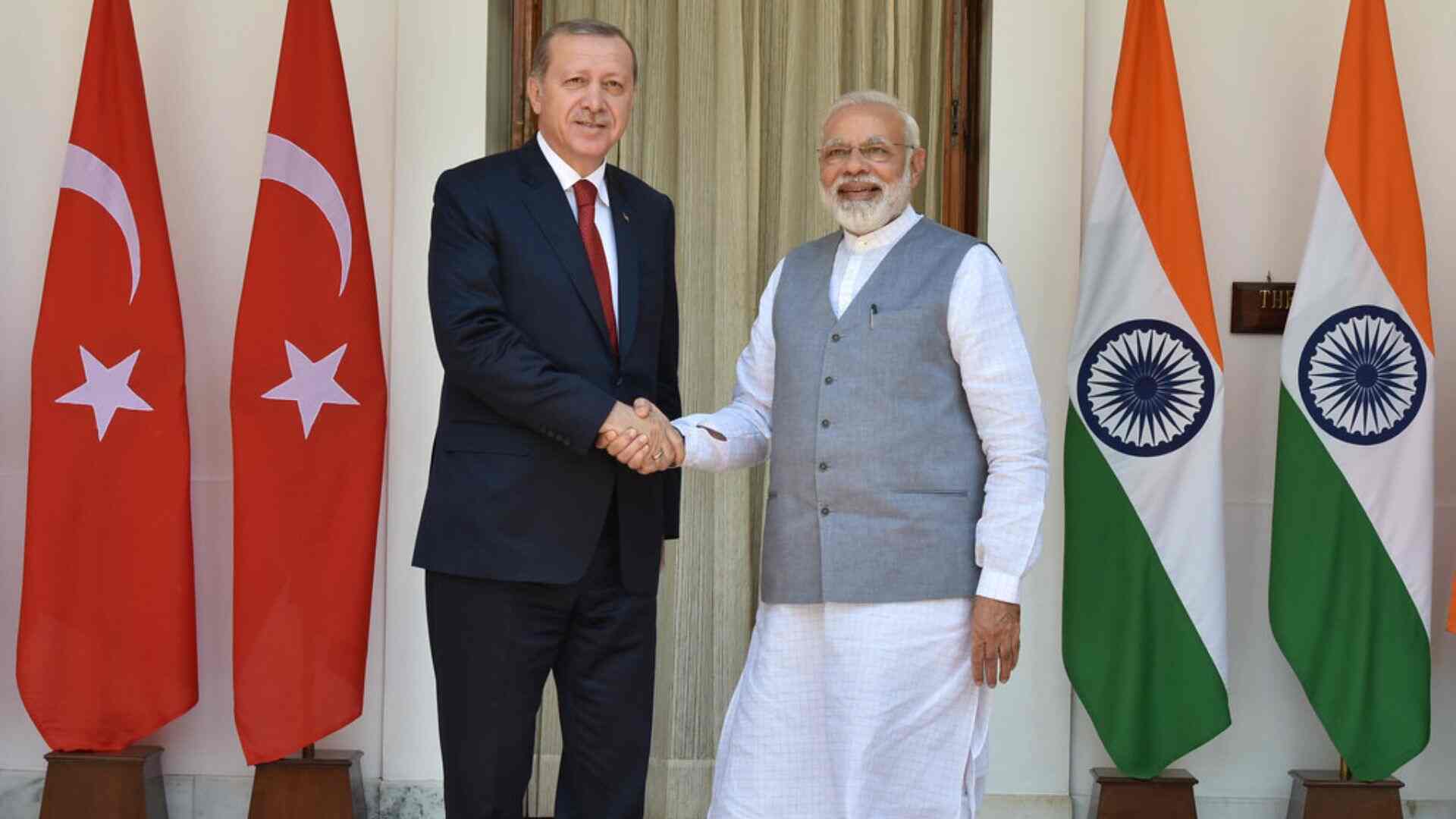
Turkey’s relations with India have never been healthy and have further deteriorated in recent years due to the anti-India stand taken by Turkey on various areas like Kashmir where it supports Pakistan. There is a history of tensions between India and Turkey based on Religious and Political lines.
TURKEY AND PAKISTAN
Turkey & Pakistan were part of the anti-Communist military alliance. India & Turkey were on the opposite sides during cold war. India was inclined towards USSR and Turkey has been an ally of USA and is a member of US led military alliance NATO.
Therefore Turkey has had strong relations with Pakistan since beginning and it got strengthened further on the Islamic grounds. Turkey has been supporting Pakistan’s claim on Kashmir and has always raised the issue on various international platforms like UNHRC. Turkey has also opposed India’s abrogation of Article 370 that gave special status to Jammu and Kashmir.
Turkey and Pakistan have long-standing military relations under which Turkey is helping Pakistan to modernise its military with drones and submarines. Turkey is the 2nd largest investor in Pakistan after China.
These factors have led India to cut defence exports to Turkey. In what illustrates this poor state of India-Turkey relations, the prime minister Narendra Modi has never had a bilateral or state visit to Turkey. Modi’s only Turkey visit so far was for the multilateral Group of 20 summit in 2015.
INDIA AND TURKEY'S ENEMIES
Interestingly, while India-Turkey relations have soured, India has strengthened links with those nations who are not Turkey friends but are located in it’s neighbourhood and surround Turkey geographically such as– Israel, Greece, Cyprus and even Armenia. It has further affected India-Turkey relations.
With shared interests, the India-Israel strategic partnership has strengthened over time with deeper strategic links. Modi became the first Indian prime minister to visit Greece in over 40 years, the India-Greece ties were also elevated to a strategic partnership to boost cooperation in security and trade and Greece supports India on Kashmir. India had also signed defence and military cooperation agreements with Cyprus.
ARMENIAN GENOCIDE
Armenia-Turkey relations have been historically hostile mainly over what is known as the 1915 Armenian genocide. Sometimes called the first genocide of the twentieth century, the Armenian genocide refers to the physical annihilation of Armenian Christian people living in the Ottoman Empire that took between 1915 and 1916. There were approximately 15 lakhs Armenians living in the Ottoman Empire in 1915. At least 7 lakhs died during the genocide, either in massacres and individual killings, or from systematic ill treatment and starvation.They have not had diplomatic ties for the past 30 years. India has been reportedly exporting weapons to Armenia through a government-to-government contract. Turkey also backs Azerbaijan who is having territorial conflicts with Armenia.
TURKEY'S IMMATURITY
So, its natural that India-Turkey relations are not that great. But India has maintained a steady relationship with Turkey. India-Turkey bilateral trade was 6 billion USD last year and it has huge potential to grow. The problem with Turkey is that it has failed to detach its relation with India to its relations with Pakistan. Saudi Arabia and UAE are traditionally strong pro-Pak countries but still they have maintained a strong relationship with India. It may not be good for Turkey to ignore India in favor of Pakistan but sadly it is their policy.
About author

Zinkpot — We Inform, You Perform.
Ask Anything, Know Better
अपना प्रश्न पूछें
-
Russia में अब INDIAN WORKERS की डिमांड!
November 19
-
CHINA's CPEC in Danger!
October 10
-
79th INDEPENDENCE DAY : What has INDIA achieved so far?
August 15 CONTEXT India gained independence from British rule on August 15, 1947, marking the beginning of a transformative journey from a colonized nation grappling with poverty, partition trauma, and economic fragility to a global powerhouse. Over the past 79 years (up to August 2025), India has made remarkable strides across multiple sectors, overcoming challenges like famines, wars, and internal conflicts while building a vibrant democracy. Key milestones include economic growth, scientific advancements, social...
-
India shuts land route for jute imports from Bangladesh in latest strike against 'unfair trade'
July 02 WHAT? India has shut down land routes for importing jute from Bangladesh, restricting entry to only the Nhava Sheva port in Maharashtra. This decision, effective immediately, aims to counter what India perceives as "unfair trade practices" by Bangladesh, particularly the dumping of subsidized jute products like yarn, fiber, and bags. Key Details Trade Context: Under the South Asian Free Trade Area (SAFTA), Bangladesh has enjoyed duty-free access to Indian markets for jute. However, Indian...
-
Pinaka missile भारत की ताकत और धार्मिक विरासत दोनों!
May 21
-
How Azerbaijan’s support for Pak could put USD780 million trade at risk
May 19 Azerbaijan's recent public support for Pakistan amid heightened tensions with India—particularly following India's Operation Sindoor and the Pahalgam terror attack—has strained its diplomatic and economic relations with India. This stance, perceived as aligning against Indian interests, has led to significant repercussions. KEY HIGHLIGHTS India-Azerbaijan Trade at Risk : India and Azerbaijan have maintained a modest yet meaningful trade relationship, valued at approximately USD 780 million. However,...
-
How INDIA conducted its FIRST NUCLEAR TEST!
May 16
-
Pakistan की बढ़ती मुसीबतें ?
May 11
-
Turkey की Pakistan दोस्ती पर भारत का जवाब!
April 28
-
INDIA ने दिया पाकिस्तान को झटका!
April 28
Comments
Write Comment