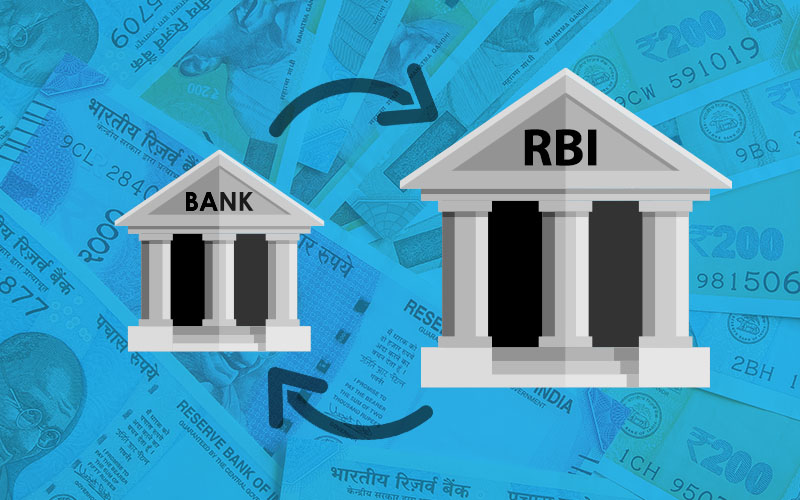
Inflation, Monetary Policy and RBI
Understanding RBI’s KEY TERMS used to define MONEY SUPPLY
The Reserve Bank of India at times uses terms like withdrawal of accommodation, neutral, hawkish and others. What does this all mean?
RBI’s ‘NEUTRAL’ means
A neutral stance indicates that the RBI maintains flexibility in adjusting policy rates based on prevailing economic conditions. This means that the central bank is open to either increasing or decreasing interest rates, depending on data related to inflation and economic growth.
The neutral stance is generally adopted when both inflation control and economic growth are given equal priority, allowing for adjustments in either direction as new information arises.
It maintains a balanced focus, placing equal weightage on managing inflation while also supporting economic growth. Additionally, the RBI provides market guidance, signalling that rate changes could occur depending on incoming data, ensuring transparency and responsiveness to economic conditions.
What is RBI’s ‘ACCOMODATION’?
It means RBI is willing to accommodate or adjust to the present money supply and also plans to increase money supply to boose demand. It means that the RBI is liberal with the present inflation and money supply.
If RBI plans to accommodate, it will cut the Repo rates so that the interest rates fall and credit uptake in the economy takes place. Reserve Bank of India maintained an accommodative stance to support the economy, particularly during the Covid-19 pandemic.
What is ‘WITHDRAWL OF ACCOMODATION’?
In contrast, a withdrawal of accommodation refers to a more restrictive monetary policy stance where the RBI aims to reduce the money supply in the economy. This involves increasing interest rates to curb inflationary pressures. When the RBI withdraws accommodation, it signals that it is less inclined to support any further money supply or inflation. It lowers economic growth as money supply falls.
This policy is aimed at tightening the monetary policy to reduce liquidity in the economy. It prioritises keeping inflation within the target levels and indicates a shift away from policies that encourage borrowing and spending.
What is a ‘HAWKISH’ stance of the RBI?
A hawkish stance reflects the central bank’s focus on controlling inflation. During this stand, RBI may not change the interest rates but is very watchful of the inflation and the level of money supply in the Economy.
What decision it would take actually depends upon the data RBI finds. However during such periods, the central bank is likely to raise interest rates to limit the money supply and dampen demand. In this phase, interest rate cuts are almost out of the question. When the central bank raises rates or tightens its monetary policy, commercial banks follow suit by increasing loan interest rates, which helps reduce demand in the financial system.
What does ‘CALIBERATED TIGHTENING’ mean?
Another commonly used term is ‘calibrated tightening’. This indicates that while rate cuts are not being considered in the current policy cycle, any rate increases will be gradual and measured. The central bank might not opt for a rate hike in every policy meeting, but its stance leans towards tightening. Rate adjustments can also occur outside scheduled policy meetings if necessary.
About author

Zinkpot — We Inform, You Perform.
Ask Anything, Know Better
अपना प्रश्न पूछें
-
RBI may approve 1-3% provisioning floor for stage-2 loans under ECL framework: Sources
November 17 BUSINESS LINE : The Reserve Bank of India could consider approving bankers’ request to lower the provisioning requirement on stage-2 loans to 1-3 per cent from proposed 5 per cent under the draft expected credit loss (ECL) guidelines, sources say. ABOUT ECL? CLICK HERE ABOUT PROVISIONING? CLICK HERE NEWS LINK
-
Upto 4 nominees? अब आपका पैसा किसे मिलेगा?
October 24
-
What are unclaimed deposits with Banks?
September 24 What Are Unclaimed Bank Deposits? Unclaimed deposits are balances lying in savings accounts, fixed deposits, recurring deposits, or other bank accounts that have had no customer activity for 10 years or more. After this period, banks are required to transfer these amounts to the Depositor Education and Awareness Fund (DEAF), maintained by the Reserve Bank of India (RBI). Importantly, these deposits are not forfeited. Depositors or their legal heirs can still claim the money at any time through the bank, which then seeks...
-

About RBI's Consumer Confidence Survey
August 29 WHAT? Consumer confidence is an economic indicator that gauges how optimistic or pessimistic consumers feel about the economy and their personal financial situation. RBI's Consumer Confidence Survey (CCS) is conducted bi-monthly. RBI’s CCS assesses perceptions and outlook on key economic parameters such as the general economic situation, employment, income, prices, and spending behavior. It produces two key indices: Current Situation Index (CSI) – Measures consumer sentiment about the...
-
Cheques to clear within hours from October 4, says RBI
August 16 WHAT? The Reserve Bank of India (RBI) has announced a new mechanism to expedite cheque clearing, effective October 4, 2025, reducing the clearance time from the current T+1 days (up to two working days) to a few hours. The Cheque Truncation System (CTS) will transition from batch processing to continuous clearing with on-realisation-settlement, improving efficiency, reducing settlement risks, and enhancing customer experience. Implementation Phases Phase 1 (October 4, 2025 – January 2, 2026):...
-
What is RBI's Financial Inclusion Index (FI-Index)?
July 23 WHAT? The Reserve Bank of India (RBI) publishes the Financial Inclusion Index (FI-Index) annually to measure the extent of financial inclusion across India. Financial inclusion means including more and more people in the formal banking network. The FI-Index is a comprehensive metric that quantifies financial inclusion on a scale from 0 (complete financial exclusion) to 100 (full financial inclusion). It incorporates 97 indicators across banking, investments, insurance, postal, and pension sectors, developed in...
-

What is a Variable Reverse Repo Rate (VRRR)?
June 24 WHAT? The reverse repo rate is the interest rate at which the RBI borrows short-term funds from commercial banks, effectively absorbing excess liquidity usually at a fixed rate as determined by the RBI. A Variable Reverse Repo Rate (VRRR) is a monetary policy tool used by the Reserve Bank of India (RBI) to manage liquidity in the banking system in which the "variable" aspect refers to a mechanism where the rate is determined through auctions, allowing flexibility in the interest rate based on market...
-
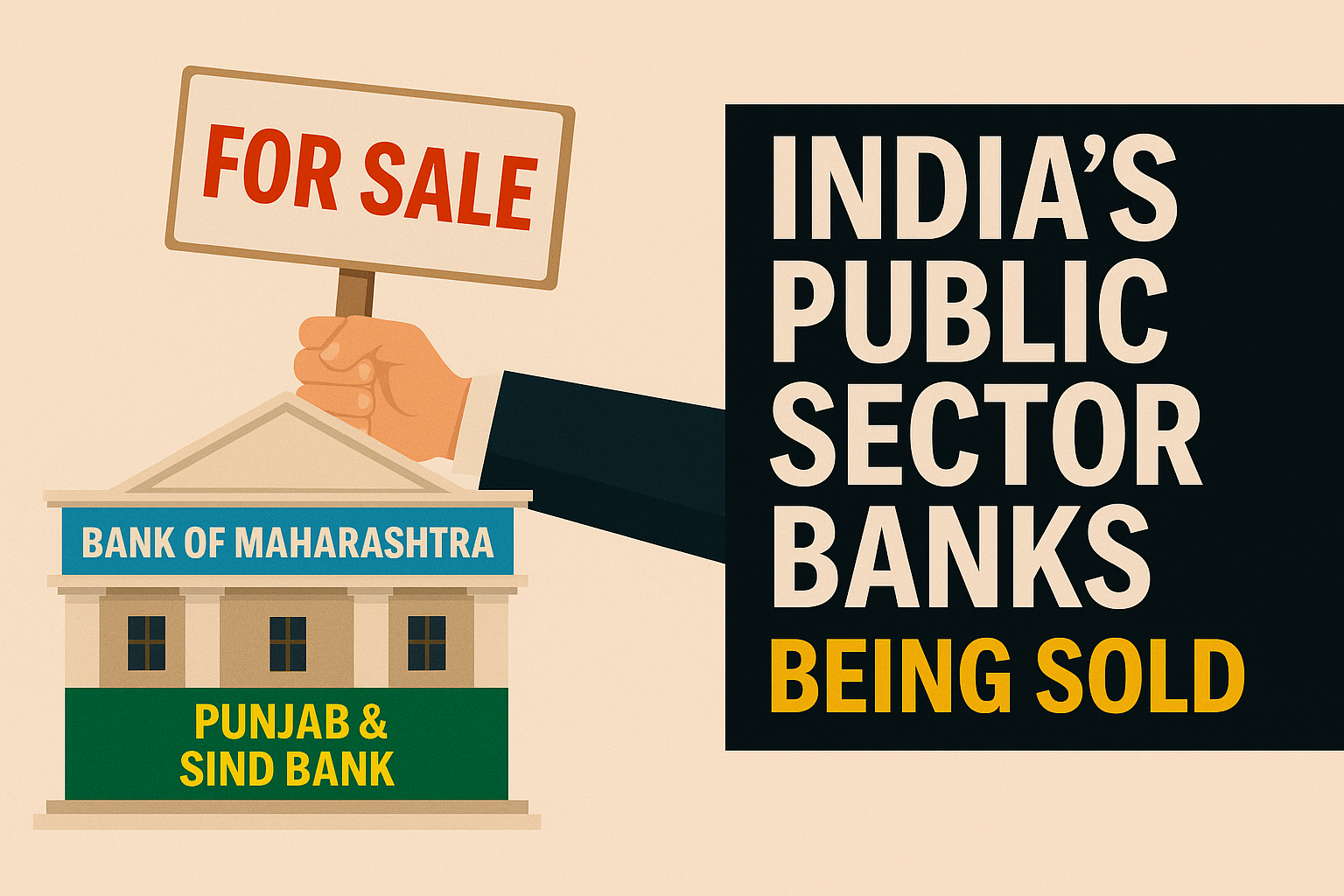
In which Banks the government is selling it's stake? Why? How would it sell?
June 17 WHAT? The Indian government is accelerating its disinvestment drive by planning to sell up to 20% stake in five public sector banks (PSBs) within the next six months, utilizing Qualified Institutional Placement (QIP) and Offer for Sale (OFS) routes. This move aims to raise capital, improve bank governance, and ensure compliance with the Securities and Exchange Board of India’s (SEBI) minimum public shareholding (MPS) norm of 25%. The initiative is part of a broader strategy to strengthen the financial health of...
-
RBI makes KYC easier: Banks must send three reminders before account freeze
June 13 SUMMARY The Reserve Bank of India (RBI) issued new directives on June 12, 2025, to simplify the Know Your Customer (KYC) process, as reported by Business Standard. Key points Mandatory Notifications: Banks must send at least three advance written reminders before the KYC update deadline and three additional reminders, including one physical letter, if the update is not completed post-deadline. These must include clear instructions, support channels, and consequences of non-compliance. Banks are...
-
Indian Households are in deep debt? How much is that?
June 12 HOW MUCH IS THE DEBT? India’s household debt has become a growing concern, with recent data showing a significant rise in borrowing. By June 2024, household debt reached 42.9% of GDP, as reported by the Reserve Bank of India (RBI) in its Financial Stability Report (December 2024), a sharp increase from 37.6% in March 2023 and well above the pre-pandemic average of 33% (2015-2019). The government’s push for financial inclusion has increased credit access, but without addressing income inequality or...
Comments
Write Comment