IMF
What is World Trade Uncertainty (WTU) Index?
WHAT?
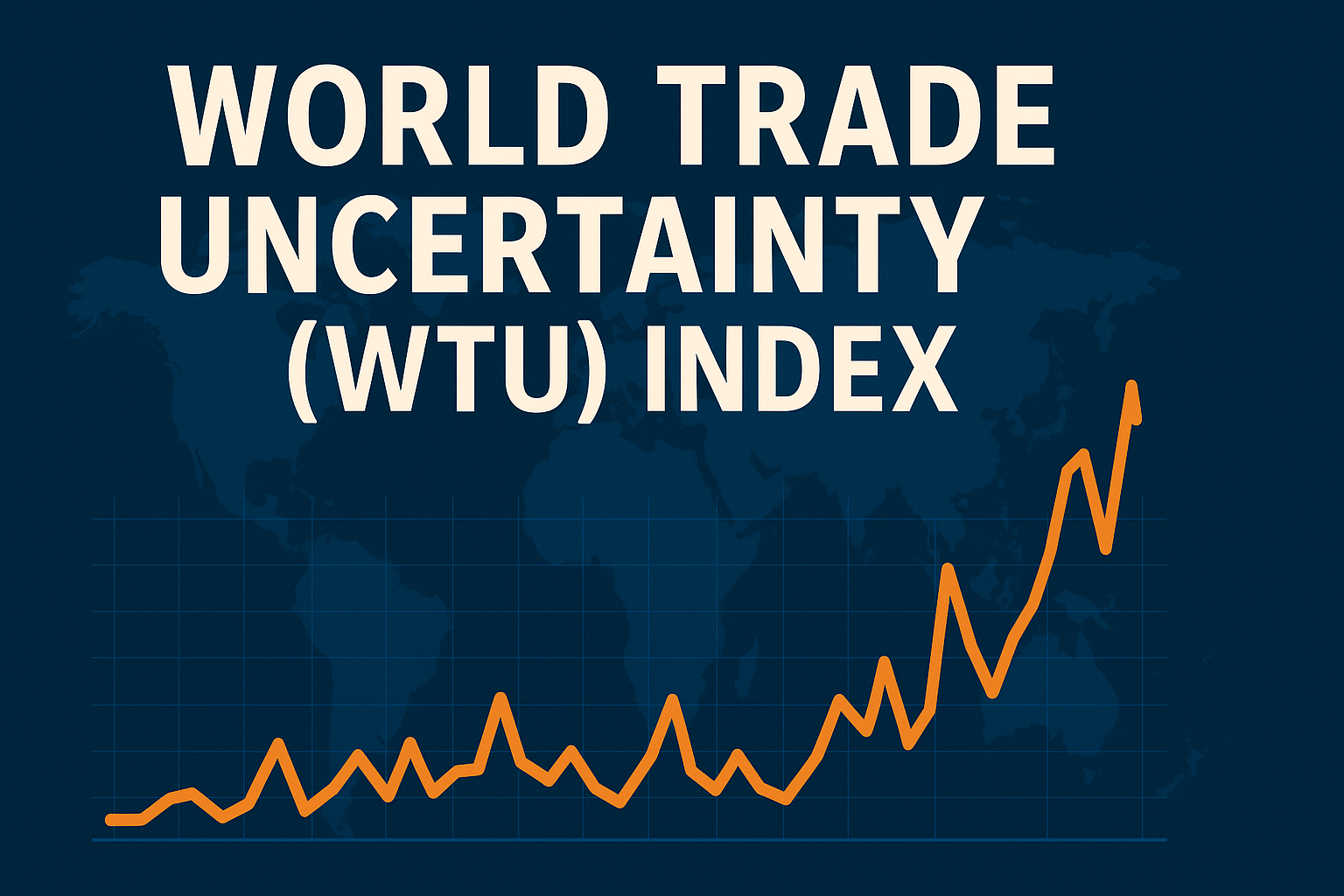
The World Trade Uncertainty Index is a global economic indicator developed by the International Monetary Fund (IMF) to measure uncertainty related to trade policy across countries and over time. It is published by International Monetary Fund (IMF) and Updated quarterly, available on the IMF's official website.
What Does It Measure?
The WTU Index quantifies trade-related uncertainty by analyzing the frequency of terms related to "trade" and "uncertainty" in the Economist Intelligence Unit (EIU) country reports. A higher value of the index indicates greater uncertainty in trade policy, which can affect Investment decisions, Trade flows, Economic growth and global supply chains.
How It’s Constructed?
- Texts are drawn from EIU country reports for 143 countries
- Instances of words like "uncertainty", "tariffs", "trade tensions" are counted
- The count is scaled to adjust for the length of each report
- Index values are aggregated by region and globally
Why Is It Important?
Provides real-time insights into how trade policy developments (e.g., tariffs, sanctions, trade wars) affect global confidence. Helps central banks, businesses, and policymakers adjust forecasts and policies. It became especially relevant during:
- The US-China trade war (2018–2019)
- Brexit negotiations
- COVID-19 supply chain disruptions
What are Economist Intelligence Unit (EIU) country reports?
The Economist Intelligence Unit (EIU) is the research and analysis division of The Economist Group, the publisher of The Economist magazine. The EIU Country Reports are in-depth monthly or quarterly reports that provide economic, political, and business intelligence on over 190 countries. EIU Country Reports offer: Detailed analysis of each country's political climate, economic performance, policy environment, and risk factors
Forecasts for key indicators like:
- GDP growth
- Inflation
- Trade and investment
- Exchange rates
- Fiscal performance
- Sectoral trends including energy, banking, industry, and consumer markets
About author

Zinkpot — We Inform, You Perform.
Ask Anything, Know Better
अपना प्रश्न पूछें
-
कितना पैसा PAKISTAN अब तक उधार ले चुका है?
November 02
-
India was right! Pakistan misses IMF loans conditions again
August 15 WHAT? India's Stand Vindicated as Pakistan Misses IMF Loan Conditions Again.Pakistan has failed to meet three out of five key targets set by the International Monetary Fund (IMF) for the second review of its $7 billion bailout package, reinforcing India's long-standing concerns about Islamabad's poor track record in implementing IMF reforms and the potential misuse of funds. This development highlights persistent structural and fiscal weaknesses in Pakistan's economy, including revenue shortfalls and unchecked...
-
Difference between FTA and BTA in trade
July 23 WHAT? The terms Free Trade Agreement (FTA) and Bilateral Trade Agreement (BTA) are often used in the context of international trade, but they have distinct meanings and implications. Below is a clear explanation of the differences based on their definitions, scope, and application. Free Trade Agreement (FTA) An FTA is a treaty between two or more countries to reduce or eliminate trade barriers, such as tariffs and quotas, to facilitate the free flow of goods and services. FTAs aim to create a free trade...
-

What is Agreement on Safeguards under WTO?
June 04 WHAT? The Agreement on Safeguards (AoS) is a World Trade Organization (WTO) agreement that governs the use of safeguard measures — temporary import restrictions that a country can impose when a sudden surge in imports causes serious injury to its domestic industry. It is one of the key agreements under the Uruguay Round (1995) of WTO. Purpose of the Agreement To ensure that the safeguard measures: Are applied transparently and fairly Are temporary and non-protectionist Are based on clear...
-
What are IMF's lending instruments?
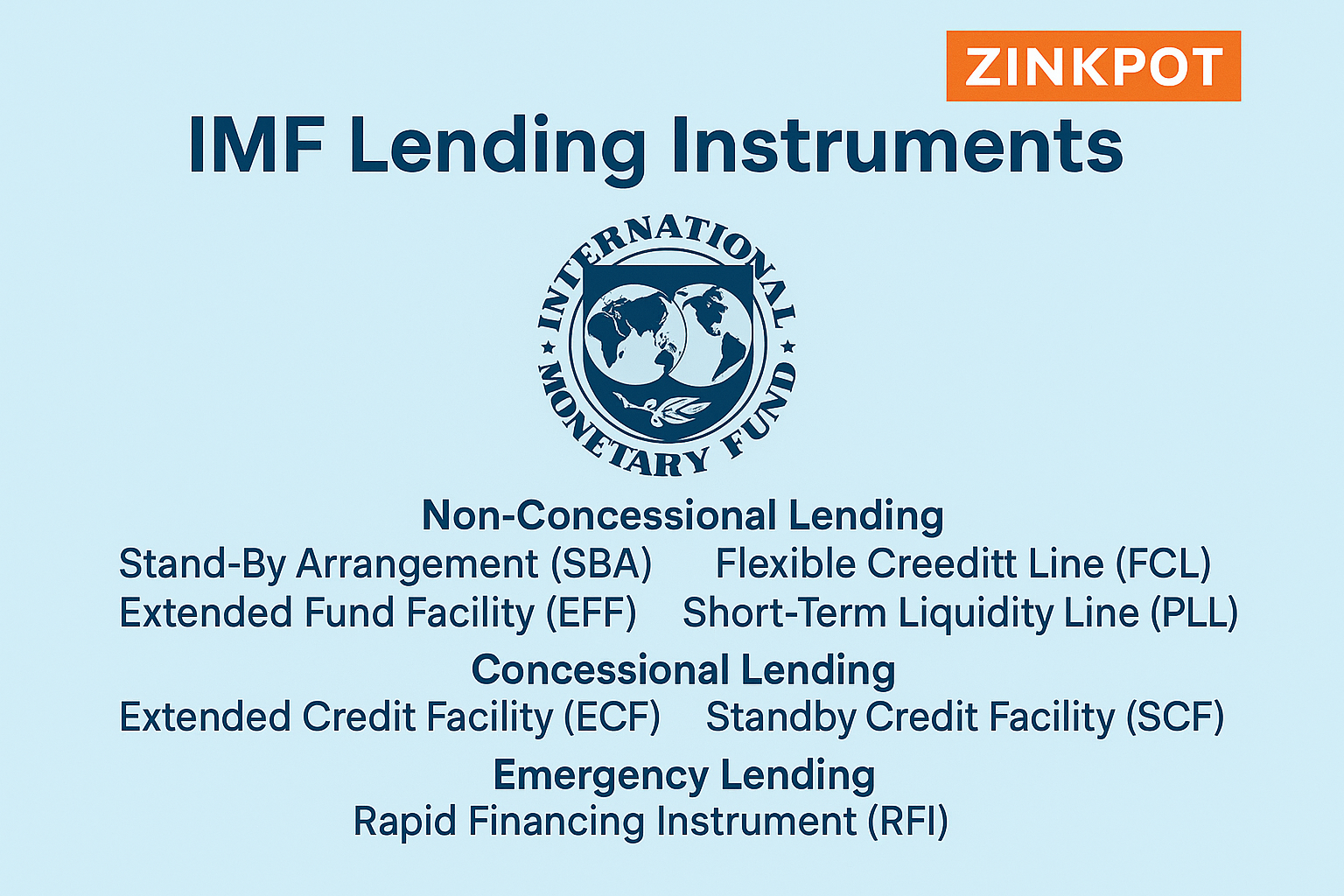
June 01 The IMF (International Monetary Fund) offers a range of lending instruments to help countries address balance of payments problems, stabilize economies, and implement reforms. These instruments differ by purpose, conditions, and repayment terms. Non-Concessional Lending (for middle- & upper-income countries) 1. Stand-By Arrangement (SBA) : Up to 3 years but usually 12-18 months Used for: Present, prospective, or potential balance of payments need, Short-term balance of payment needs Duration:...
-
India’s forex reserves surge by $6.99 billion to $692.72 billion in week-long rally
May 31 SUMMARY India's foreign exchange reserves experienced a significant increase of $6.99 billion, reaching a total of $692.72 billion for the week ending May 23, 2025, according to data released by the Reserve Bank of India (RBI) . Key Components of the Increase Foreign Currency Assets (FCA): The largest component of the reserves, FCAs rose by $4.52 billion to $586.17 billion. These assets are influenced by the valuation changes of major currencies like the euro, pound, and yen against the US...
-
FDI at an all-time low: Reasons for downfall and why experts predict a turnaround soon
May 28 SUMMARY Net FDI means the difference of FDI received in India and the FDI sent from India. India's net Foreign Direct Investment (FDI) experienced a significant decline of 96.5% in the fiscal year 2024–25, dropping to just $353 million from $10 billion the previous year, marking the lowest level on record. India received a gross FDI of $81 billion in FY25. Key Reasons for the Decline Increased Repatriation and Outward Investments: While gross FDI inflows rose to $81.1 billion, up...
-
What is Tariff Rate Quota (TRQ)?
May 20 DEFINITION Tariff Rate Quota (TRQ) is a trade policy tool that allows a specified quantity of a product to be imported at a lower tariff rate, while quantities above that threshold are subject to higher tariffs. Example: India allows import of 100,000 tonnes of maize at 15% tariff (TRQ). Any import beyond 100,000 tonnes is charged 60% tariff. Directorate General of Foreign Trade (DGFT) issues TRQ licenses and Customs authorities enforce tariffs at the borders. Purpose of TRQs Protect...
-
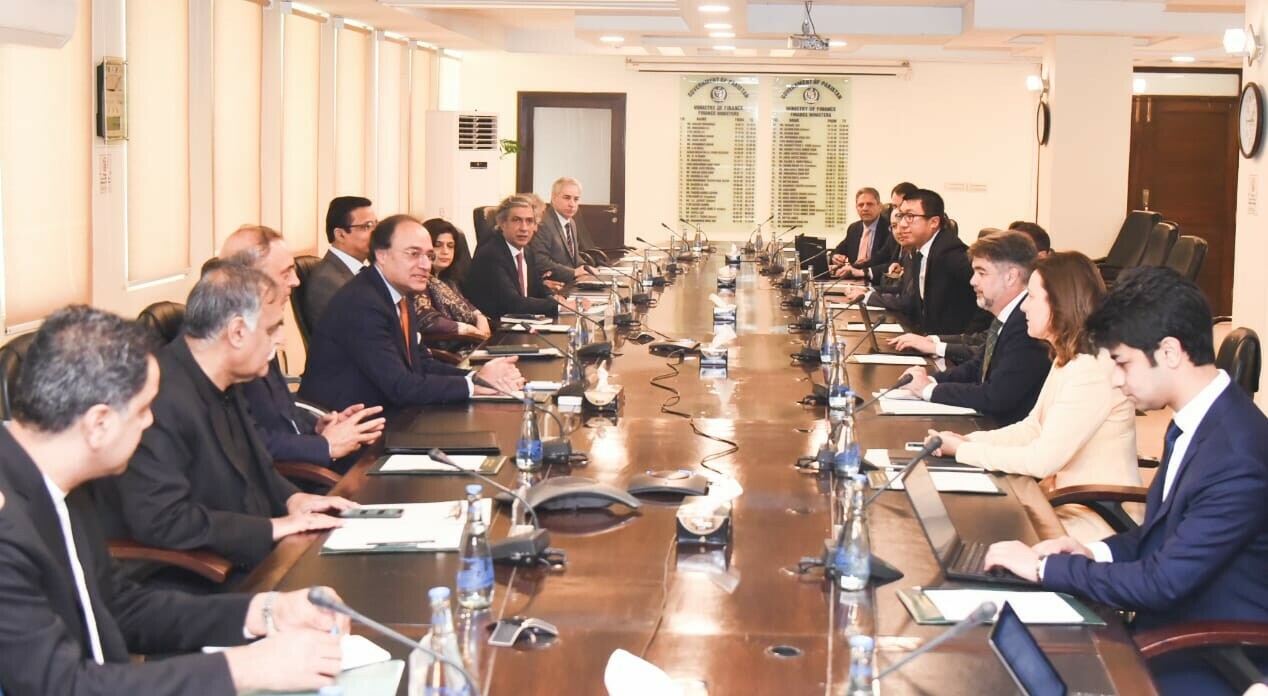
Major differences between EFF, SBA and RFI facilities of IMF
May 10 Feature Extended Fund Facility (EFF) Stand-By Arrangement (SBA) Rapid Financing Instrument (RFI) Main Purpose Medium- to long-term assistance for countries with structural issues and persistent balance of payments (BoP) problems. Short-term help to resolve temporary BoP gaps, including shocks like commodity price swings. Immediate financial support for countries facing urgent BoP needs (e.g. disasters, pandemics). Launched 1974 1952 (modern...
-
What is the Extended Fund Facility (EFF) of the IMF?
May 10 WHAT? The Extended Fund Facility (EFF) is one of the key lending instruments of the International Monetary Fund (IMF), designed to assist countries facing serious medium- to long-term balance of payments problems due to structural weaknesses. DETAILS ABOUT EEF Purpose : Support economic programs to overcome structural issues and stabilize the economy. Launched : 1974 Loan Duration : Typically 3 to 4 years (can be extended to 5). Repayment Period : Starts 4.5 years after...
Comments
Write Comment