CURRENT NEWS
RBI rate cut: What it means for your money and how you should invest now
SUMMARY
The article from Business Standard, published on June 9, 2025, titled "RBI rate cut: What it means for your money and how you should invest now," discusses the implications of a recent 25-basis-point rate cut by the Reserve Bank of India (RBI), bringing the repo rate to 6.25%.
Key points
- Impact on Borrowing and Savings: Lower rates reduce borrowing costs, benefiting home loan and personal loan borrowers (e.g., EMIs may decrease). However, savings accounts and fixed deposits (FDs) will see lower returns, with top banks offering 6-7% on FDs, down from 7-8%.
- Debt Instruments: Experts recommend locking into longer-term FDs or debt mutual funds (e.g., dynamic bond funds) to secure higher yields before rates fall further. Government securities and corporate bonds are also suggested.
- Equities: Lower rates typically boost equity markets by reducing corporate borrowing costs, making growth stocks attractive. Sectors like real estate, banking, and consumer durables may benefit.
- Gold: With global rate cuts (e.g., U.S. Fed’s recent cut), gold prices may rise, making it a good hedge against inflation.
- Economic Context: The RBI’s cut, the first since 2023, aims to spur growth amid slowing inflation (projected at 4.5% for FY26) and global rate easing. However, risks like geopolitical tensions and monsoon variability remain.
- Advice: Balance portfolios with a mix of equities (for growth), debt (for stability), and gold (for hedging). Avoid over-leveraging despite cheaper loans, as economic uncertainties persist.
About author

Zinkpot — We Inform, You Perform.
Ask Anything, Know Better
अपना प्रश्न पूछें
-
RBI may approve 1-3% provisioning floor for stage-2 loans under ECL framework: Sources
November 17 BUSINESS LINE : The Reserve Bank of India could consider approving bankers’ request to lower the provisioning requirement on stage-2 loans to 1-3 per cent from proposed 5 per cent under the draft expected credit loss (ECL) guidelines, sources say. ABOUT ECL? CLICK HERE ABOUT PROVISIONING? CLICK HERE NEWS LINK
-
FREE Credit Card का सच!
October 25
-
What is the Cheque Truncation System (CTS)?
August 22 WHAT? The Cheque Truncation System (CTS) is a process introduced by the Reserve Bank of India (RBI) to streamline and expedite cheque clearing by replacing the physical movement of cheques with digital images and electronic data. It enhances efficiency, reduces costs, and minimizes risks associated with traditional cheque processing. CTS is an electronic cheque-clearing system where the physical cheque is "truncated" (stopped) at the presenting bank, and its digital image, along with relevant data (e.g.,...
-
Cheques to clear within hours from October 4, says RBI
August 16 WHAT? The Reserve Bank of India (RBI) has announced a new mechanism to expedite cheque clearing, effective October 4, 2025, reducing the clearance time from the current T+1 days (up to two working days) to a few hours. The Cheque Truncation System (CTS) will transition from batch processing to continuous clearing with on-realisation-settlement, improving efficiency, reducing settlement risks, and enhancing customer experience. Implementation Phases Phase 1 (October 4, 2025 – January 2, 2026):...
-
What is a Forward Rate Agreement (FRA)?
August 13 WHAT? A Forward Rate Agreement (FRA) is a financial contract between two parties to lock in an interest rate for a future period, used primarily to hedge against or speculate on interest rate fluctuations. It is an over-the-counter (OTC) derivative instrument, meaning it is customized and not traded on exchanges. An FRA is an agreement to exchange a fixed interest rate for a floating interest rate (based on a reference rate like MIBOR in India or SOFR globally) on a notional amount for a specified future period. It is...
-
What is NARCL, a government bad bank?
August 04 WHAT? The National Asset Reconstruction Company Limited (NARCL), often referred to as India’s “bad bank,” was established to address the issue of non-performing assets (NPAs) in the Indian banking system. It was announced in the Union Budget 2021–22 and incorporated on July 7, 2021, under the Companies Act, 2013, with registration as an Asset Reconstruction Company (ARC) under the Securitisation and Reconstruction of Financial Assets and Enforcement of Security Interest (SARFAESI) Act,...
-
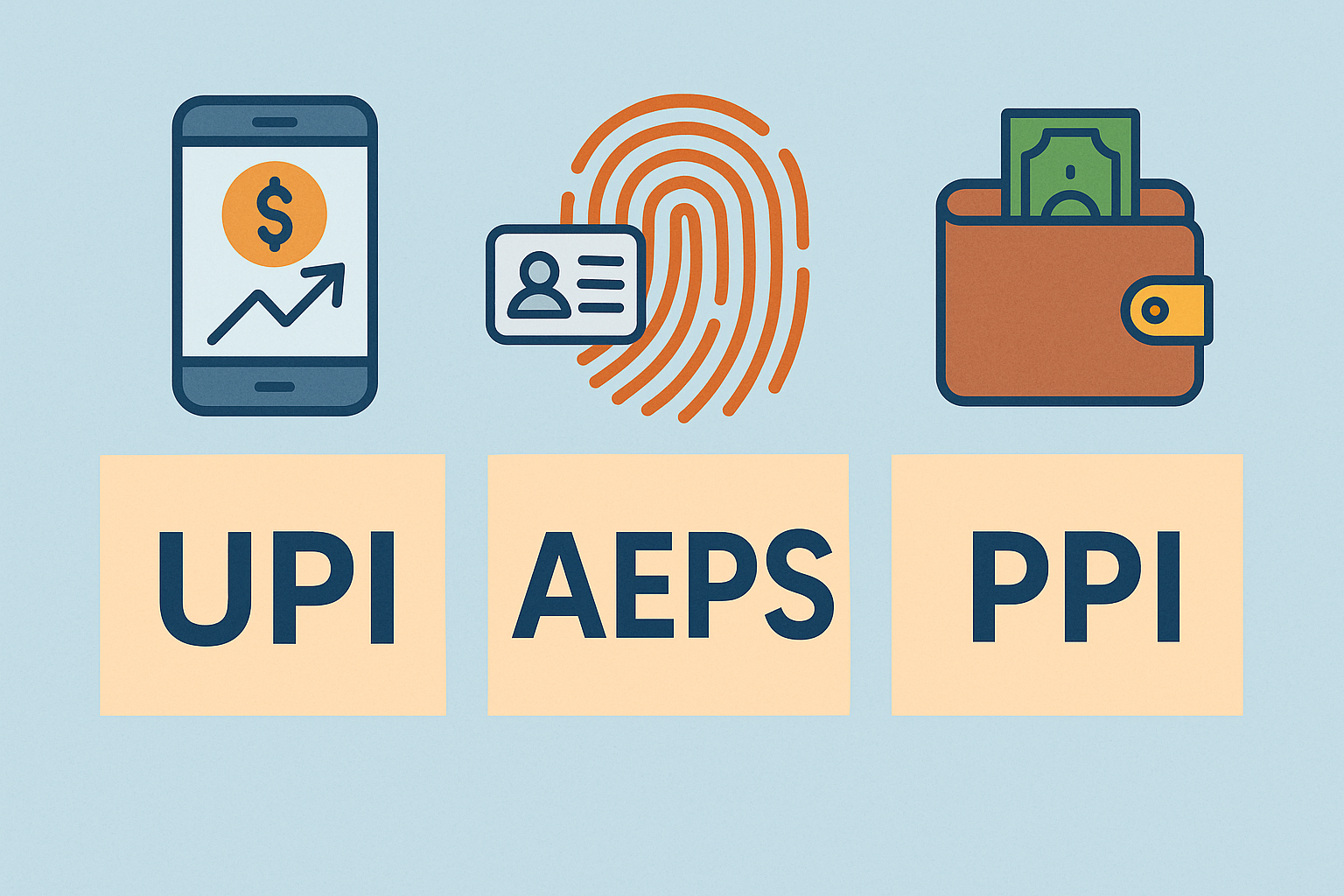
Difference between UPI, AEPS and PPI payment technologies
July 07 WHAT? The Unified Payments Interface (UPI), Aadhaar Enabled Payment System (AEPS), and Prepaid Payment Instruments (PPI) are distinct digital payment systems in India, each serving unique purposes and user bases. Differences Aspect Unified Payments Interface (UPI) Aadhaar Enabled Payment System (AEPS) Prepaid Payment Instruments (PPI) Definition Real-time mobile-based payment system enabling instant bank-to-bank transfers using Virtual Payment Addresses...
-
Difference between Gross NPA (GNPA) and Net NPA (NNPA)
July 02 WHAT? Gross Non-Performing Assets (Gross NPA) and Net Non-Performing Assets (Net NPA) are key indicators of the health of a bank's loan portfolio in India, reflecting the level of bad loans or assets that have stopped generating income. Gross NPA Banks extend loans to the borrowers and since these loans earns interest for the banks, they are considered Bank Assets. Banks expect a return on these assets like interest income. But if the borrower doesnt pay it's due principal or interest or both on...
-
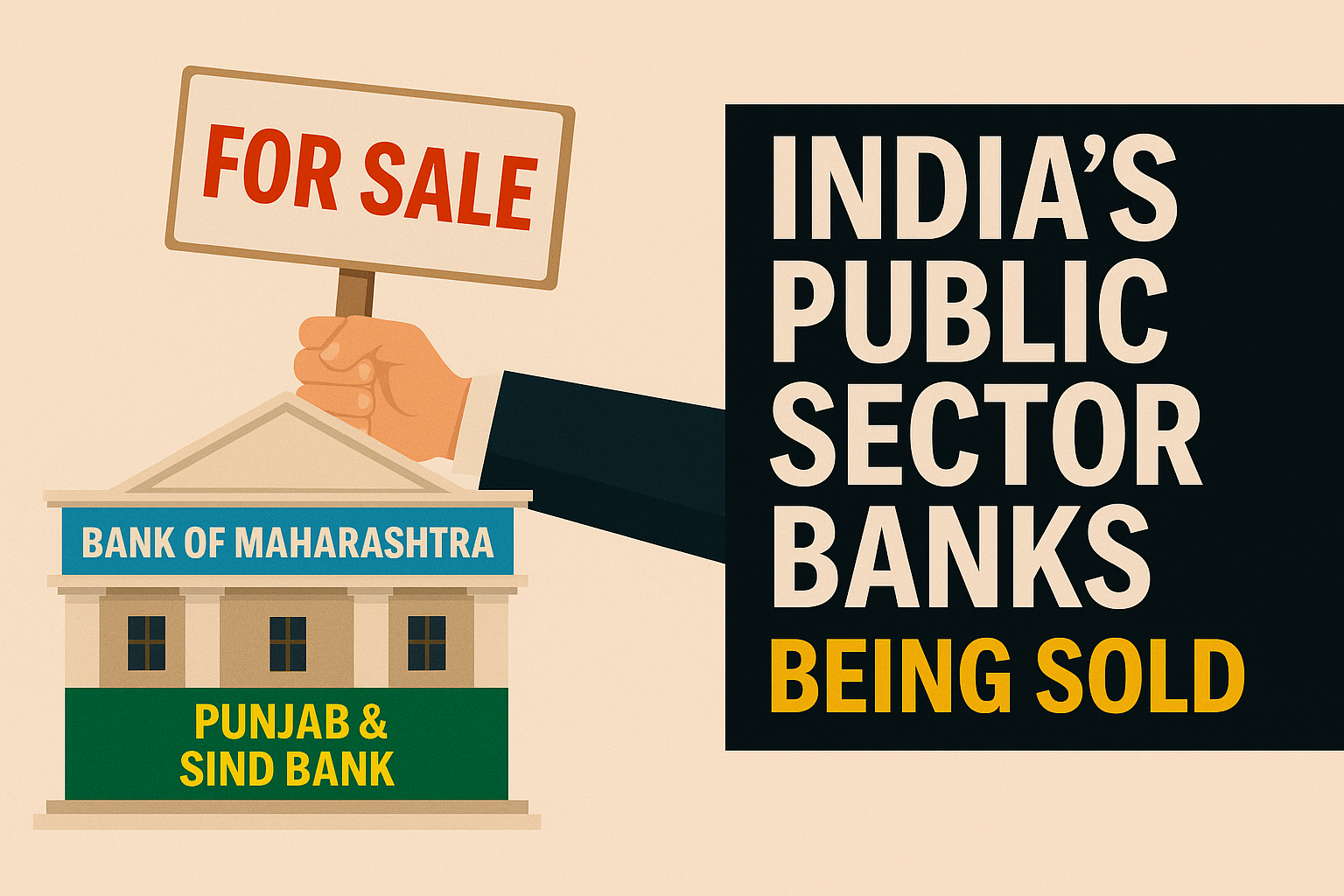
In which Banks the government is selling it's stake? Why? How would it sell?
June 17 WHAT? The Indian government is accelerating its disinvestment drive by planning to sell up to 20% stake in five public sector banks (PSBs) within the next six months, utilizing Qualified Institutional Placement (QIP) and Offer for Sale (OFS) routes. This move aims to raise capital, improve bank governance, and ensure compliance with the Securities and Exchange Board of India’s (SEBI) minimum public shareholding (MPS) norm of 25%. The initiative is part of a broader strategy to strengthen the financial health of...
-
RBI makes KYC easier: Banks must send three reminders before account freeze
June 13 SUMMARY The Reserve Bank of India (RBI) issued new directives on June 12, 2025, to simplify the Know Your Customer (KYC) process, as reported by Business Standard. Key points Mandatory Notifications: Banks must send at least three advance written reminders before the KYC update deadline and three additional reminders, including one physical letter, if the update is not completed post-deadline. These must include clear instructions, support channels, and consequences of non-compliance. Banks are...
Comments
Write Comment