About author

Zinkpot — We Inform, You Perform.
Ask Anything, Know Better
अपना प्रश्न पूछें
-
कितना पैसा PAKISTAN अब तक उधार ले चुका है?
November 02
-
Pakistan’s Outreach to Bangladesh: A Response to India-Afghanistan Ties?
October 28 Background In recent months, Pakistan has been working hard to build stronger ties with Bangladesh. This comes at a time when India and Afghanistan are becoming closer friends, which worries Pakistan. Relations between Pakistan and Bangladesh have been uneasy for decades since Bangladesh’s independence in 1971, when it separated from Pakistan after a bloody war that India supported. Since then, ties have often been cold — marked by mistrust, limited trade, and political tension. However, in recent years, Pakistan has started...
-
EU’s Carbon Border Adjustment Mechanism (CBAM)
October 28 Introduction The Carbon Border Adjustment Mechanism, or CBAM, is a new policy from the European Union (EU) to help fight climate change. It puts a price on the carbon pollution created when making certain goods that are imported into the EU. This encourages countries outside the EU to make their industries cleaner. CBAM is a smart step by the EU to make global trade greener and fairer. By pricing carbon on imports, it pushes everyone toward cleaner ways of making things. As it moves from testing to full action in 2026, businesses worldwide...
-
India welcomes Taliban!
October 11 Context In a major shift in its foreign policy, India has announced it will upgrade its presence in Afghanistan by turning its "technical mission" in Kabul into a full embassy. This move comes after a high-level visit by Taliban Foreign Minister Amir Khan Muttaqi to New Delhi—the first such trip by a senior Taliban leader since they took power in 2021. While India hasn't officially said it "recognizes" the Taliban government yet, experts call this a clear sign of closer...
-
Why is European union not imposing tariff on India for buying Russian Crude?
August 28 CONTEXT The European Union (EU) has not imposed broad tariffs or secondary sanctions directly on India for purchasing Russian oil, unlike the recent U.S. actions under President Trump, who added a 25% tariff on Indian goods (bringing the total to 50% in some cases) as punishment for India's oil imports from Russia. Instead, the EU's approach focuses on targeting Russia's energy sector and closing loopholes in the supply chain without broadly penalizing third-country buyers like India. This strategy aims to weaken...
-

What are Currency Swap Agreements?
August 20 WHAT? A currency swap involves two parties exchanging a specified amount of one currency for another at an agreed exchange rate, with a commitment to reverse the transaction at a future date, often at the same rate plus interest. Currency swap agreements are financial arrangements between two central banks or monetary authorities to exchange their respective currencies up to a pre-agreed amount, typically to provide liquidity, stabilize exchange rates, or support trade and investment. Swaps are typically short-term...
-
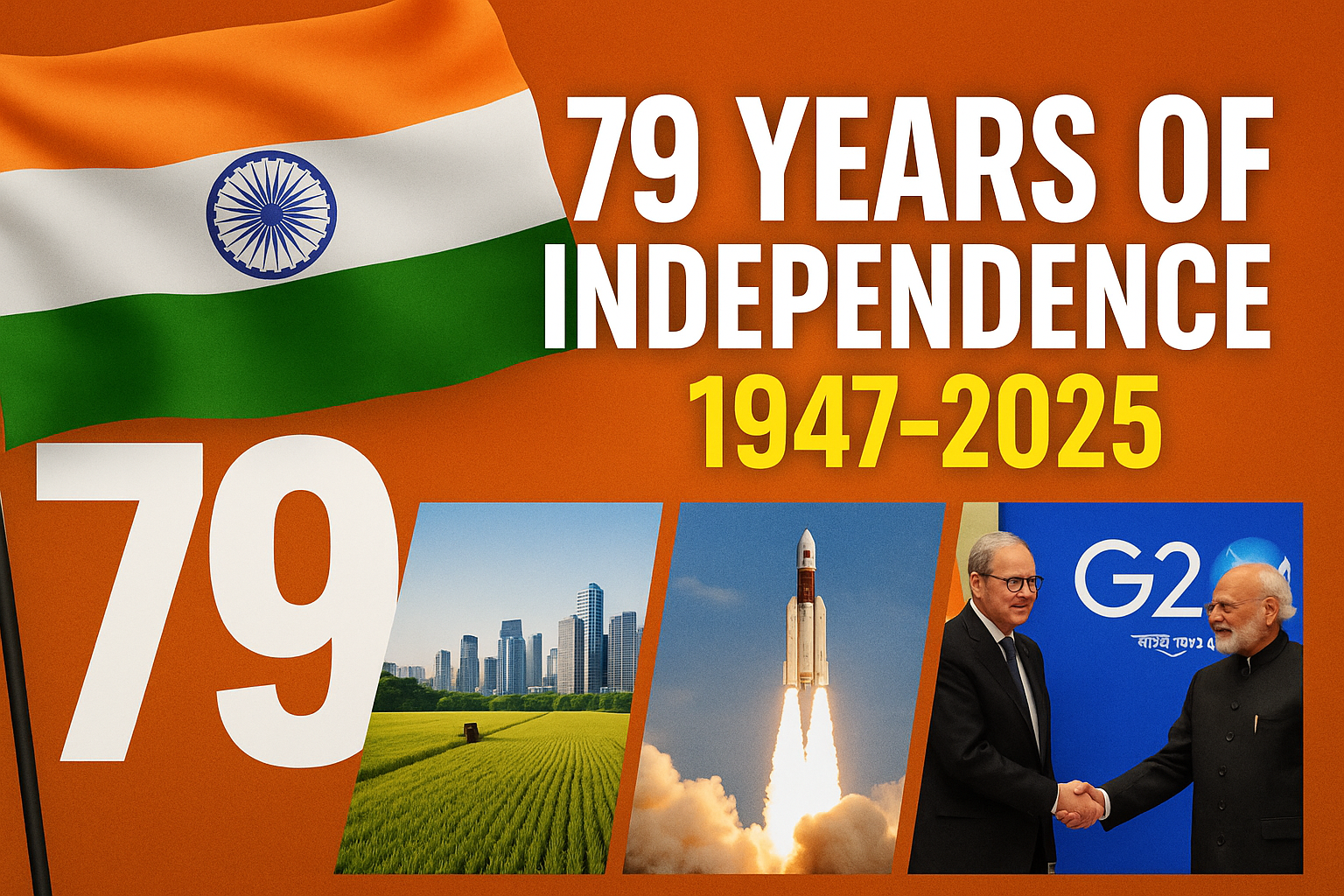
79th INDEPENDENCE DAY : What has INDIA achieved so far?
August 15 CONTEXT India gained independence from British rule on August 15, 1947, marking the beginning of a transformative journey from a colonized nation grappling with poverty, partition trauma, and economic fragility to a global powerhouse. Over the past 79 years (up to August 2025), India has made remarkable strides across multiple sectors, overcoming challenges like famines, wars, and internal conflicts while building a vibrant democracy. Key milestones include economic growth, scientific advancements, social...
-
PAKISTAN पर पहले गरीबी और अब भारी बाढ़ की मार!
July 06
-
India in talks with Japan, Vietnam on rare earth imports: Kumaraswamy
June 24 SUMMARY India's strategic efforts to reduce its heavy dependence on China for rare earth elements, which are vital for manufacturing electric vehicles (EVs), wind turbines, electronics, and other clean energy technologies. Strategic Efforts Import Dependency and Sources: In FY25, India imported 3,020 tonnes of rare earth compounds, with China supplying 74% (2,232 tonnes), Japan 18% (554 tonnes), and Vietnam 7% (224 tonnes). This reliance on China, which dominates 85% of global rare earth...
-
Pakistan फंसा Geopolitical Trap में
June 20
Comments
Write Comment