Debt Market
What are State Development Loans (SDL)?
WHAT?
State Development Loans (SDLs) are bonds issued by state governments in India to raise funds for their developmental needs. These are long-term borrowings intended to finance infrastructure, welfare schemes, and cover fiscal deficits. Since state revenue is often insufficient to meet expenditure demands, SDLs help bridge the funding gap in a structured and regulated manner.
Although the SDLs are issued by state governments, the process is managed by the Reserve Bank of India (RBI), which conducts auctions on their behalf. These auctions take place on the RBI’s e-Kuber platform, typically on a fortnightly basis. The RBI acts as the facilitator but not the guarantor, meaning while it helps in issuance and repayment processes, the repayment responsibility lies with the issuing state.
Features of SDLs
SDLs are typically issued with a maturity period of 10 years, although other tenors may also be used. They carry a fixed interest rate (coupon), which is paid semi-annually to the bondholders. On maturity, the full principal amount is repaid. These bonds are tradable in the secondary market via platforms such as NSE, BSE, and NDS-OM, allowing investors the flexibility to exit before maturity if needed.
Who Can Invest?
A wide variety of investors can participate in SDLs. These include institutional investors such as banks, mutual funds, insurance companies, pension and provident funds. In recent years, retail investors have also gained access to SDLs through channels like the RBI Retail Direct portal and online bond marketplaces. This democratization of access has increased retail interest in government-backed instruments.
Benefits of SDLs
One of the biggest advantages of SDLs is their relative safety. While they are not directly guaranteed by the central government, their management by RBI gives them a quasi-sovereign character, which significantly reduces credit risk. Moreover, SDLs offer higher interest rates than central government securities (G-Secs), usually by 0.25% to 0.75%, making them attractive for yield-seeking investors. Banks also use them to fulfill Statutory Liquidity Ratio (SLR) requirements, which further enhances their demand and credibility.
DATA
In FY 2025–26, states have been aggressive in their borrowing. Between April and July 2025, Indian states borrowed ₹2.97 trillion via SDLs, a sharp increase from ₹2.14 trillion in the same period last year. States like Maharashtra, Andhra Pradesh, Telangana, Madhya Pradesh, and Tamil Nadu have led in raising funds. This surge reflects increasing expenditure on infrastructure and welfare, as well as proactive fiscal management by state governments.
How can one invest?
Retail investors can invest in SDLs using RBI’s Retail Direct platform, which allows individuals to open a gilt account and buy government securities directly. Additionally, platforms like NSE Bond, GoldenPi, and Zerodha offer SDL access through demat accounts. Many debt mutual funds, particularly gilt and conservative hybrid funds, also include SDLs in their portfolios — offering an indirect route for investors.
Risks
Despite their advantages, SDLs are not risk-free. Credit risk, though low, depends on the financial health of the issuing state. If a state is fiscally weak or defaults in payment, it may impact investor confidence. Additionally, SDLs are sensitive to interest rate fluctuations — if interest rates rise, the market value of existing SDLs can decline. Liquidity risk is also a factor; some state SDLs are less actively traded, making them harder to sell quickly in the secondary market.
About author

Zinkpot — We Inform, You Perform.
Ask Anything, Know Better
अपना प्रश्न पूछें
-
What is a Credit Default Swap (CDS)?
September 09 WHAT? A Credit Default Swap (CDS) is a type of financial derivative contract that acts like insurance against the default of a loan or bond. When an investor is concerned that a borrower (like a company or government) might default on its debt, the investor can buy a CDS from an institution e.g. a bank to protect itself. In return for a regular payment (called a premium), the seller of the CDS agrees to compensate the buyer of the CDS (the investor) if the borrower fails to repay. How Does a CDS...
-
What are 54EC Bonds?
August 29 WHAT? 54EC Bonds are a type of tax-saving bonds issued under Section 54EC of the Income Tax Act, 1961. The purpose is that if someone sells a long-term capital asset (like land, house, or building) and earns long-term capital gain (LTCG), they can invest the profit in these bonds and claim exemption from capital gains tax. Key Features of 54EC Bonds Who can invest : Individuals, HUFs, Companies, and Firms. Applicable only on long-term capital gains (not short-term). Eligible Bonds...
-

What are Dimsum Bonds?
August 24 WHAT? Dim sum bonds are a type of debt security issued outside of mainland China—primarily in Hong Kong—and denominated in Chinese renminbi (RMB, also known as yuan or CNY). They allow foreign investors to gain exposure to the RMB currency without directly accessing China's domestic bond market, which has historically been restricted to outsiders. The name "dim sum" is a playful reference to the popular bite-sized Chinese dishes often associated with Hong Kong cuisine, symbolizing the bonds'...
-
How would RBI cutting Repo and CRR impact everyone? Impact on FD, loans and investment?
June 15 RBI DECISIONS The Reserve Bank of India’s (RBI) recent monetary policy actions, including a 50 basis point (bps) repo rate cut to 5.5% on June 6, 2025, and a 100 bps Cash Reserve Ratio (CRR) reduction to 3% implemented in four 25-bps tranches starting September 2025. These measures aim to boost economic growth by increasing liquidity and lowering borrowing costs, but they also signal a potential decline in interest rates, affecting returns on fixed-income investments. The RBI’s repo rate cut to 5.5%...
-
Indian Households are in deep debt? How much is that?
June 12 HOW MUCH IS THE DEBT? India’s household debt has become a growing concern, with recent data showing a significant rise in borrowing. By June 2024, household debt reached 42.9% of GDP, as reported by the Reserve Bank of India (RBI) in its Financial Stability Report (December 2024), a sharp increase from 37.6% in March 2023 and well above the pre-pandemic average of 33% (2015-2019). The government’s push for financial inclusion has increased credit access, but without addressing income inequality or...
-
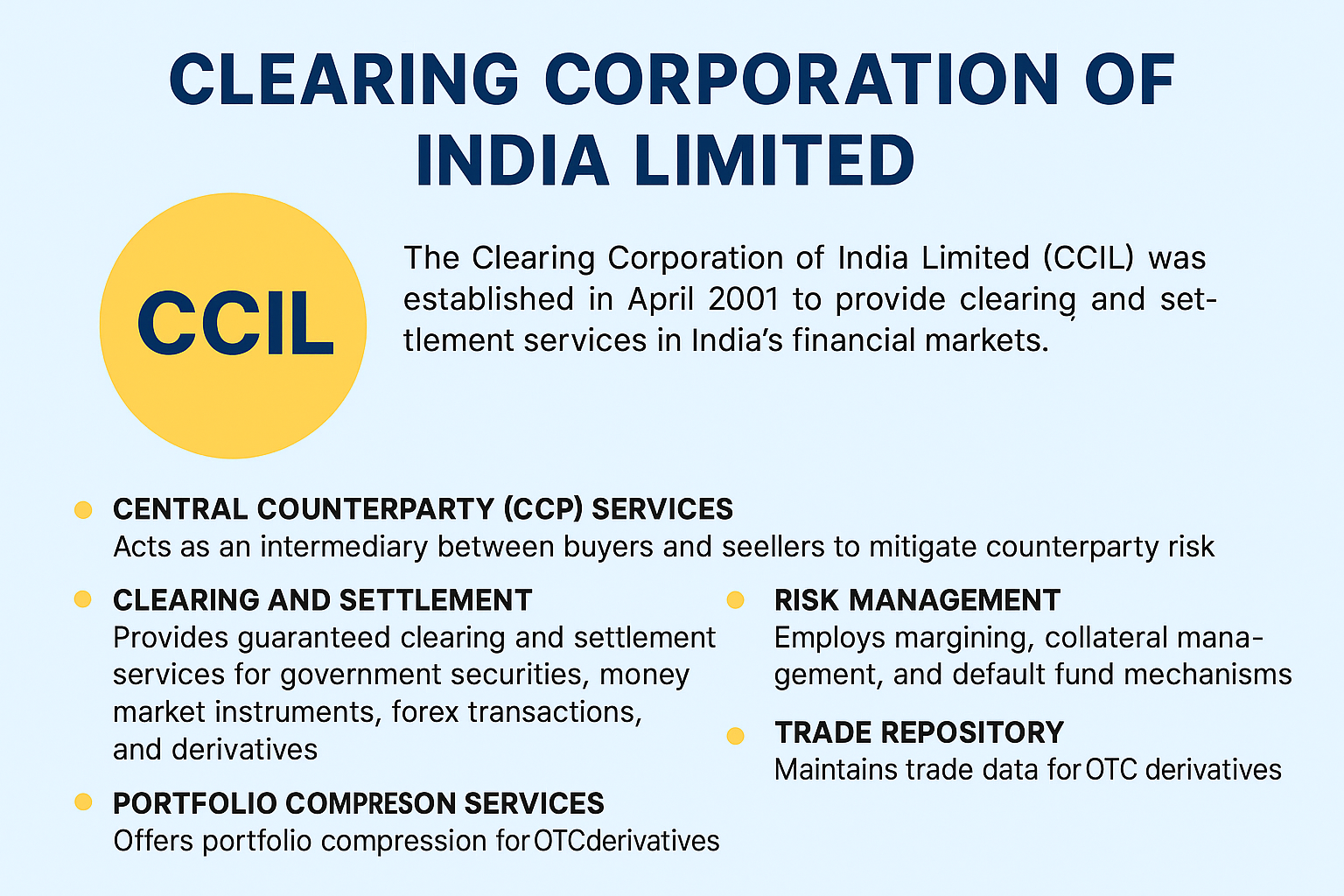
What are the functions of Clearing Corporation of India (CCIL)?
June 01 WHAT IS CCIL? The Clearing Corporation of India Limited (CCIL) is a pivotal institution in India's financial infrastructure, established in April 2001 to provide efficient clearing and settlement services across various financial markets. Recognized as a Qualified Central Counterparty (QCCP) by the Reserve Bank of India (RBI) in 2014, CCIL plays a critical role in ensuring the stability and integrity of the Indian financial system. BASIC DETAILS Established: 2001 Regulator: RBI (Reserve Bank of...
-
What is a Fully Accessible Route (FAR) in G-Secs?
June 01 WHAT IS FAR? The Fully Accessible Route (FAR) is a regulatory framework introduced by the Reserve Bank of India (RBI) and the Government of India in March 2020 to attract more foreign investment into Indian government securities (G-Secs). KEY FEATURES Feature Details Purpose To enable unrestricted access for Non-Resident Investors (FPIs) Eligible Securities Specific Government of India bonds are designated under FAR Access Type No...
-
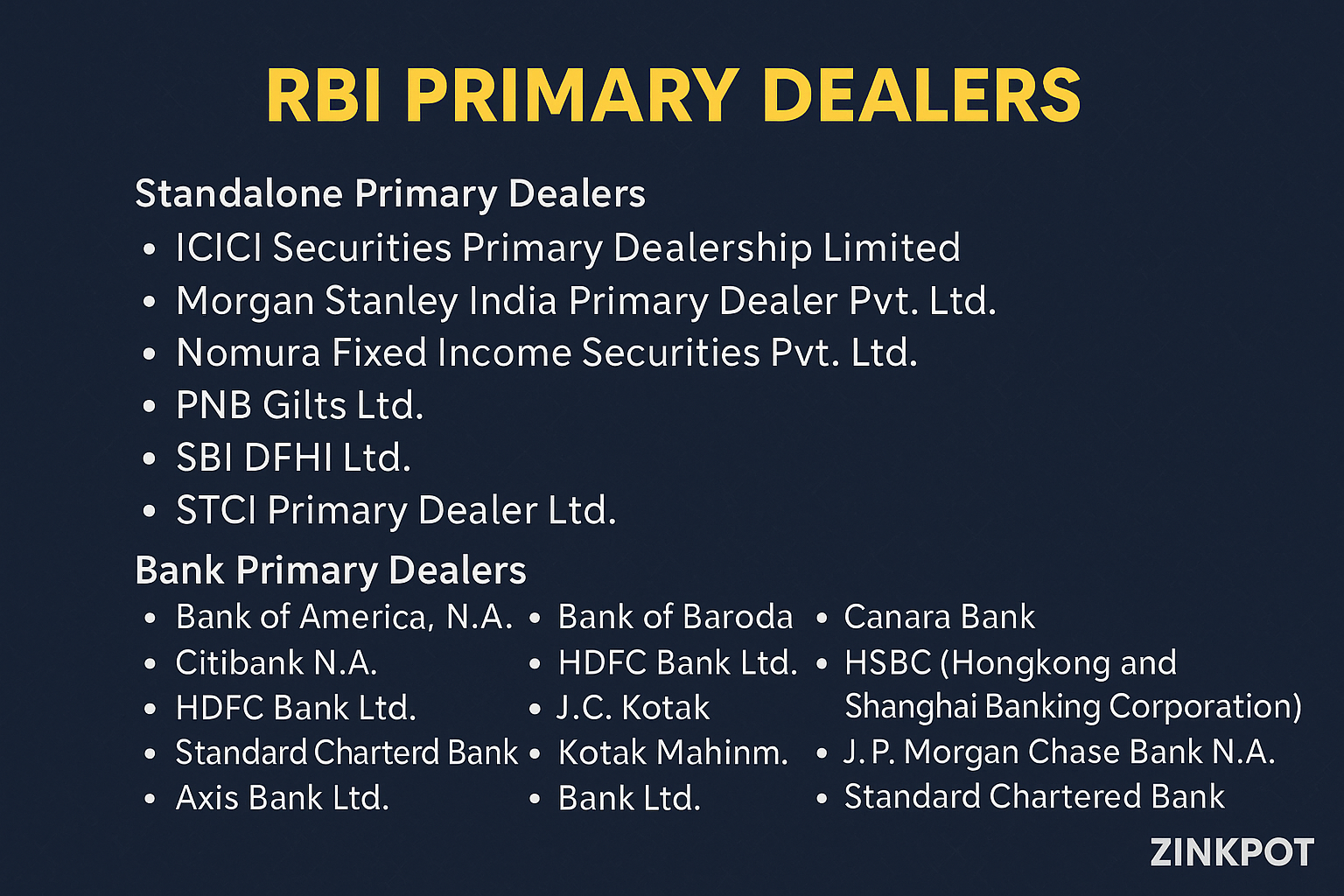
Who are the Primary Dealers (PDs) with RBI?
May 26 DEFINITION Primary Dealers (PDs) are financial institutions authorized by the Reserve Bank of India (RBI) to underwrite and participate directly in the auction of government securities, including Treasury Bills (T-Bills) and Dated Securities (G-Secs). The Reserve Bank of India (RBI) designates certain institutions as Primary Dealers (PDs) to strengthen the government securities (G-Sec) market. TYPES These PDs are categorized into two types: Standalone Primary Dealers: Non-bank entities that...
-
What is a Certificate of Deposit (CD)?
May 22 DEFINITION A Certificate of Deposit (CD) is a negotiable money market instrument issued by banks and financial institutions to raise short-term funds from investors at a fixed interest rate and for a fixed maturity period. It is similar to a fixed deposit but tradable, especially in the institutional money market. Who Can Issue CDs in India? Issuer Regulator Scheduled Commercial Banks RBI Select Financial Institutions (e.g. SIDBI,...
-
What is a Fund of Funds (FoF) and FoF scheme?
May 07 WHAT? Usually a fund like Mutual fund invests in some stocks or bonds directly. But a ‘Fund Of Funds’ (FOF) is an investment strategy of holding a portfolio of some different Mutual funds or investment funds rather than investing directly in stocks, bonds or other securities. Therefore an FOF Scheme primarily invests in the units of another Mutual Fund scheme or some Alternate Investment Funds (AIFs). This a normal fund holds shares where as the FoF holds the units of other mutual fund or AIF...
Comments
Write Comment