Public Finance
What are Automatic Stabilizers?
DEFINITION
Automatic stabilizers are built-in features of a government's fiscal policy that help moderate economic cycles without requiring new legislation or deliberate intervention. During the recession, they work by automatically increasing government spending or decreasing tax revenues to stimulate activity and take the opposite action during booms to cool things down. This helps smooth out fluctuations in GDP, employment, and inflation, making the economy more stable overall.
The concept originates from Keynesian economics, emphasizing how these mechanisms can act as a "shock absorber" for the business cycle. They're particularly important in modern mixed economies, where governments play a role in stabilization without constant micromanagement.
Key Examples of Automatic Stabilizers
|
Type |
Description |
How It Stabilizes During Recession |
How It Stabilizes During Boom |
|
Progressive Income Taxes |
Tax rates increase with income levels. |
As incomes fall, people move to lower tax brackets, reducing their tax burden and leaving more disposable income for spending. |
As incomes rise, higher tax rates collect more revenue, curbing excessive spending and inflation. |
|
Unemployment Insurance |
Benefits paid to those who lose jobs. |
Claims rise, injecting money into the economy via increased government spending on benefits. |
Fewer claims mean less spending, freeing up resources and reducing inflationary pressure. |
|
Welfare and Social Safety Nets (e.g., food stamps, Medicaid) |
Means-tested programs that provide aid based on income or need. |
More people qualify as incomes drop, boosting consumption through transfers. |
Fewer qualifiers reduce outlays, helping to balance budgets. |
|
Corporate Taxes |
Taxes on business profits. |
Profits decline, so tax revenues fall automatically, easing pressure on struggling firms. |
Profits surge, increasing revenues and dampening overheating. |
How Do They Work in Practice?
- Countercyclical Effect: During a recession or during high unemployment, stabilizers increase the budget deficit by design—more spending, less tax collection—which supports demand. In expansions, they create surpluses or smaller deficits.
- Magnitude: Their impact depends on the size of the government sector. Countries with larger welfare states (e.g., Sweden) have stronger stabilizers than those with minimal intervention (e.g., some emerging markets).
- Limitations: They don't eliminate cycles entirely and may not suffice for severe shocks (like the COVID-19 pandemic), often requiring discretionary fiscal policy (e.g., stimulus packages). They can also contribute to long-term debt if not paired with prudent management.
Recent Relevance
In recent years, automatic stabilizers have been highlighted in discussions around economic resilience. For example, during the 2020-2022 pandemic and inflation period, enhanced unemployment benefits (temporarily made more generous) acted as supercharged stabilizers. Economists debate their role in post-pandemic recovery, with some arguing for reforms to make them more responsive to modern challenges like gig work or climate-related disruptions.
About author

Zinkpot — We Inform, You Perform.
Ask Anything, Know Better
अपना प्रश्न पूछें
-
2025 में 2 लाख नौकरियाँ गईं, अब आगे क्या?
November 02
-
What Is the Fiscal Multiplier?
October 11 What is it? The fiscal multiplier is a simple idea in economics that shows how government spending or tax changes can boost the whole economy. Imagine the government spends extra money on something like building roads or giving tax cuts. This extra money doesn't just stop there—it flows through the economy, creating more jobs, more spending, and higher overall income. The fiscal multiplier measures how much bigger the final impact is compared to the original amount spent or cut. In easy terms, if the multiplier is 2,...
-
What is Income distance in Finance commission?
September 22 CONTEXT In the context of India's Finance Commission—a constitutional body tasked every five years with recommending how to divide tax revenues between the Centre and the states—income distance serves as a measure of economic inequality among states. As India's 16th Finance Commission gears up to redefine how central taxes are shared among states, one term keeps popping up in policy debates: "income distance." This seemingly straightforward concept is at the heart of ensuring equitable resource...
-
What is monetization and National Monetization Pipeline (NMP)?
September 15 Meaning of Monetization Turning something into money or turning non-revenue assets (e.g., free services) into profitable ones. For instance, in the music industry, artists monetize through streaming royalties or ad placements on platforms. Monetization refers to the process of converting something non-monetary—such as assets, data, services, or ideas—into money or revenue. In essence, it involves transforming resources that do not generate income into profit-generating opportunities. This can occur in...
-
What are State Development Loans (SDL)?
September 09 WHAT? State Development Loans (SDLs) are bonds issued by state governments in India to raise funds for their developmental needs. These are long-term borrowings intended to finance infrastructure, welfare schemes, and cover fiscal deficits. Since state revenue is often insufficient to meet expenditure demands, SDLs help bridge the funding gap in a structured and regulated manner. Although the SDLs are issued by state governments, the process is managed by the Reserve Bank of India (RBI), which conducts auctions on their behalf. These...
-
What is Fiscal health Index (FHI)?
August 28 WHAT? The Fiscal Health Index (FHI) is a composite measure developed by NITI Aayog, India's policy think tank, to evaluate the fiscal performance of major Indian states. It assesses aspects such as expenditure quality, revenue generation, fiscal discipline, debt management, and long-term debt sustainability, using data primarily from the Comptroller and Auditor General (CAG) report. The index aims to highlight strengths and weaknesses in state finances, guide policy reforms, promote best practices, and ensure...
-
PAN 2.0 PROJECT : WHY AND BENEFITS
August 06 WHAT? The PAN 2.0 Project is an e-Governance initiative by the Indian Income Tax Department to modernize the Permanent Account Number (PAN) and Tax Deduction and Collection Account Number (TAN) systems. Approved by the Cabinet Committee on Economic Affairs (CCEA) on November 25, 2024, with a budget of ₹1,435 crore, it aims to streamline taxpayer registration services through a technology-driven, paperless platform aligned with the Digital India vision. Key aspects Unified Portal: Consolidates...
-
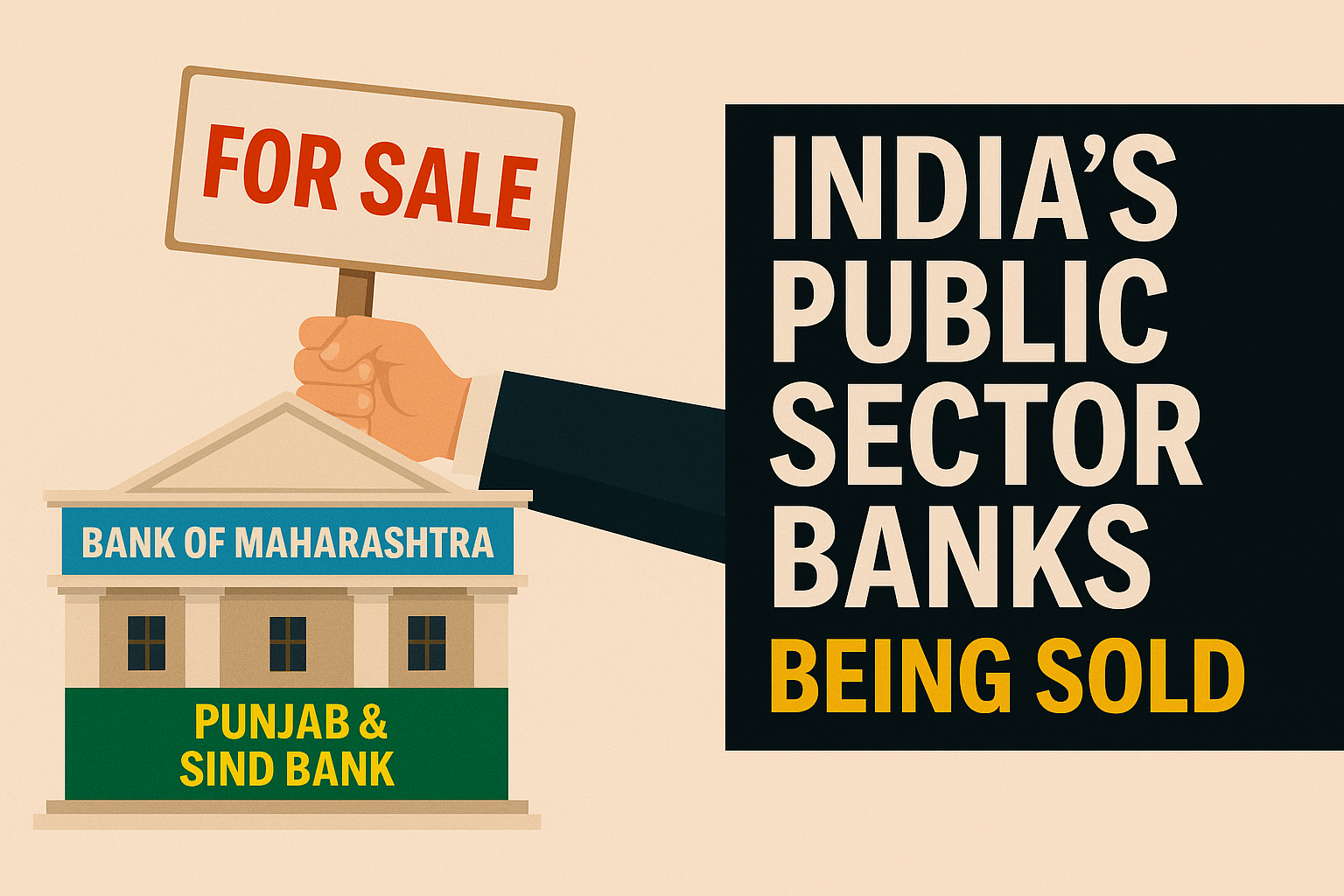
In which Banks the government is selling it's stake? Why? How would it sell?
June 17 WHAT? The Indian government is accelerating its disinvestment drive by planning to sell up to 20% stake in five public sector banks (PSBs) within the next six months, utilizing Qualified Institutional Placement (QIP) and Offer for Sale (OFS) routes. This move aims to raise capital, improve bank governance, and ensure compliance with the Securities and Exchange Board of India’s (SEBI) minimum public shareholding (MPS) norm of 25%. The initiative is part of a broader strategy to strengthen the financial health of...
-
'We teach kids to crack IIT, not file an ITR': Analyst in brutal middle-class takedown
June 03 SUMMARY In a candid critique of India's middle-class financial habits, analyst Hardik Joshi highlighted the lack of financial literacy among Indian adults. He pointed out that while families invest heavily in gold and lavish weddings, they often neglect essential financial planning such as health insurance and retirement savings. Joshi emphasized that financial education is crucial for all, not just the wealthy, to break the cycle of living paycheck to paycheck. He noted that only 27% of Indian...
-
‘Bail yourself out’: Rich Dad Poor Dad author predicts major financial crisis ahead, urges people to ditch ‘fake fiat money’
May 19 SUMMARY Bestselling author Robert Kiyosaki has issued a fresh warning about a possible global financial crisis. The Rich Dad Poor Dad author took to X (formerly Twitter), and said that each crisis gets bigger because the root problems are never solved. Robert Kiyosaki has issued a stark warning about an impending global financial crisis. He attributes this looming threat to unresolved systemic issues, such as the U.S. abandoning the gold standard in 1971 and the escalating $1.6 trillion student loan debt. Kiyosaki...
Comments
Write Comment