IMF
What is meant by Reserve Tranche and Reserve Position at IMF?
What is a Reserve Tranche at the IMF?
When a country joins the IMF, it has to pay an amount as a subscription quota to the IMF. This amount has to be paid in Domestic currency (75%) and other freely usable currencies or in SDR (remaining 25%). (Click here to fund to know how IMF is financed).
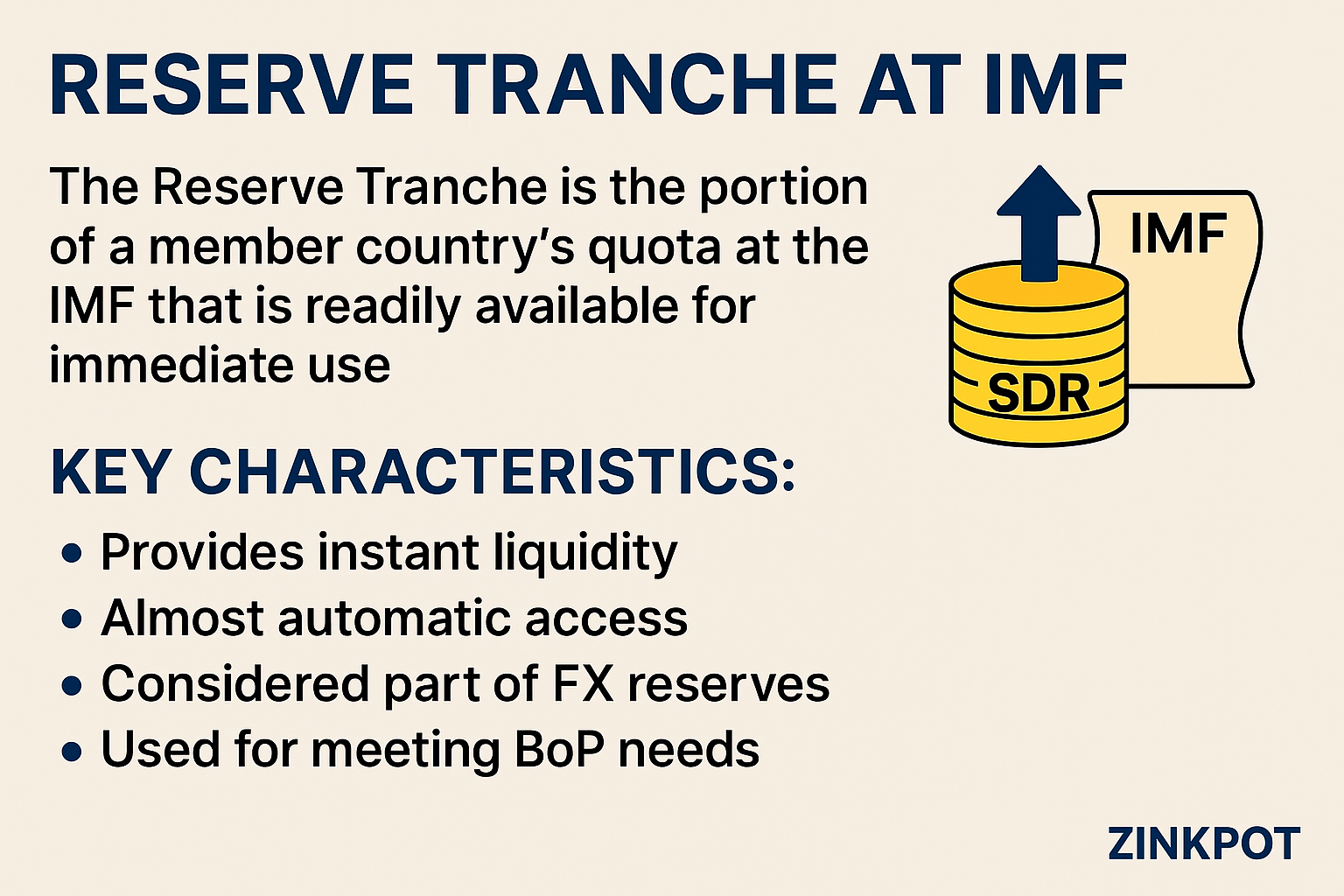
The Reserve Tranche is the portion of a member country's quota at the International Monetary Fund (IMF) that is readily available for immediate use without any charges to address balance of payment needs. The Reserve Tranche Position (RTP) is the difference between a member’s quota at the IMF and the IMF’s holdings of that member’s currency.
It therefore represents the portion of a country’s IMF subscription which is 25% as mentioned above and is usually paid in foreign currency or SDRs. Reserve Tranche = Quota − IMF Holdings of Member’s Currency
For Example
- India’s quota at IMF = SDR 13 billion
- IMF’s holding of Indian rupees = SDR 9.5 billion
- So, India’s Reserve Tranche Position = SDR 3.5 billion
So India can withdraw SDR 3.5 billion without IMF program conditions.
Feature Description
About author

Zinkpot — We Inform, You Perform.
Ask Anything, Know Better
अपना प्रश्न पूछें
-
What are IMF's lending instruments?
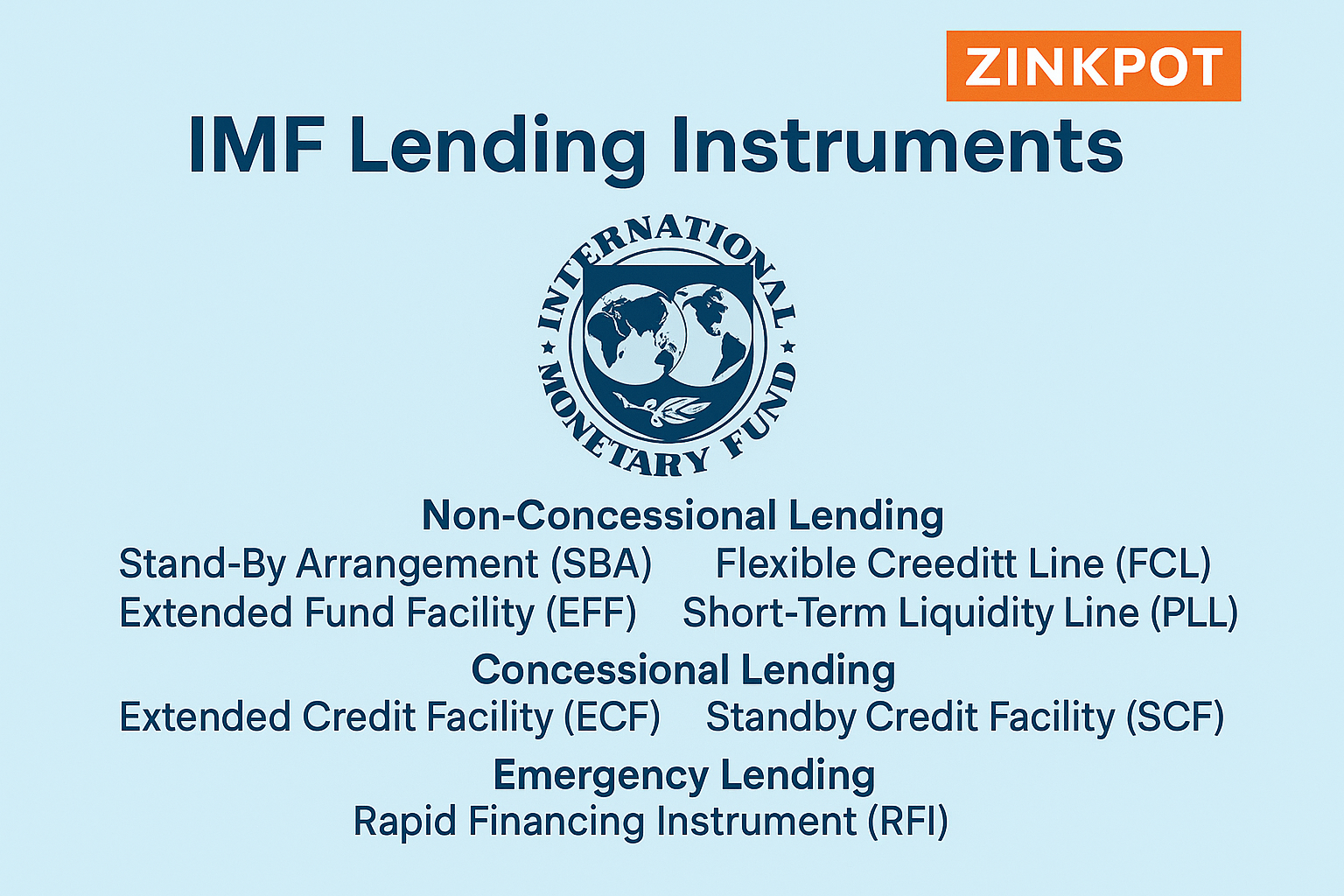
June 01 The IMF (International Monetary Fund) offers a range of lending instruments to help countries address balance of payments problems, stabilize economies, and implement reforms. These instruments differ by purpose, conditions, and repayment terms. Non-Concessional Lending (for middle- & upper-income countries) 1. Stand-By Arrangement (SBA) : Up to 3 years but usually 12-18 months Used for: Present, prospective, or potential balance of payments need, Short-term balance of payment needs Duration:...
-
What is World Trade Uncertainty (WTU) Index?
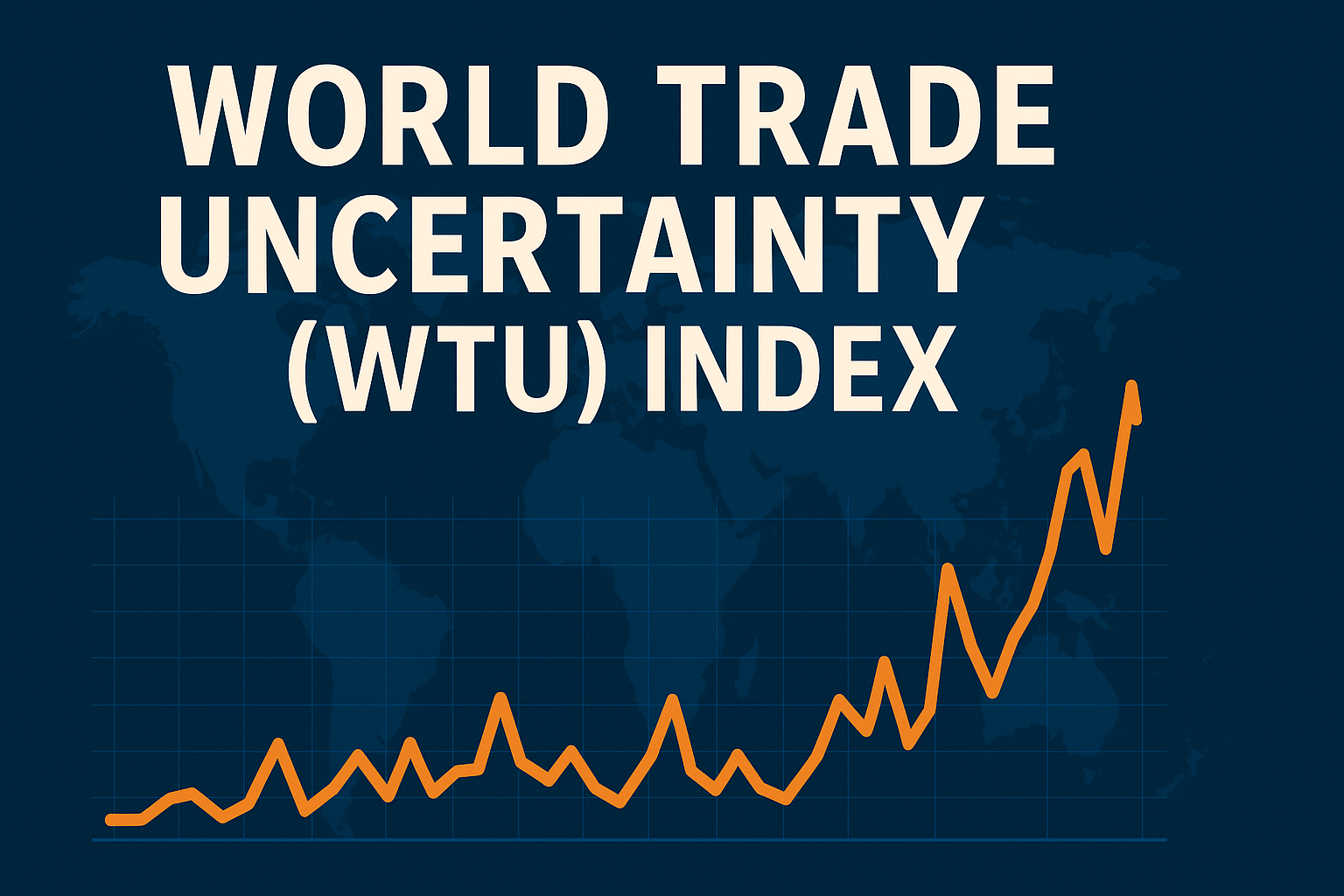
May 13 WHAT? The World Trade Uncertainty Index is a global economic indicator developed by the International Monetary Fund (IMF) to measure uncertainty related to trade policy across countries and over time. It is published by International Monetary Fund (IMF) and Updated quarterly, available on the IMF's official website. What Does It Measure? The WTU Index quantifies trade-related uncertainty by analyzing the frequency of terms related to "trade" and "uncertainty" in the Economist...
-
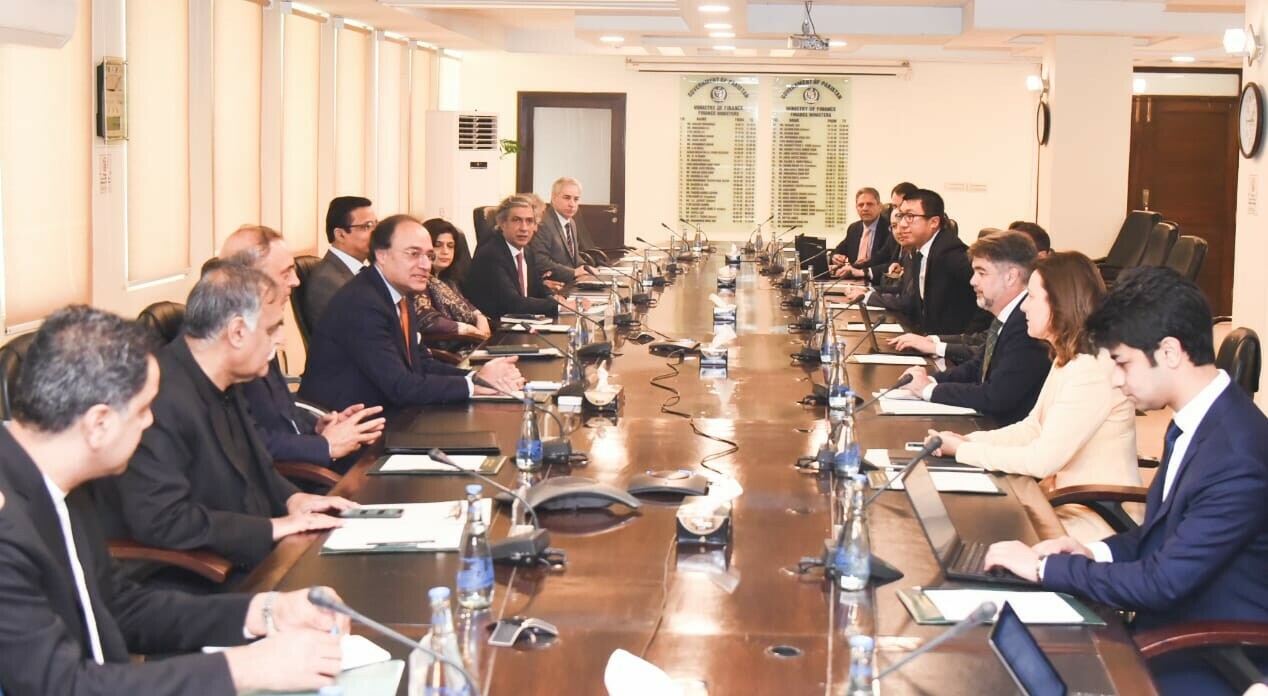
Major differences between EFF, SBA and RFI facilities of IMF
May 10 Feature Extended Fund Facility (EFF) Stand-By Arrangement (SBA) Rapid Financing Instrument (RFI) Main Purpose Medium- to long-term assistance for countries with structural issues and persistent balance of payments (BoP) problems. Short-term help to resolve temporary BoP gaps, including shocks like commodity price swings. Immediate financial support for countries facing urgent BoP needs (e.g. disasters, pandemics). Launched 1974 1952 (modern...
-
What is the Extended Fund Facility (EFF) of the IMF?
May 10 WHAT? The Extended Fund Facility (EFF) is one of the key lending instruments of the International Monetary Fund (IMF), designed to assist countries facing serious medium- to long-term balance of payments problems due to structural weaknesses. DETAILS ABOUT EEF Purpose : Support economic programs to overcome structural issues and stabilize the economy. Launched : 1974 Loan Duration : Typically 3 to 4 years (can be extended to 5). Repayment Period : Starts 4.5 years after...
Comments
Write Comment