Equity Market
What is Sharpe Ratio used in investment analysis?
WHAT?
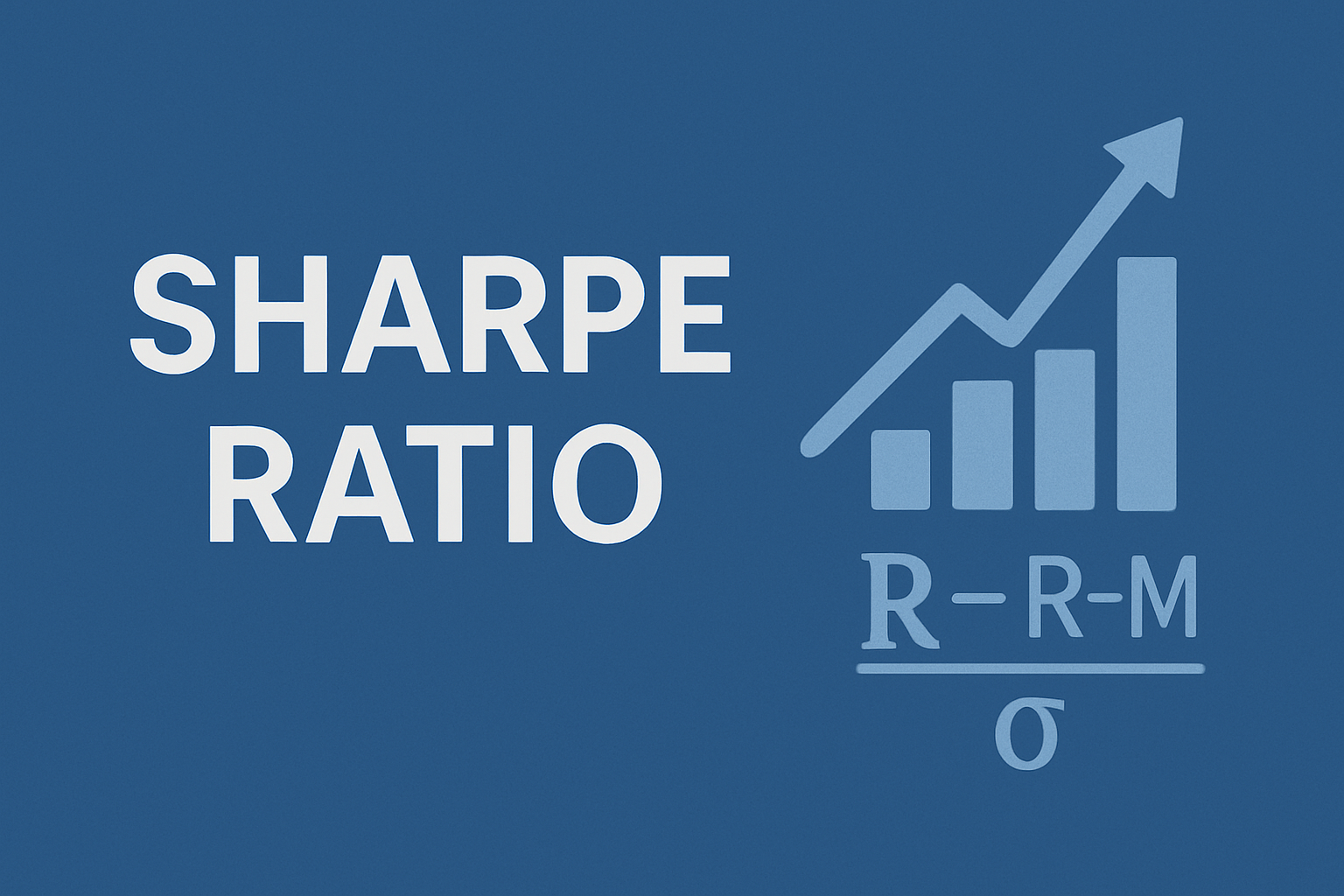
The Sharpe Ratio is a widely used financial metric that measures the risk-adjusted return of an investment or portfolio. It evaluates how much excess return an investment generates per unit of risk, helping investors assess whether the returns are worth the risk taken. Developed by Nobel laureate William F. Sharpe in 1966, it is a key tool for comparing the performance of different investments or portfolios.

Interpretation
- Higher Sharpe Ratio: Indicates better risk-adjusted returns (more return per unit of risk). A ratio above 1 is generally considered good, 2 is very good, and 3 or higher is excellent.
- Lower or Negative Sharpe Ratio: Suggests poor performance relative to risk or losses compared to the risk-free rate.
- Comparison: Useful for comparing investments with similar risk profiles. For example, a mutual fund with a Sharpe Ratio of 1.5 is preferable to one with 0.8, assuming similar objectives.
Key Features
- Excess Return: The numerator (Rp - Rf ) represents the return above the risk-free rate, reflecting the reward for taking on additional risk.
- Risk Measurement: The denominator (σp) captures volatility, measuring how much returns fluctuate. Higher volatility increases risk, lowering the Sharpe Ratio unless returns are proportionally higher.
Applications
- Portfolio Evaluation: Assesses whether a portfolio manager’s returns justify the risk taken.
- Investment Selection: Helps choose between assets or funds with different risk-return profiles.
- Performance Benchmarking: Compares performance across mutual funds, hedge funds, or individual securities.
Example
Suppose a mutual fund in India has:
Annual return (Rp): 12%.
Risk-free rate (Rf): 6.5% (based on India’s 10-year government bond yield in 2025).

Interpretation: A Sharpe Ratio of 0.37 indicates modest risk-adjusted returns, suggesting the fund’s returns are not high enough to justify its volatility compared to a risk-free investment.
The Sharpe Ratio is a critical tool for assessing risk-adjusted returns, enabling investors to compare investments by balancing returns against volatility. A higher ratio indicates better performance per unit of risk, but limitations like its reliance on historical data and normal distribution assumptions require careful use. In India’s context, with a risk-free rate of ~6.5% in 2025, it remains a valuable metric for evaluating investments in a dynamic market.
What are alpha and beta in the stock analysis? click here to know
About author

Zinkpot — We Inform, You Perform.
Ask Anything, Know Better
अपना प्रश्न पूछें

Comments
Write Comment