
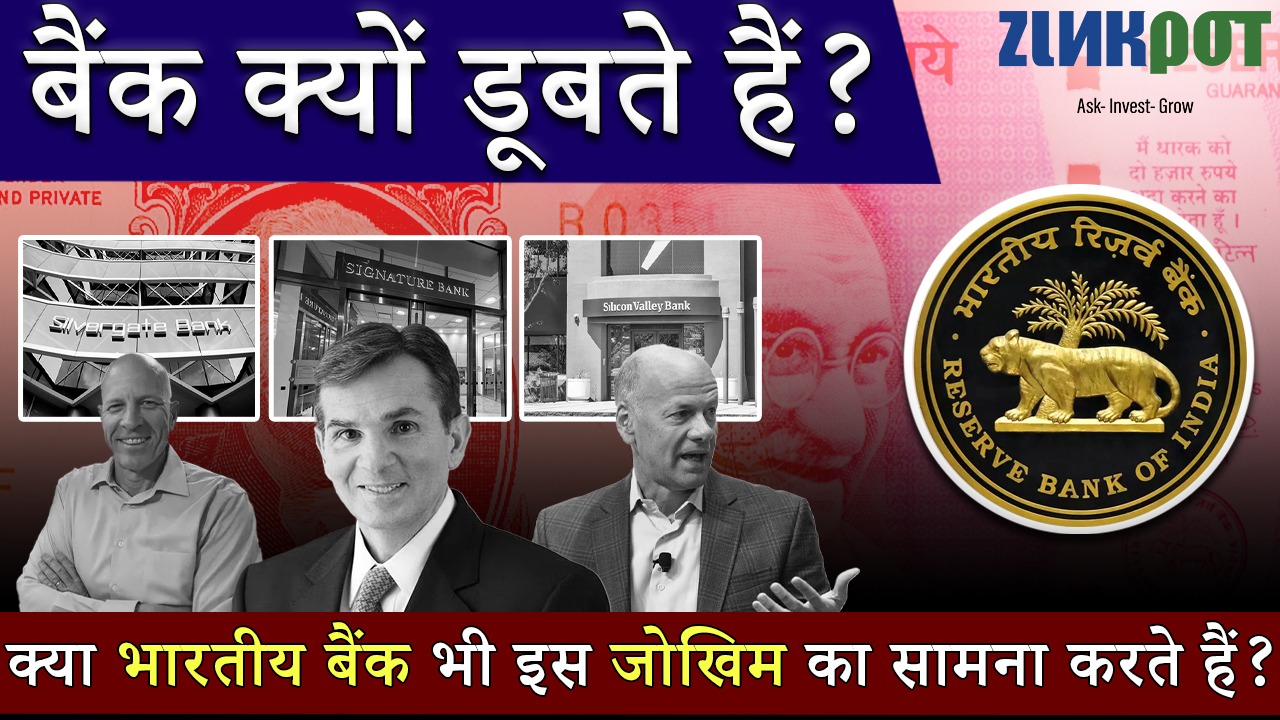
Three major banks in the US have collapsed since 10 March - Silicon Valley Bank (SVB), Silvergate and Signature Bank - the biggest bank failures since 2008. Similarly Credit Suisse Bank of Switzerland is about to collapse without the support of the European Central Bank.
The question is why do banks collapse, especially such big and old ones? Banks are susceptible to many types of risks.
Banks invest heavily in government bonds to keep their money safe. But if their investment value declines, banks are at risk.
Why do bond prices fall? When interest rate increases, cost of borrowing increases or interest one earns in lending also increases. If a lender can get more interest rate elsewhere, then why would they buy bonds? Hence the prices of bonds decrease. And if bond prices decrease, It leads to the Bank's losses on their investment.
If this happens, banks’ asset values decrease substantially and liabilities become bigger than assets, hence the bank is at risk or about to collapse. When this news comes in the market, many depositors want to withdraw deposits at the same time. This leads to the scenario that the bank does not have enough cash on hand. The bank can become illiquid, deepening the bank’s troubles.
This as a whole lowers the share prices of the banks. It also closes the option to raise money by selling the shares which are already trading at the lowest price. Adding to this, If Banks’ regulations are not strong like liquidity ratios and others, banks facing these situations are bound to collapse. All of the above events occurred with the American banks which have led to their collapse. But they had something more to their problem.
US Banks catered to companies dealing in IT and technology industry which has been struggling with lower demand and due to sharp falls in crypto currencies.
This is not the case with Indian Banks. How is the situation with Indian Banks?
RBI, the regulator of Indian Banks, has been stringent with banking liquidity through many ratios which the banks had to follow. So the liquidity problem is not there. NPAs have come down significantly so the issue of bad loans is also not concerning.
Investment risk in government bonds is also minimal because the tax revenues of the government have been significantly high and fiscal deficits are being lowered.
But precaution is a must and lessons must be taken from these events. Indians can't afford any bank collapse as they already face many shocks in their daily life.

Ask Anything, Know Better
November 17 BUSINESS LINE : The Reserve Bank of India could consider approving bankers’ request to lower the provisioning requirement on stage-2 loans to 1-3 per cent from proposed 5 per cent under the draft expected credit loss (ECL) guidelines, sources say. ABOUT ECL? CLICK HERE ABOUT PROVISIONING? CLICK HERE NEWS LINK
October 25
August 22 WHAT? The Cheque Truncation System (CTS) is a process introduced by the Reserve Bank of India (RBI) to streamline and expedite cheque clearing by replacing the physical movement of cheques with digital images and electronic data. It enhances efficiency, reduces costs, and minimizes risks associated with traditional cheque processing. CTS is an electronic cheque-clearing system where the physical cheque is "truncated" (stopped) at the presenting bank, and its digital image, along with relevant data (e.g.,...
August 15 WHAT? India's Stand Vindicated as Pakistan Misses IMF Loan Conditions Again.Pakistan has failed to meet three out of five key targets set by the International Monetary Fund (IMF) for the second review of its $7 billion bailout package, reinforcing India's long-standing concerns about Islamabad's poor track record in implementing IMF reforms and the potential misuse of funds. This development highlights persistent structural and fiscal weaknesses in Pakistan's economy, including revenue shortfalls and unchecked...
August 13 WHAT? A Forward Rate Agreement (FRA) is a financial contract between two parties to lock in an interest rate for a future period, used primarily to hedge against or speculate on interest rate fluctuations. It is an over-the-counter (OTC) derivative instrument, meaning it is customized and not traded on exchanges. An FRA is an agreement to exchange a fixed interest rate for a floating interest rate (based on a reference rate like MIBOR in India or SOFR globally) on a notional amount for a specified future period. It is...
August 04 WHAT? The National Asset Reconstruction Company Limited (NARCL), often referred to as India’s “bad bank,” was established to address the issue of non-performing assets (NPAs) in the Indian banking system. It was announced in the Union Budget 2021–22 and incorporated on July 7, 2021, under the Companies Act, 2013, with registration as an Asset Reconstruction Company (ARC) under the Securitisation and Reconstruction of Financial Assets and Enforcement of Security Interest (SARFAESI) Act,...
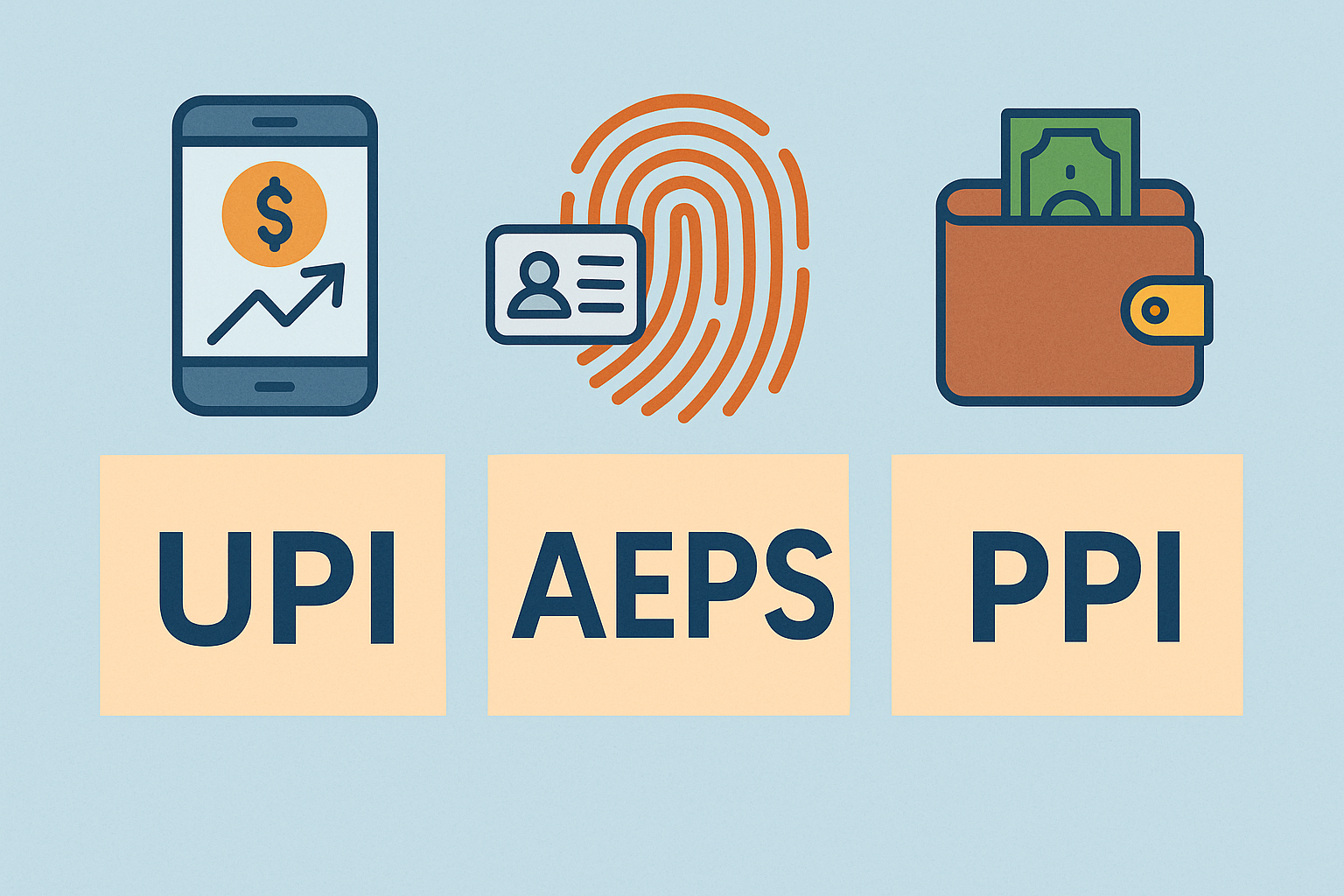
July 07 WHAT? The Unified Payments Interface (UPI), Aadhaar Enabled Payment System (AEPS), and Prepaid Payment Instruments (PPI) are distinct digital payment systems in India, each serving unique purposes and user bases. Differences Aspect Unified Payments Interface (UPI) Aadhaar Enabled Payment System (AEPS) Prepaid Payment Instruments (PPI) Definition Real-time mobile-based payment system enabling instant bank-to-bank transfers using Virtual Payment Addresses...
July 02 WHAT? Gross Non-Performing Assets (Gross NPA) and Net Non-Performing Assets (Net NPA) are key indicators of the health of a bank's loan portfolio in India, reflecting the level of bad loans or assets that have stopped generating income. Gross NPA Banks extend loans to the borrowers and since these loans earns interest for the banks, they are considered Bank Assets. Banks expect a return on these assets like interest income. But if the borrower doesnt pay it's due principal or interest or both on...
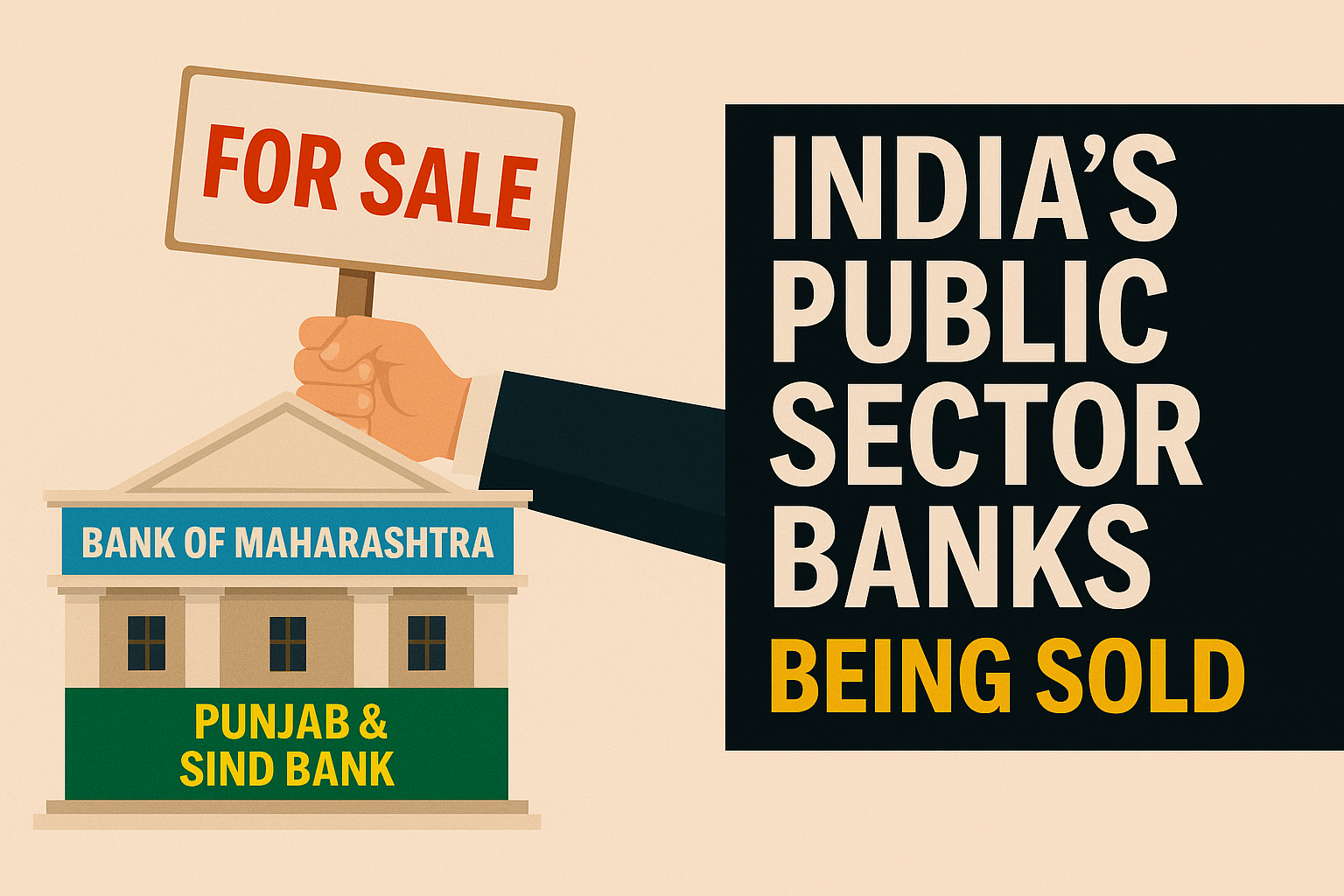
June 17 WHAT? The Indian government is accelerating its disinvestment drive by planning to sell up to 20% stake in five public sector banks (PSBs) within the next six months, utilizing Qualified Institutional Placement (QIP) and Offer for Sale (OFS) routes. This move aims to raise capital, improve bank governance, and ensure compliance with the Securities and Exchange Board of India’s (SEBI) minimum public shareholding (MPS) norm of 25%. The initiative is part of a broader strategy to strengthen the financial health of...
June 12 HOW MUCH IS THE DEBT? India’s household debt has become a growing concern, with recent data showing a significant rise in borrowing. By June 2024, household debt reached 42.9% of GDP, as reported by the Reserve Bank of India (RBI) in its Financial Stability Report (December 2024), a sharp increase from 37.6% in March 2023 and well above the pre-pandemic average of 33% (2015-2019). The government’s push for financial inclusion has increased credit access, but without addressing income inequality or...
Comments
Write Comment