WHAT
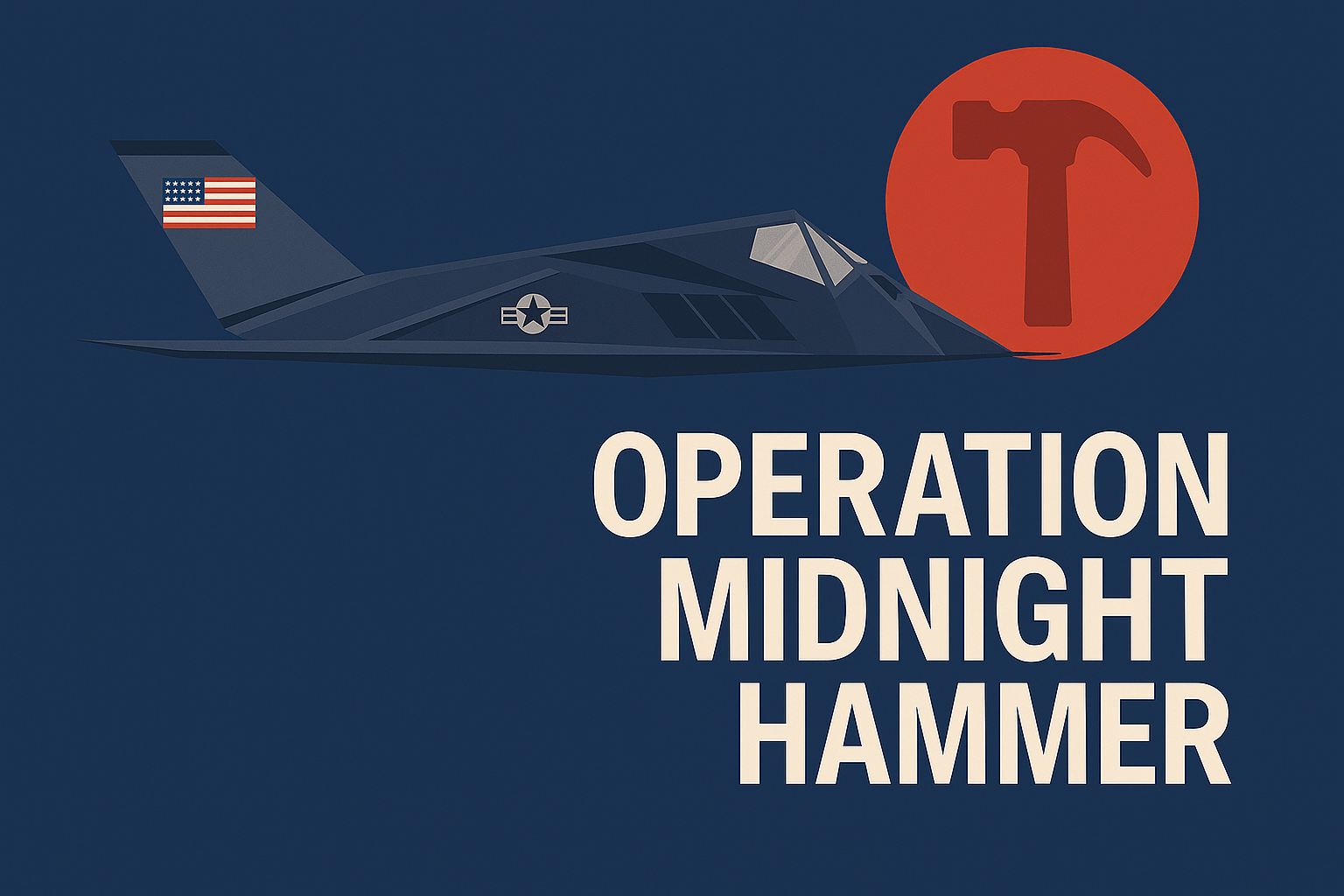
Operation Midnight Hammer was a U.S. military operation conducted on June 21, 2025, targeting Iran’s nuclear facilities at Fordow, Natanz, and Isfahan. The operation is followed by US's ally Israel's recent war with Iran. Israel is bombing Iran's uranium enrichment facilities to stop it from developing nuclear weapons. Israel has launched it's operation against Israel known as Operation True Promise. Click here to know about it.
Execution Details
- The operation Involved six (or possibly seven) B-2A Spirit stealth bombers from Whiteman Air Force Base, Missouri, in a 37-hour, 7,000-mile non-stop mission.
- It was supported by over 125 aircraft, including fighters (F-22s, F-35s) and aerial refuelers, with decoy B-2s used to maintain surprise.
- US Bombers evaded Iran’s air defenses, including Russian-supplied systems, with no reported U.S. losses.
Weapons Deployed
- Six (or up to 14) GBU-57 Massive Ordnance Penetrators (MOPs): 30,000-pound bunker-busters, used for the first time in combat, primarily targeting Fordow’s underground facility. They targeted the Fordow nuclear facility, known for housing about 1,000 centrifuges for uranium enrichment.
- 75 precision-guided munitions: Including JDAMs and JSOWs for surface targets at Natanz and Isfahan.
- 30 Tomahawk cruise missiles: Launched from a U.S. Navy submarine to complement B-2 strikes. These missiles struck Natanz and Isfahan, complementing the B-2 strikes to destroy surface infrastructure.
Impact
- “Extremely severe damage” reported to Iran’s nuclear sites, with Fordow’s bunkers penetrated. Full damage assessment is ongoing.
- No U.S. or allied casualties reported; operation achieved tactical surprise.
Iran’s reactions
Iran threatened to close the Strait of Hormuz, a critical oil chokepoint, in retaliation. This could disrupt 40% of India’s crude oil imports and 50% of its LNG, potentially spiking oil prices to $80-$120 per barrel. India’s mitigation includes diversified imports (e.g., 40% from Russia), 74-day strategic oil reserves, and diplomatic efforts.
Impact on India
A Strait of Hormuz closure could disrupt 40% of India’s crude oil imports and 50% of its LNG, potentially driving oil prices to $80-$120 per barrel. India’s diversified imports (e.g., from Russia) and 74-day strategic reserves may mitigate short-term impacts, but prolonged closure would challenge energy security.


Comments
Write Comment