

The reverse repo rate is the interest rate at which the RBI borrows short-term funds from commercial banks, effectively absorbing excess liquidity usually at a fixed rate as determined by the RBI.
A Variable Reverse Repo Rate (VRRR) is a monetary policy tool used by the Reserve Bank of India (RBI) to manage liquidity in the banking system in which the "variable" aspect refers to a mechanism where the rate is determined through auctions, allowing flexibility in the interest rate based on market conditions and bank bids, rather than being fixed at the RBI’s standard reverse repo rate.
VRRR is used when there’s excess liquidity, often due to factors like government spending, foreign capital inflows, or RBI’s open market operations. For example, in 2021-2022, VRRR auctions were frequently conducted to mop up liquidity injected during the COVID-19 pandemic.
For example, If banks hold ₹3 lakh crore in excess liquidity due to heavy government spending, the RBI may conduct a 14-day VRRR auction to absorb ₹1 lakh crore. If the cut-off rate is 3.45%, banks earn this rate, and the RBI reduces liquidity, stabilizing market interest rates.
Example: If the RBI announces a VRRR auction to absorb ₹2 lakh crore, banks submit bids with amounts and interest rates (e.g., Bank A offers ₹10,000 crore at 3.5%, Bank B at 3.45%). The RBI accepts bids starting from the highest rate until the target is met, setting a cut-off rate (e.g., 3.45%).
Banks earn the bid rate, and the RBI reduces liquidity, stabilizing short-term interest rates like the call money rate, which influences lending and borrowing costs.

Ask Anything, Know Better
October 31 Introduction The US Federal Reserve, often called the Fed, is USA's main bank. It helps control the economy by setting rules for money and banking. One big tool it uses is changing interest rates. The key rate is called the federal funds rate. This is the rate banks charge each other for short-term loans. When people talk about the Fed cutting rates, they usually mean lowering this federal funds rate. Why Does the Fed Cut Interest Rates? The Fed cuts rates when the economy needs a boost. For example, if...
September 12 What is Inflation? Inflation is a sustained increase in the general price level of goods and services in an economy over time, which erodes the purchasing power of money, meaning that each unit of currency buys fewer goods and services than before. It is not a one-time price hike but a persistent trend, often expressed as an annual percentage rate. Inflation is when a commodity you buy now comes for higher prices than the previous price for the same quantity and quality. While moderate inflation (around 2-3%) is considered...
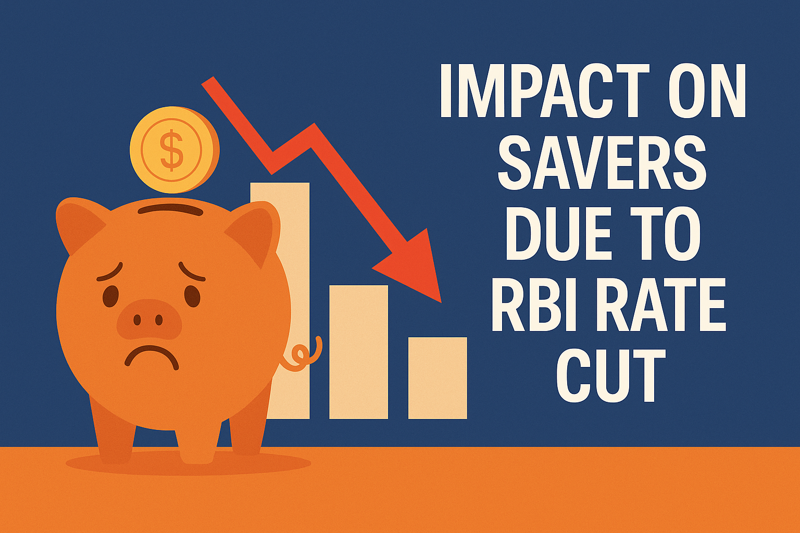
June 15 RBI DECISIONS The Reserve Bank of India’s (RBI) recent monetary policy actions, including a 50 basis point (bps) repo rate cut to 5.5% on June 6, 2025, and a 100 bps Cash Reserve Ratio (CRR) reduction to 3% implemented in four 25-bps tranches starting September 2025. These measures aim to boost economic growth by increasing liquidity and lowering borrowing costs, but they also signal a potential decline in interest rates, affecting returns on fixed-income investments. The RBI’s repo rate cut to 5.5%...
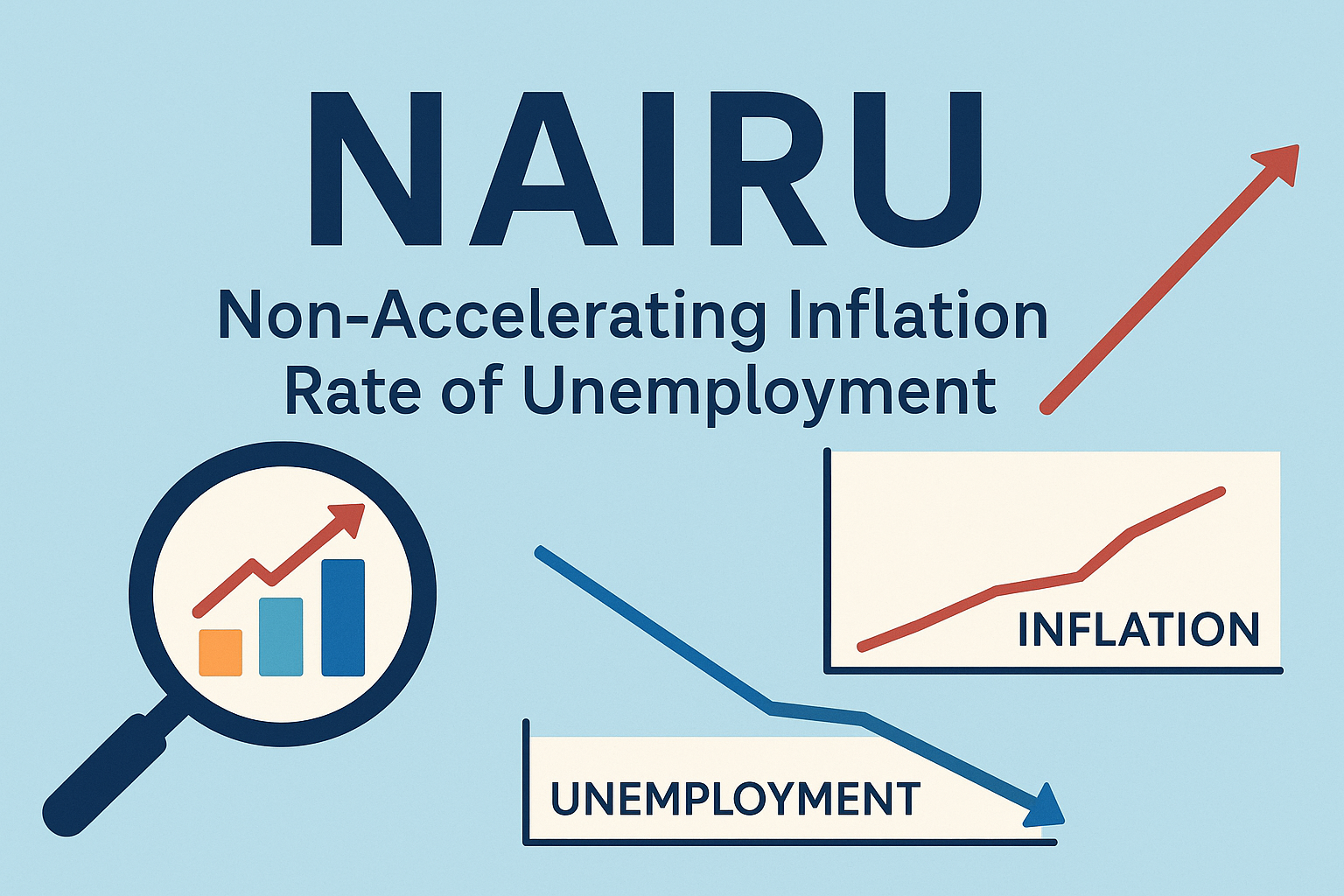
June 14 What is NAIRU? NAIRU, or the Non-Accelerating Inflation Rate of Unemployment, is an economic concept that represents the specific unemployment rate at which inflation remains stable, neither accelerating nor decelerating. It is a theoretical benchmark where the labor market is in equilibrium, meaning there is neither upward pressure on wages (which fuels inflation) nor downward pressure (which could lead to deflation). NAIRU is closely tied to the idea of the "natural rate of unemployment," but it...
May 30 SUMMARY India's GDP growth for the fourth quarter of FY2024–25 is projected to be around 7%, driven by robust rural demand, increased government spending, and improved agricultural output. However, the full fiscal year growth is expected to settle at approximately 6.3%, slightly below earlier estimates. Q4 FY2024–25 Growth Estimates Reuters projects 6.7% growth, citing stronger rural consumption and state expenditure, despite subdued private investment. ICRA estimates...
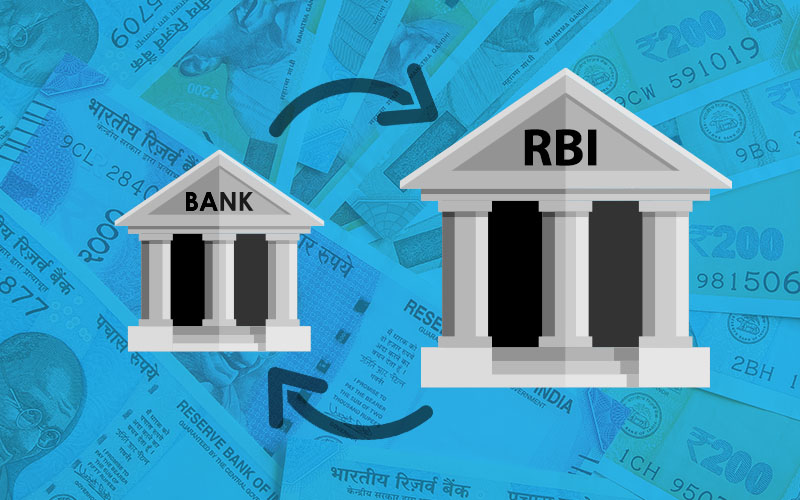
April 24 The Reserve Bank of India at times uses terms like withdrawal of accommodation, neutral, hawkish and others. What does this all mean? RBI’s ‘NEUTRAL’ means A neutral stance indicates that the RBI maintains flexibility in adjusting policy rates based on prevailing economic conditions. This means that the central bank is open to either increasing or decreasing interest rates, depending on data related to inflation and economic growth. The neutral stance is generally adopted when both...
April 15 ECONOMIC TIMES India’s wholesale inflation eased to 2.05 per cent in March on an annual basis, as against 2.38 per cent in January, government data showed on Tuesday. Click here to read full news
March 31 Introduction Tri-party repo” means a repo contract where a third entity (apart from the borrower and lender), called a Tri-Party Agent, acts as an intermediary between the two parties to the repo to facilitate services like collateral selection, payment and settlement, custody and management during the life of the transaction. It is also known as TREPS. Purpose of Tri-party Repo? The aim to introduce Tri-party repo was to improve liquidity in the corporate bond repo market, thereby providing an...
May 21 TREPS, short for "Treasury Bills Repurchase," is a financial instrument widely used in the money market. In simple terms, it represents a short-term borrowing and lending arrangement between two parties – a borrower and a lender. In a TREPS transaction, the borrower, often a mutual fund, pledges government securities, such as Treasury Bills, with the lender (usually a bank or a financial institution) to borrow funds. The lender provides the funds to the borrower, and in return, the borrower agrees to...
February 12 Inflation is a key economic indicator that may provide light on the overall financial position of countries throughout the world. Inflation rate refers to the percentage increase in the general price level of goods and services in an economy over some time. It is a key economic indicator used to measure the rate at which the purchasing power of a currency is declining. Zimbabwe, Venezuela, Sudan, Turkey, Argentina, Sri Lanka, Lithuania, Estonia, Ukraine, Moldova, Suriname, Ghana, Haiti, Sierra Leone, Angola, Nigeria, and Malawi are among...
Comments
Write Comment