
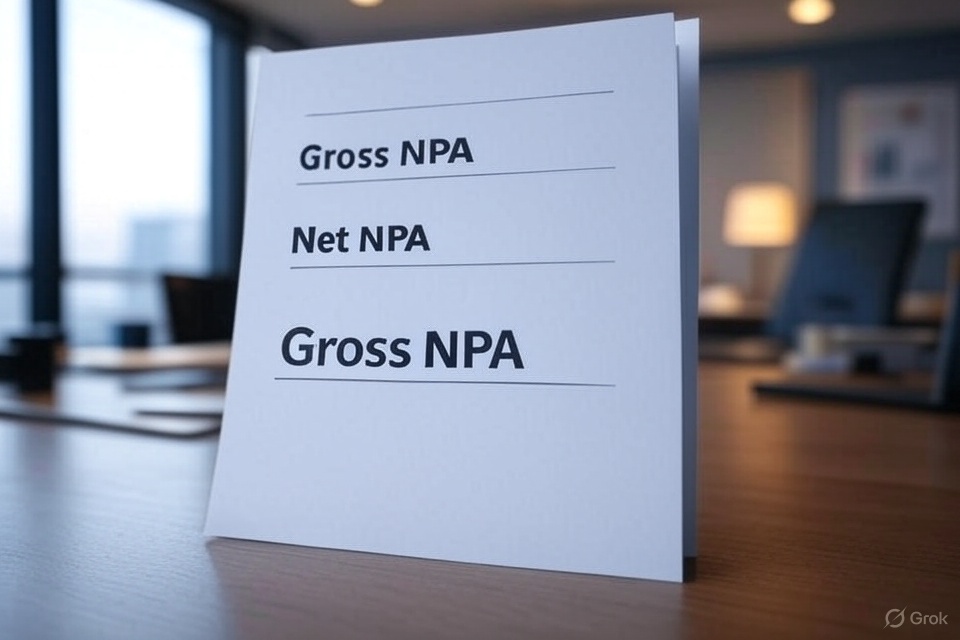
Gross Non-Performing Assets (Gross NPA) and Net Non-Performing Assets (Net NPA) are key indicators of the health of a bank's loan portfolio in India, reflecting the level of bad loans or assets that have stopped generating income.
Banks extend loans to the borrowers and since these loans earns interest for the banks, they are considered Bank Assets. Banks expect a return on these assets like interest income. But if the borrower doesnt pay it's due principal or interest or both on the loans taken for more than 90 days from the due date, it is classified as Non Performing Asset of NPA or Gross NPA or GNPA.
Gross NPA represents the total value of loans and advances where the borrower has failed to make interest or principal payments for 90 days or more, as per Reserve Bank of India (RBI) guidelines. It includes all outstanding amounts without accounting for provisions or write-offs. Example: If a bank has ₹100 crore in loans where payments are overdue by 90+ days, the Gross NPA is ₹100 crore.
RBI requires that the banks should have extra capital managed separately to cover the possible losses due to the GNPA. This process is called Provisioning. Click here to know more on Provisioning. Provisioning is about making arrangements to cover to provide cushion for the bad days. Banks need to cushion their loans which may have turned into Non Performing Assets.
Net NPA is the amount of Gross NPA after deducting provisions made by the bank for bad loans. Therefore Net NPA = Gross NPA - (Provisions for NPAs). Example: If the Gross NPA is ₹100 crore and provision amount is 40 crores, the Net NPA is ₹60 crore.
NNPA Provides a clearer picture of the bank’s financial health by showing the net loss potential after mitigating measures. Higher Gross NPA signals greater credit risk, while a lower Net NPA indicates better provisioning and resilience. RBI monitors both, but Net NPA is critical for assessing capital adequacy and profitability.

Ask Anything, Know Better
April 08 What is Non food credit? Non-Food Credit is used to measure how much bank lending is going to sectors other than government food procurement operations. It is an important indicator of real economic activity and private sector demand for loans. Non-Food Credit : Non-Food Credit = Total bank credit – Food credit It refers to loans given by banks to sectors like: Industry Services Agriculture Retail / Personal loans MSMEs Infrastructure Trade and commerce Non-Food...
November 17 BUSINESS LINE : The Reserve Bank of India could consider approving bankers’ request to lower the provisioning requirement on stage-2 loans to 1-3 per cent from proposed 5 per cent under the draft expected credit loss (ECL) guidelines, sources say. ABOUT ECL? CLICK HERE ABOUT PROVISIONING? CLICK HERE NEWS LINK
October 25
October 10
October 09 What is ECL? The Expected Credit Loss (ECL) framework is a new rule from the Reserve Bank of India (RBI) for banks to handle bad loans better. It helps banks guess and set aside money for loans that might go wrong in the future. RBI put out a draft of these rules on October 7, 2025. This changes the old way where banks only saved money after a loan actually became bad. It's like planning ahead instead of reacting later. The new system starts from April 1, 2027, and banks have five years to fully adjust. Why...
September 24 What Are Unclaimed Bank Deposits? Unclaimed deposits are balances lying in savings accounts, fixed deposits, recurring deposits, or other bank accounts that have had no customer activity for 10 years or more. After this period, banks are required to transfer these amounts to the Depositor Education and Awareness Fund (DEAF), maintained by the Reserve Bank of India (RBI). Importantly, these deposits are not forfeited. Depositors or their legal heirs can still claim the money at any time through the bank, which then seeks...
August 25 CONTEXT Banks like Bank of India, SBI and Canara Bank have classified the loan accounts of Reliance Communications (RCom) and it’s promoter Anil Ambani as fraud for a ₹3,000 crore loan fraud case involving SBI. The fraud tag blacklists them across the banking system, severely restricting future borrowing and inviting further legal scrutiny. It could lead to asset seizures, penalties, or imprisonment if criminal charges are upheld. But when does a Bank classify a borrower as a...
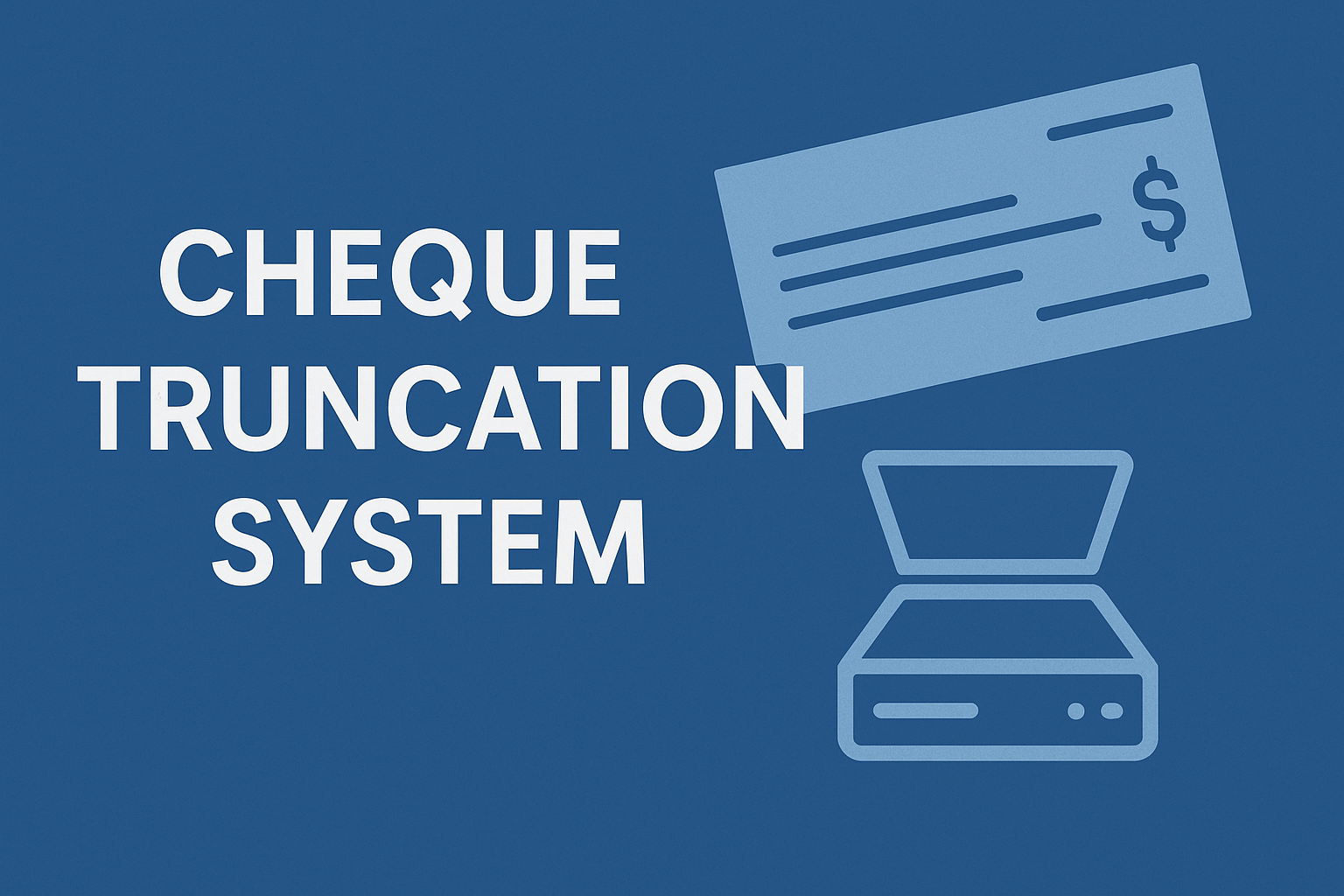
August 22 WHAT? The Cheque Truncation System (CTS) is a process introduced by the Reserve Bank of India (RBI) to streamline and expedite cheque clearing by replacing the physical movement of cheques with digital images and electronic data. It enhances efficiency, reduces costs, and minimizes risks associated with traditional cheque processing. CTS is an electronic cheque-clearing system where the physical cheque is "truncated" (stopped) at the presenting bank, and its digital image, along with relevant data (e.g.,...
August 13 WHAT? A Forward Rate Agreement (FRA) is a financial contract between two parties to lock in an interest rate for a future period, used primarily to hedge against or speculate on interest rate fluctuations. It is an over-the-counter (OTC) derivative instrument, meaning it is customized and not traded on exchanges. An FRA is an agreement to exchange a fixed interest rate for a floating interest rate (based on a reference rate like MIBOR in India or SOFR globally) on a notional amount for a specified future period. It is...

August 09 CONTEXT ICICI Bank hikes minimum account balance for urban areas to ₹50,000. But why is minimum balance required? Banks often require a minimum balance or deposit as part of opening and maintaining an account, though the terms can sometimes overlap. A minimum opening deposit is the initial amount (typically ₹2000-₹10,000) needed to fund and activate a new account, while a minimum balance refers to an ongoing requirement to keep a certain amount in the account to avoid fees or penalties. KEY...
Comments
Write Comment