GST Rate Reforms 2025: Overview
India's Goods and Services Tax (GST) underwent its most significant overhaul since 2017 with the rollout of "GST 2.0" reforms, approved by the 56th GST Council meeting on September 3, 2025. Effective from September 22, 2025 (coinciding with the start of Navratri), these changes simplify the structure from four main slabs (5%, 12%, 18%, 28%) plus cess to a streamlined system: 0% (exemptions), 5%, 18%, and a new 40% slab for luxury and "sin" goods. Tobacco products like cigarettes and gutkha remain at 28% + cess until state compensation dues are cleared.
The reforms aim to boost consumption, ease compliance for businesses, and provide relief to middle-class households—estimated to save consumers over ₹2 lakh crore annually by shifting ~200 everyday items to lower slabs. Essentials become cheaper, while the tax burden shifts to high-end discretionary spending. Prices for many items (e.g., from Amul's 700+ products like butter and ice cream) are already dropping as companies pass on benefits.
Key Changes at a Glance
|
Category |
Old GST Rate |
New GST Rate (from Sept 22, 2025) |
Impact |
|---|---|---|---|
|
Essentials (Food, Unpackaged Items) |
0% or 5% |
0% |
No change; remains tax-free to keep basics affordable. |
|
Packaged Foods, Household Goods |
5%-12% |
5% |
Cheaper; e.g., soaps, toothpaste, juices drop. |
|
Standard Goods (Electronics, Services) |
12%-18% |
18% |
Mostly unchanged, but some shifts make them relatively stable. |
|
White Goods, Mid-Range Vehicles |
28% |
18% |
Significant cut; e.g., ACs, fridges, cars under ₹15 lakh become ~10% cheaper. |
|
Luxury/Sin Goods |
28% + cess |
40% |
Costlier; e.g., premium cars, tobacco (phased in). |
What’s Cheaper?
These categories see direct price reductions, benefiting households during the festive season. Expect 5-10% savings on many items as manufacturers adjust MRPs.
|
Item/Category |
Examples |
Old Rate |
New Rate |
Estimated Savings Example |
|---|---|---|---|---|
|
Food & Groceries |
Packaged milk, juices, dry fruits, spices, ice cream, bakery items |
5%-12% |
0%-5% |
Amul butter (100g): ₹62 → ₹58; Ice cream (1L): ₹195 → ₹135. |
|
Household Essentials |
Soaps, toothpaste, hair oil, Indian breads (roti/naan) |
12%-18% |
5% |
Toothpaste tube: ~₹5-10 off per unit. |
|
Healthcare & Insurance |
Medicines, diagnostic devices, life/health insurance premiums |
12%-18% |
0%-5% |
Health policy: 0% GST; common drugs: 5% (savings up to 13%). |
|
Electronics & Appliances |
ACs, refrigerators, washing machines, dishwashers, LCD/LED TVs |
28% |
18% |
Washing machine (₹30,000): ~₹2,500-3,000 cheaper. (Mobiles/laptops unchanged at 18%.) |
|
Automobiles |
Small/mid-size cars (<₹15 lakh), bikes, bicycles, auto parts |
28% |
18% |
Maruti Swift: ~₹20,000-30,000 off; bikes: 8-10% reduction. |
|
Services |
Gyms, salons, barbers, yoga classes; school supplies (notebooks, pencils) |
18% |
5% |
Gym membership: ~13% cheaper; notebooks: 0%-5%. |
|
Other |
Textiles (man-made fibres/yarn), handicrafts, batteries, paper products |
12%-18% |
5%-18% |
Fabrics: 5% (boosts exports); school books: 0%. |
What’s Costlier?
To offset revenue losses, a new 40% slab targets non-essentials, potentially increasing prices by 12%+ on these. This shifts the tax load from essentials to the affluent.
|
Item/Category |
Examples |
Old Rate |
New Rate |
Estimated Price Hike |
|---|---|---|---|---|
|
Luxury Vehicles |
Premium cars/bikes (>₹15 lakh), aeroplanes, yachts |
28% + cess |
40% |
Mercedes E-Class: ~₹1-2 lakh more. |
|
Sin Goods |
Cigarettes, tobacco, pan masala, gutkha (phased) |
28% + cess |
40% |
Pack of cigarettes: 10-15% up (full shift post-cess clearance). |
|
High-End Lifestyle |
Luxury watches, high-end electronics (e.g., premium audio) |
28% |
40% |
Rolex watch: ~12% costlier. |
Broader Impact
Consumers: Immediate relief on daily spends (groceries, appliances) ahead of Diwali; total household savings could hit ₹2.5 lakh crore. Buy Swadeshi during festivals to maximize benefits.
Businesses: Simplified filing (fewer slabs), faster refunds (90% provisional for inverted duties), and MSME support. Auto/FMCG sectors expect Q3 2025-26 demand surge.
Economy: Boosts manufacturing (e.g., electronics, textiles) and consumption; GDP growth projected at 6.9%. However, monitor if all benefits pass through—government urges vigilance.

Ask Anything, Know Better
November 10 Overview India's tax department has caught a big scam where people used fake donations to political parties to avoid paying taxes. The Central Board of Direct Taxes (CBDT) found out about a ₹9,169 crore racket. This involved small political parties, accountants, and middlemen who helped cheat the system. The news came out on November 9, 2025, and it's a wake-up call for how some people misuse rules meant for real political funding. Why CBDT Monitors Donations CBDT is the government body that handles income...
September 24 Overview In a major development for the Indian automotive industry, the government announced on September 22, 2025, the complete removal of the GST Compensation Cess, ushering in new GST rates: 18% for small petrol and diesel cars and 40% for larger cars and SUVs. This move has made cars more affordable for customers, especially with the festive season in full swing. However, the decision has dealt a severe blow to car dealers, who are now grappling with an estimated ₹2500 crore loss due to unsold inventory purchased at higher...
September 05 Category / Examples Old GST New GST Notes Consumer durables – air-conditioners, dishwashers, TVs (LCD/LED) 28% 18% Rate rationalisation for electronics. Cement 28% 18% Relief for housing & infra. Small cars (≤1200cc petrol/LPG/CNG ≤4000 mm; ≤1500cc diesel ≤4000 mm) 28% 18% Relief for middle class Motorcycles ≤350 cc 28% 18% >350 cc moved to 40%. Three-wheelers (HSN...
September 05 The GST Council is established under Article 279A, introduced by the 101st Constitutional Amendment Act, 2016. It functions as a joint forum for decision-making between the Union and the States. Members of GST council include: Union Finance Minister (Chairperson) Union Minister of State in charge of Revenue/Finance State Finance Ministers or their nominees Weighted Voting Structure Decisions are made through a weighted voting system, structured as follows: Central Government holds 1/3 (≈33.33%) of...
September 03 The GST Council, led by Finance Minister Nirmala Sitharaman, is advancing an extensive overhaul of the Goods and Services Tax system—arguably the most significant since its launch in 2017. Key highlights include Elimination of 12% and 28% slabs: These are being phased out in favor of a two-rate structure—5% for essential and "merit" goods and 18% for standard items. A 40% "sin and luxury" rate will initially remain for high-value goods like tobacco and premium automobiles. Benefits...
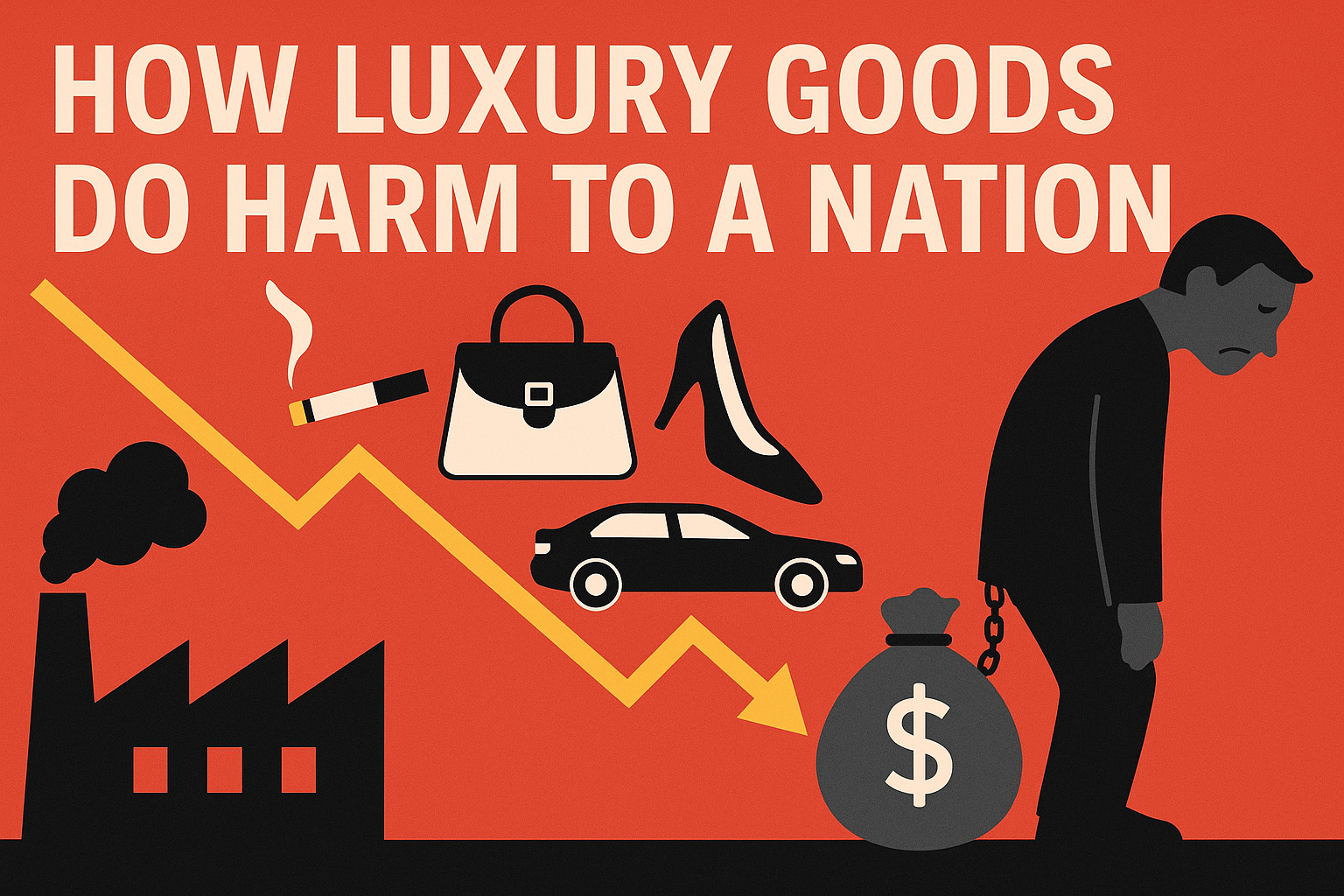
August 25 WHAT Luxury goods like expensive cars, branded clothes, diamonds, and imported wines are seen as a status symbol in today’s world. They may give happiness and prestige to individuals, but at the national level, they create economic pressure, social inequality, and cultural harm. Key Points and Analysis Issue Analysis Result 1. Dependence on Imports Most luxury goods are imported, sending foreign exchange abroad. Money drains out instead of building...
August 23 CONTEXT The government is planning to rationalize the GST rates. As of now the different rates are 0%, 5%, 12%, 18% and 28%. The cars attract a GST of 28% making them costlier. The government's Group of Ministers (GoM) are discussing potential changes to India's GST structure for vehicles, which could significantly reduce prices and make car ownership more affordable. They are backing a simplified two-slab GST system: 5% for essentials and 18% for standard items. This overhaul might lower GST on small cars and...
June 30 WHAT? India’s Goods and Services Tax (GST) collection nearly doubled over five years, reaching an all-time high of ₹22.08 lakh crore in FY25. This marks eight years since GST’s introduction on July 1, 2017, reflecting significant growth in the tax regime. Key Details Growth Trajectory: GST collections rose from ₹11.37 lakh crore in FY21 to ₹22.08 lakh crore in FY25, a year-on-year increase of 9.4%. The average monthly collection increased from ₹1.51 lakh crore in FY22 to ₹1.84...
June 08 SUMMARY The article from CNBC TV18, published on May 30, 2025, titled "8 years of GST: Achievements, challenges, next reforms," reflects on the progress of India’s Goods and Services Tax (GST) since its implementation on July 1, 2017. Key points Achievements: GST unified India’s complex indirect tax system, creating a common economic market and improving compliance through the GST Network (GSTN) technology platform. It has driven economic activity, with revenues...
June 05 SUMMARY India's Goods and Services Tax (GST) collections have been on an upward trajectory, with April 2025 witnessing a record high of ₹2.37 lakh crore—a 12.6% year-on-year increase. This surge is attributed to several key factors: Key Drivers of Rising GST Collections Robust Import Activity: A significant 20.8% increase in GST revenue from imported goods, particularly high-value items like electronics and gold, has bolstered overall collections. Enhanced Domestic...

Comments
Write Comment