
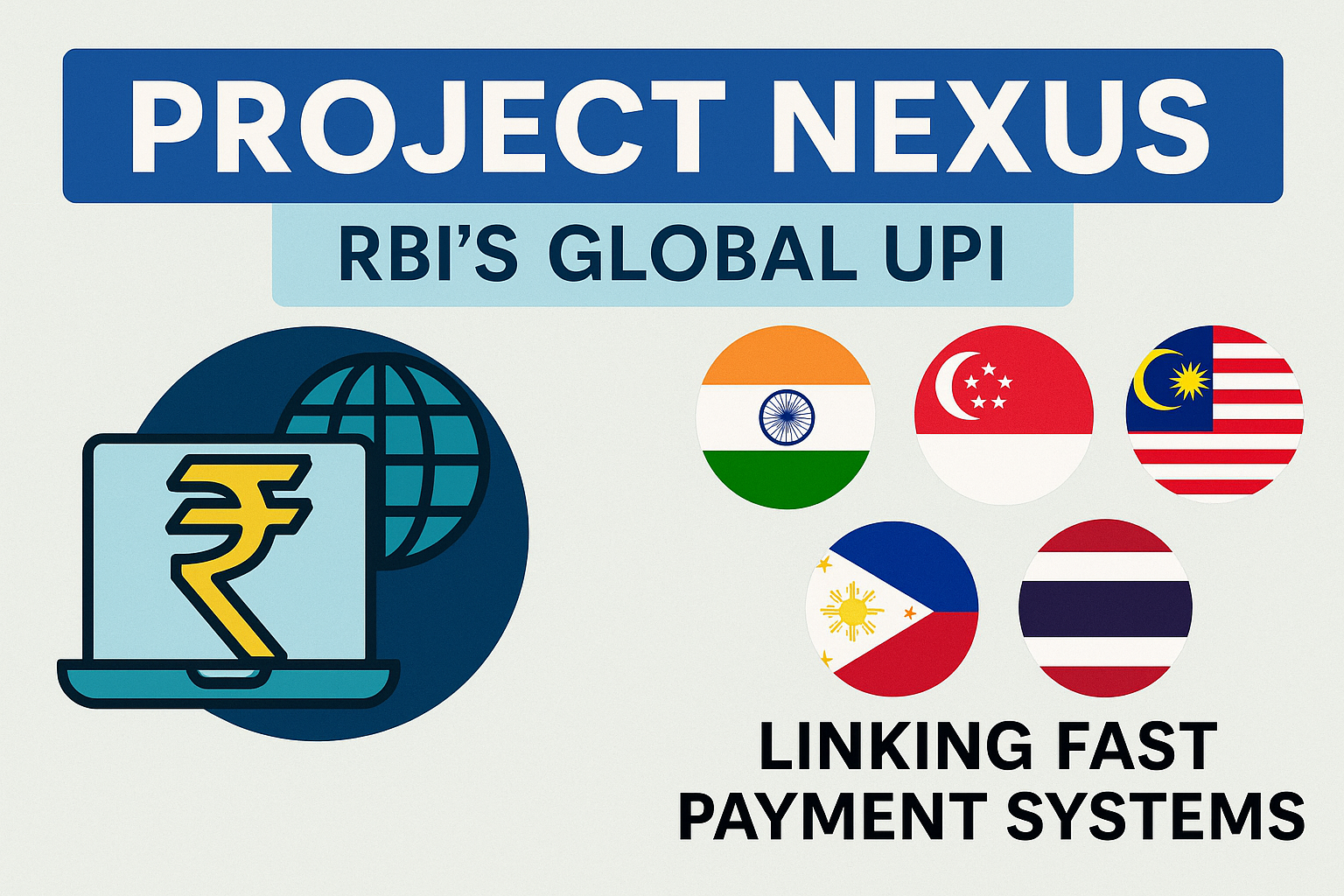
Project Nexus is a multilateral initiative led by the Bank for International Settlements (BIS) Innovation Hub to create a standardized platform for connecting domestic instant payment systems (IPS) across countries, enabling seamless, instant cross-border retail payments.
Launched in 2021, it addresses challenges in traditional cross-border payments, such as high costs, delays, and lack of transparency, by allowing IPS operators to make a single connection to the Nexus platform to access multiple countries' systems.
This supports the G20 Roadmap for Enhancing Cross-Border Payments and promotes financial inclusion, particularly in regions like ASEAN and India.
Nexus operates as a "hub-and-spoke" model where domestic IPS connect to a central Nexus platform rather than directly to each other such as India’s UPI, Singapore’s PayNow, Malaysia’s DuitNow, Thailand’s PromptPay into a common network.

Ask Anything, Know Better
October 12
January 15 UPI payment is a revolution in India with billion of users using different apps to pay, that too for free. Then how do the UPI service providers earn money? Watch here.
January 09 UPI has emerged as the most preferred medium of money transfers or bill payments. You would be surprised to know that alone in December 2024 approximately 1700 crore transactions were conducted through UPI transferring an amount of 23 lakh crore. The most surprising thing is that all these transactions have been free of cost to the users. So the big question is that how do UPI service providers earn money from? Actually, there are many other ways of their earning. One source is the Commission income. All of UPI...
Comments
Write Comment