CURRENT NEWS
Iran’s parliament approves closure of Strait of Hormuz: How will this impact India’s oil supply?
SUMMARY
The potential closure of the Strait of Hormuz, as reportedly approved by Iran's parliament, could significantly impact India's oil supply, though mitigation strategies and diversified import sources may cushion the blow.
The Strait of Hormuz is a critical chokepoint through which approximately 20% of global oil and 25% of liquefied natural gas (LNG) flows, including about 40% of India’s crude oil imports (roughly 2 million barrels per day out of 5.5 million bpd) and over 50% of its LNG imports. A closure would disrupt shipments from key Gulf producers like Saudi Arabia, Iraq, the UAE, Kuwait, and Qatar, which are major suppliers for India.
Potential Impacts on India
- Supply Disruptions: India imports 90% of its crude oil, with over 40% transiting through the Strait. A blockade could disrupt this supply, affecting refinery operations and fuel availability. Similarly, Qatar, which supplies about 80% of India’s LNG, relies on the Strait, and disruptions could impact electricity generation, fertilizer production, and CNG supply.
- Price Spikes: Analysts predict oil prices could rise to $80-$120 per barrel or higher with a prolonged closure, increasing fuel costs and triggering inflation in India. This would raise costs for consumers and industries, impacting economic stability.
- Trade and Economic Ripple Effects: About 5-6% of India’s exports to West Asia could be affected, particularly to Iraq, if the Strait is blocked. Higher shipping and insurance costs due to rerouting or risk premiums would further strain trade.
Mitigating Factors
- Diversified Sources: India has reduced its reliance on Gulf oil by diversifying imports, with nearly 40% of its crude coming from Russia in 2023, which uses routes like the Suez Canal, Cape of Good Hope, or the Pacific Ocean, bypassing the Strait. LNG from Australia, the US, and Russia would also remain unaffected.
- Strategic Reserves: India maintains oil reserves for about 74 days, including inventories held by Indian Oil Corporation, Bharat Petroleum, Hindustan Petroleum, and the Indian Strategic Petroleum Reserves Ltd. This buffer could help manage short-term disruptions.
- Alternative Routes: Some exports to West Asia can use ports like Fujairah (UAE) or Salalah (Oman) to avoid the Strait, though capacity constraints exist. Saudi Arabia and the UAE have limited pipeline capacity (about 2.6 million bpd) to bypass the Strait, but this is insufficient to offset a full closure.
- Diplomatic and Strategic Measures: India’s strong ties with both Iran and Israel, along with its Hormuz Peace Initiative in 2019, demonstrate its ability to navigate regional tensions. The government is actively monitoring the situation and exploring alternatives.
- Likelihood of Closure: While Iran’s parliament has approved the measure, the final decision rests with Iran’s Supreme National Security Council. Experts suggest a full closure is unlikely due to Iran’s own reliance on the Strait for 96% of its oil exports, primarily to China, and the risk of provoking a military response from the US and its allies, given the presence of the US Fifth Fleet in Bahrain. Past threats (e.g., 2011, 2018, 2019) have not materialized into a blockade, suggesting this may be more political posturing than an imminent action.
NEWS LINK
About author

Zinkpot — We Inform, You Perform.
Ask Anything, Know Better
अपना प्रश्न पूछें
-
ईरान का ‘Math Formula’ और दुनिया तबाह! $200 का होगा पेट्रोल?
April 15
-
Main points 2025 Gaza Peace Plan from the Sharm El Sheikh Summit!
October 14 Overview The Gaza Peace Plan, also called the Trump Peace Agreement, is a new effort to end the long conflict in Gaza. It was discussed and supported at a big meeting in Sharm El Sheikh, Egypt, on October 13, 2025. This plan comes after a war that started on October 7, 2023, between Israel and Hamas, a group in Gaza. The war caused a lot of death and damage, but a ceasefire began on October 10, 2025, as the first step of the plan. How the Gaza Peace Plan Started The idea for this peace plan came...
-
Iran admits 'serious damage' to nuclear sites after US strikes
June 27 WHAT? Iran's Foreign Minister Abbas Araghchi confirmed the "significant and serious damages" on state television, contrasting with Supreme Leader Ayatollah Ali Khamenei's dismissal of the US claims as exaggerated. The strikes, executed with B-2 bombers using bunker-busting bombs, have raised concerns about the status of Iran's 400 kg of enriched uranium—sufficient for nearly 10 nuclear bombs—and its advanced centrifuges. Key Details Iranian authorities have officially...
-
Where did the 400 kgs Iranian Uranium go?
June 25 WHAT? Following U.S. airstrikes on Iran’s nuclear facilities, including the Fordow enrichment plant, the International Atomic Energy Agency (IAEA) reported that 409 kilograms of uranium enriched to 60% purity—enough for potentially 10 nuclear warheads—has gone unaccounted for. Satellite imagery showed a convoy of trucks outside Fordow before the strikes, suggesting Iran may have moved the uranium to a secure location. It is believed that Iran’s nuclear program is now run from a secretive...
-
IRAN closed STRAIT OF HORMUZ? OIL CRISIS COMING?
June 20
-
Iran-Israel conflict may not be very good for India, cautions CEA Anantha Nageswaran
June 18 SUMMARY The Iran-Israel-Iran conflict escalated on June 13, 2025, with Israel launching airstrikes on Iranian nuclear and military sites, killing 585 (including 239 civilians) and wounding 1,326 (Human Rights Activists, June 18, 2025). Iran retaliated with missile and drone attacks on Israeli cities, causing 24 deaths and 592 injuries. The Strait of Hormuz is a critical chokepoint, with fears of closure disrupting 40% of India’s oil imports from West Asia. Oil prices surged 12% to $78 per barrel on June 13, later stabilizing...
-
Iran-Israel Conflict: A Middle East flashpoint that Indian economy can’t ignore
June 14 SUMMARY The article from The Economic Times, dated June 13, 2025, highlights the potential economic repercussions for India due to the escalating Iran-Israel conflict. Key impacts Energy Security: India, heavily reliant on oil imports (over 80% of its crude oil comes from the Middle East), faces risks of supply disruptions and price spikes. Brent crude prices surged past $75 following Israeli strikes on Iran, directly affecting India’s import bill. Remittances: Around 9-10...
-
Major blast at South Iran port kills five
April 27 ECONOMIC TIMES SUMMARY A huge blast probably caused by the explosion of chemical materials killed at least five people and injured more than 700 on Saturday at Iran's biggest port, Bandar Abbas, Iranian state media reported. CLICK HERE TO READ FULL NEWS
-
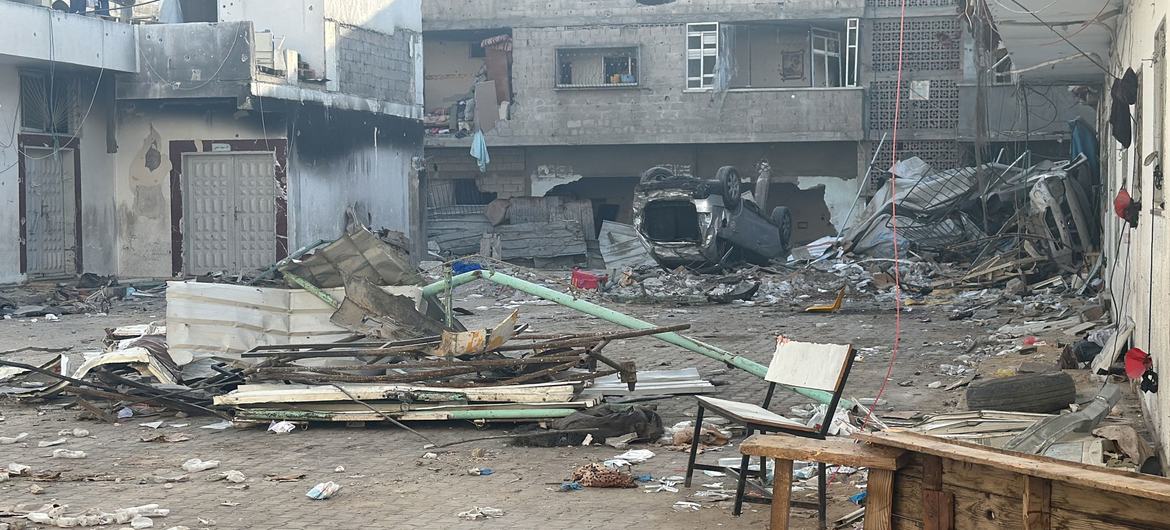
Why is Israel destroying all hospitals in Gaza?
April 14 WHAT HAPPENED? Recently An Israeli air strike has destroyed Al Ahli Arab Hospital, the last fully functional hospital in Gaza City. The strike destroyed the intensive care and surgery departments of the hospital. However there were no deaths due to this attack. Unfortunately, one child, who previously suffered a head injury, died as a result of the rushed evacuation process. Al-Ahli Hospital is one of at least 36 hospitals that have been bombed and burned by the Israeli military in the last 18 months since the start of the...
Comments
Write Comment