
The money supply in India refers to the total amount of money available in the economy at a given time, encompassing various forms of currency and deposits that can be used for transactions, savings, or investments. It is a critical economic indicator monitored and managed by the Reserve Bank of India (RBI) to influence inflation, economic growth, and financial stability.
The money supply is measured through monetary aggregates (M0, M1, M2, M3, and sometimes M4), which categorize money based on liquidity and usage.
Monetary aggregates in India are measures of the money supply used by the Reserve Bank of India (RBI) to monitor and manage the amount of money circulating in the economy. These aggregates help track liquidity, guide monetary policy, and assess economic activity.
They are categorized into narrow money (highly liquid) and broad money (less liquid), reflecting different components of money like currency, demand deposits, and time deposits.
The RBI defines four main monetary aggregates: M0, M1, M2, M3, and occasionally M4 (though M4 is less commonly used). These are based on the New Monetary Aggregates framework adopted in 1977 and revised periodically, with data published weekly and monthly in the RBI’s Monetary Policy Reports and Weekly Statistical Supplement.

Ask Anything, Know Better
November 17 BUSINESS LINE : The Reserve Bank of India could consider approving bankers’ request to lower the provisioning requirement on stage-2 loans to 1-3 per cent from proposed 5 per cent under the draft expected credit loss (ECL) guidelines, sources say. ABOUT ECL? CLICK HERE ABOUT PROVISIONING? CLICK HERE NEWS LINK
October 24
September 24 What Are Unclaimed Bank Deposits? Unclaimed deposits are balances lying in savings accounts, fixed deposits, recurring deposits, or other bank accounts that have had no customer activity for 10 years or more. After this period, banks are required to transfer these amounts to the Depositor Education and Awareness Fund (DEAF), maintained by the Reserve Bank of India (RBI). Importantly, these deposits are not forfeited. Depositors or their legal heirs can still claim the money at any time through the bank, which then seeks...

August 29 WHAT? Consumer confidence is an economic indicator that gauges how optimistic or pessimistic consumers feel about the economy and their personal financial situation. RBI's Consumer Confidence Survey (CCS) is conducted bi-monthly. RBI’s CCS assesses perceptions and outlook on key economic parameters such as the general economic situation, employment, income, prices, and spending behavior. It produces two key indices: Current Situation Index (CSI) – Measures consumer sentiment about the...
August 16 WHAT? The Reserve Bank of India (RBI) has announced a new mechanism to expedite cheque clearing, effective October 4, 2025, reducing the clearance time from the current T+1 days (up to two working days) to a few hours. The Cheque Truncation System (CTS) will transition from batch processing to continuous clearing with on-realisation-settlement, improving efficiency, reducing settlement risks, and enhancing customer experience. Implementation Phases Phase 1 (October 4, 2025 – January 2, 2026):...
July 23 WHAT? The Reserve Bank of India (RBI) publishes the Financial Inclusion Index (FI-Index) annually to measure the extent of financial inclusion across India. Financial inclusion means including more and more people in the formal banking network. The FI-Index is a comprehensive metric that quantifies financial inclusion on a scale from 0 (complete financial exclusion) to 100 (full financial inclusion). It incorporates 97 indicators across banking, investments, insurance, postal, and pension sectors, developed in...
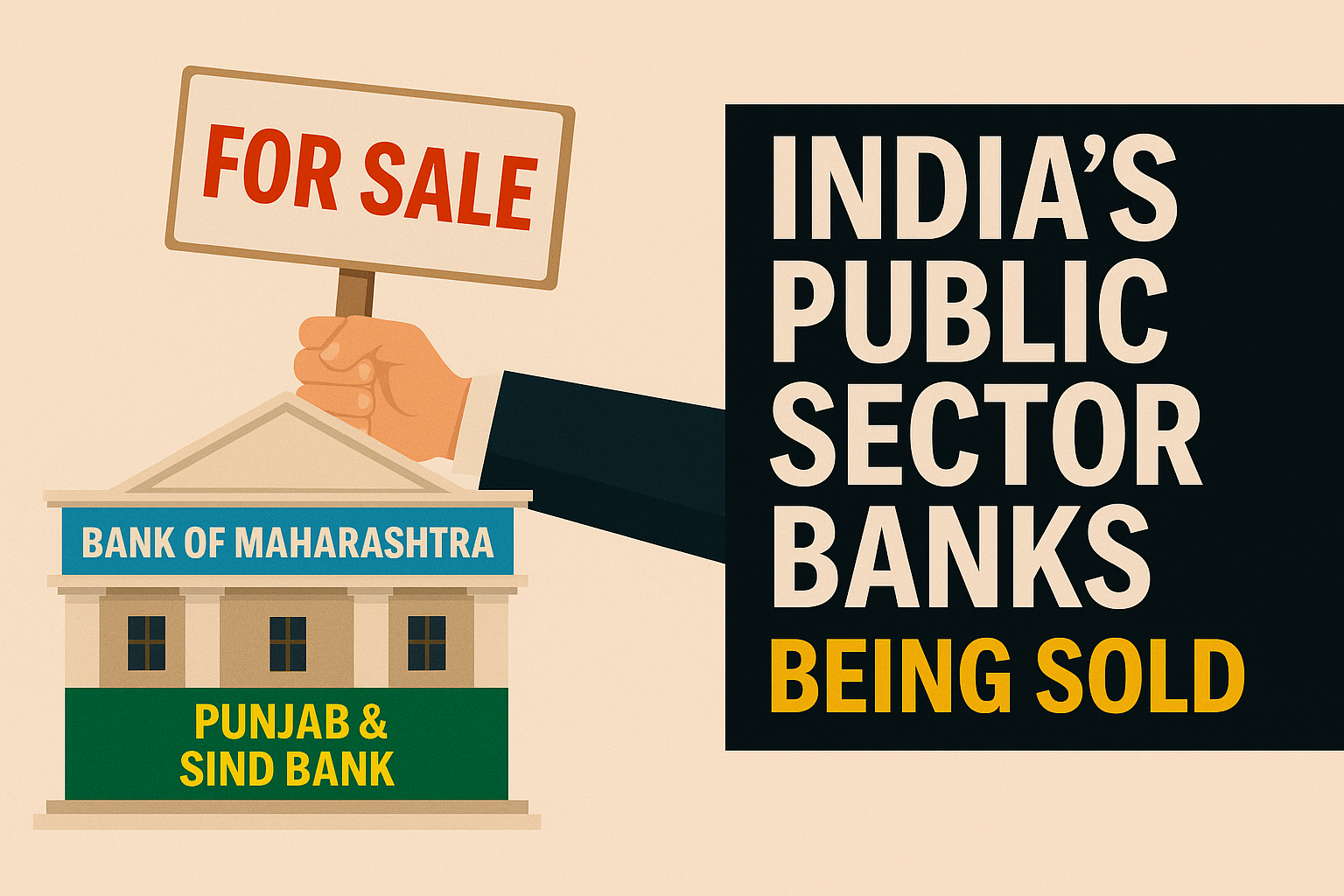
June 17 WHAT? The Indian government is accelerating its disinvestment drive by planning to sell up to 20% stake in five public sector banks (PSBs) within the next six months, utilizing Qualified Institutional Placement (QIP) and Offer for Sale (OFS) routes. This move aims to raise capital, improve bank governance, and ensure compliance with the Securities and Exchange Board of India’s (SEBI) minimum public shareholding (MPS) norm of 25%. The initiative is part of a broader strategy to strengthen the financial health of...

June 10 SUMMARY The article link is currently inaccessible due to a server error on The Hindu BusinessLine website. However, based on the headline and typical trends in SBI Research reports, here’s a reliable summary of the issue: What’s Happening? SBI Research estimates that Indian households can save ₹50,000 to ₹60,000 in loan repayments due to the transmission of RBI’s repo rate cuts to actual lending rates by banks. This is based on the cumulative effect of policy rate cuts in recent...
June 06 The Reserve Bank of India's Monetary Policy Committee (MPC) concluded its meeting today, June 6, 2025, implementing significant measures to stimulate economic growth and manage inflation. Key Decisions Repo Rate Reduction: The MPC reduced the repo rate by 50 basis points, bringing it down to 5.5%, marking the third consecutive rate cut this year. Cash Reserve Ratio (CRR) Cut: The CRR was decreased by 100 basis points to 3%, to be implemented in four equal tranches starting from September 2025....
June 05 WHAT? Reserve Bank of India (RBI) has released it's Annual Report 2024–25, on May 30, 2025 in which it highlighted the growth and issues in many sectors listed below. Economic Performance GDP Growth: India's GDP grew by 6.5% in FY25, maintaining its status as the world's fastest-growing major economy. Agriculture: GVA increased by 4.6%, up from 2.7% the previous year. Industry: Growth slowed to 4.3%. Services: Expanded by 7.5%, contributing 64.1% to GVA. RBI...
Comments
Write Comment