

Dim sum bonds are a type of debt security issued outside of mainland China—primarily in Hong Kong—and denominated in Chinese renminbi (RMB, also known as yuan or CNY). They allow foreign investors to gain exposure to the RMB currency without directly accessing China's domestic bond market, which has historically been restricted to outsiders. The name "dim sum" is a playful reference to the popular bite-sized Chinese dishes often associated with Hong Kong cuisine, symbolizing the bonds' offshore nature and appeal as "appetizers" for RMB investment.
The dim sum bond market emerged in the early 2010s as part of China's efforts to internationalize the RMB. The first dim sum bond was issued in 2007 by the China Development Bank, but the market gained momentum around 2010-2011 when Hong Kong became a hub for offshore RMB deposits and trading.

Ask Anything, Know Better
August 29 WHAT? 54EC Bonds are a type of tax-saving bonds issued under Section 54EC of the Income Tax Act, 1961. The purpose is that if someone sells a long-term capital asset (like land, house, or building) and earns long-term capital gain (LTCG), they can invest the profit in these bonds and claim exemption from capital gains tax. Key Features of 54EC Bonds Who can invest : Individuals, HUFs, Companies, and Firms. Applicable only on long-term capital gains (not short-term). Eligible Bonds...
June 01 WHAT IS FAR? The Fully Accessible Route (FAR) is a regulatory framework introduced by the Reserve Bank of India (RBI) and the Government of India in March 2020 to attract more foreign investment into Indian government securities (G-Secs). KEY FEATURES Feature Details Purpose To enable unrestricted access for Non-Resident Investors (FPIs) Eligible Securities Specific Government of India bonds are designated under FAR Access Type No...
April 06 What is a Bond? It is a debt instrument that provides investors with a fixed income via interest payments and repays the principal amount on a pre-defined maturity date. Bonds are safe instruments free from the ups and downs of that of an equity market. Bonds are an important part of the financial market and act as a crucial source of capital for corporates and the government. RELATED CONCEPTS Bond price: It is the price at which an investor buys a bond. Coupon rate: This is the periodic interest...
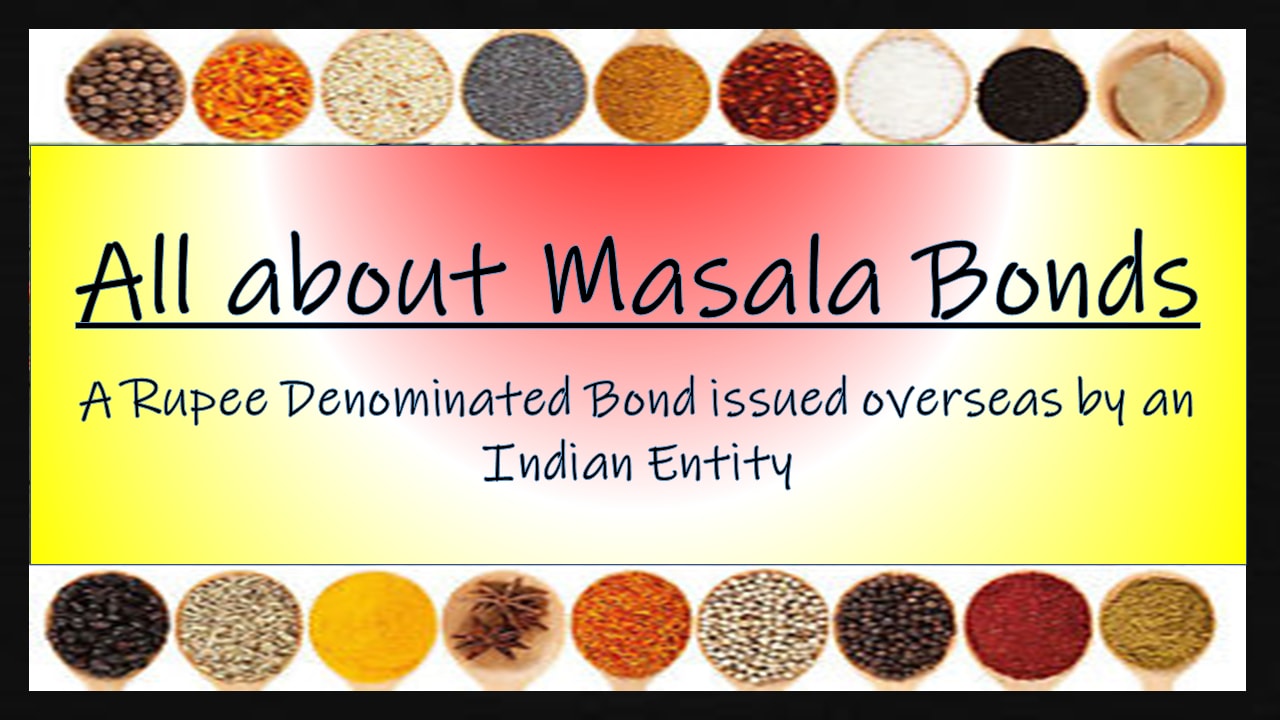
December 30 Masala bonds are rupee-denominated bonds issued by Indian entities in overseas markets. The term "Masala" was used by the International Finance Corporation (IFC) to evoke the culture and cuisine of India. The first Masala bond was issued by the World Bank-backed IFC in November 2014, and it raised Rs.1,000 crore bond to fund infrastructure projects in India. The issuance of masala bonds allows Indian entities to raise funds from international investors without exposing themselves to the currency risk associated with borrowing...
Comments
Write Comment