
A Forward Rate Agreement (FRA) is a financial contract between two parties to lock in an interest rate for a future period, used primarily to hedge against or speculate on interest rate fluctuations. It is an over-the-counter (OTC) derivative instrument, meaning it is customized and not traded on exchanges.
An FRA is an agreement to exchange a fixed interest rate for a floating interest rate (based on a reference rate like MIBOR in India or SOFR globally) on a notional amount for a specified future period. It is cash-settled, meaning only the difference between the fixed and floating rates is paid, not the principal.
In the FRA, typically, a borrower (hedging against rising rates) and a lender (hedging against falling rates), or speculators betting on rate movements.
A company enters a 6x9 FRA with a notional amount of ₹100 crore, agreeing to a fixed rate of 6% against MIBOR for a 3-month period starting 6 months from now.
If, after 6 months, the 3-month MIBOR is 7%, the company receives a payment to offset the higher floating rate.
If MIBOR is 5%, the company pays the counterparty the difference, as it benefits from lower market rates.

Ask Anything, Know Better
October 25
August 22 WHAT? The Cheque Truncation System (CTS) is a process introduced by the Reserve Bank of India (RBI) to streamline and expedite cheque clearing by replacing the physical movement of cheques with digital images and electronic data. It enhances efficiency, reduces costs, and minimizes risks associated with traditional cheque processing. CTS is an electronic cheque-clearing system where the physical cheque is "truncated" (stopped) at the presenting bank, and its digital image, along with relevant data (e.g.,...
August 04 WHAT? The National Asset Reconstruction Company Limited (NARCL), often referred to as India’s “bad bank,” was established to address the issue of non-performing assets (NPAs) in the Indian banking system. It was announced in the Union Budget 2021–22 and incorporated on July 7, 2021, under the Companies Act, 2013, with registration as an Asset Reconstruction Company (ARC) under the Securitisation and Reconstruction of Financial Assets and Enforcement of Security Interest (SARFAESI) Act,...
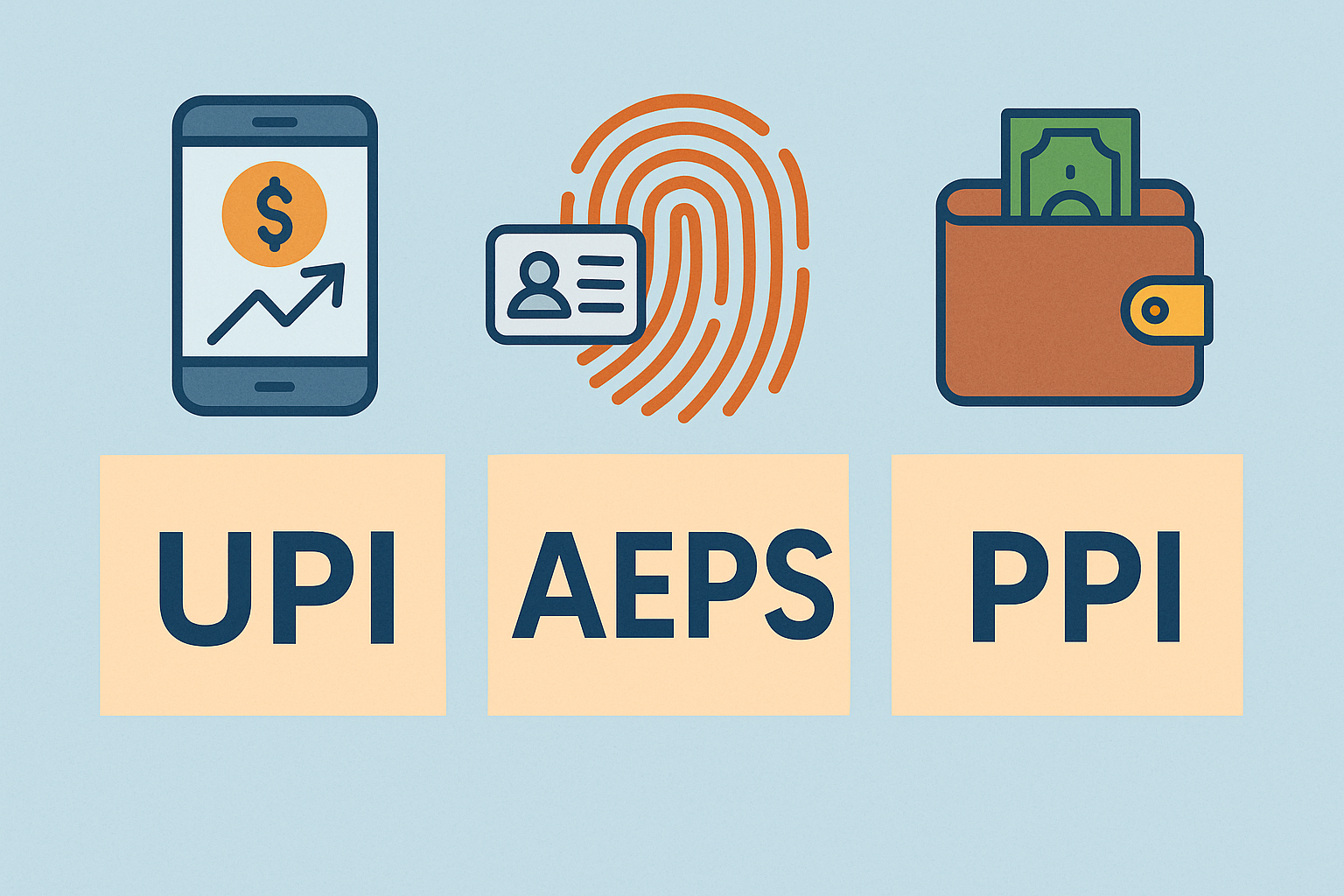
July 07 WHAT? The Unified Payments Interface (UPI), Aadhaar Enabled Payment System (AEPS), and Prepaid Payment Instruments (PPI) are distinct digital payment systems in India, each serving unique purposes and user bases. Differences Aspect Unified Payments Interface (UPI) Aadhaar Enabled Payment System (AEPS) Prepaid Payment Instruments (PPI) Definition Real-time mobile-based payment system enabling instant bank-to-bank transfers using Virtual Payment Addresses...
July 02 WHAT? Gross Non-Performing Assets (Gross NPA) and Net Non-Performing Assets (Net NPA) are key indicators of the health of a bank's loan portfolio in India, reflecting the level of bad loans or assets that have stopped generating income. Gross NPA Banks extend loans to the borrowers and since these loans earns interest for the banks, they are considered Bank Assets. Banks expect a return on these assets like interest income. But if the borrower doesnt pay it's due principal or interest or both on...
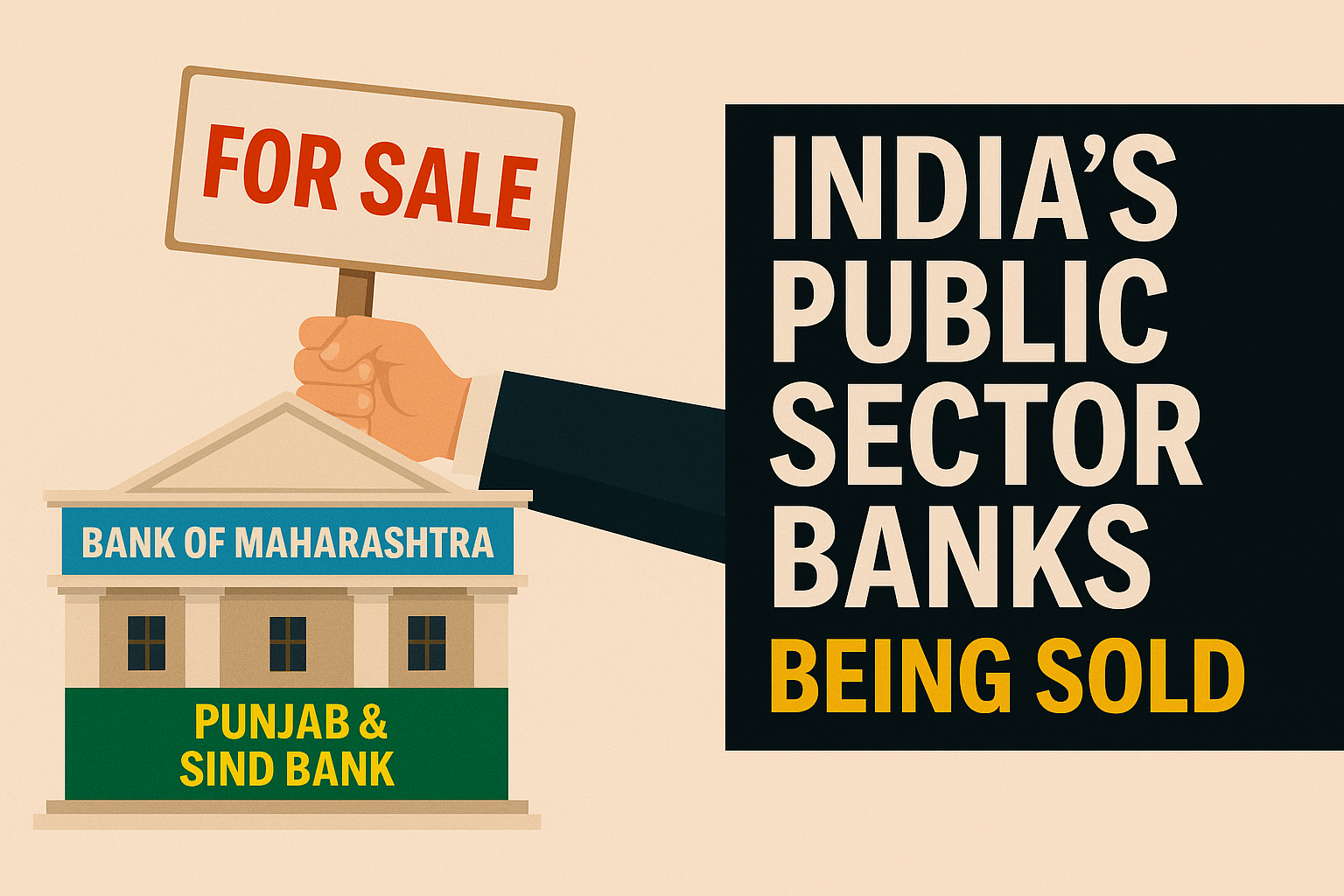
June 17 WHAT? The Indian government is accelerating its disinvestment drive by planning to sell up to 20% stake in five public sector banks (PSBs) within the next six months, utilizing Qualified Institutional Placement (QIP) and Offer for Sale (OFS) routes. This move aims to raise capital, improve bank governance, and ensure compliance with the Securities and Exchange Board of India’s (SEBI) minimum public shareholding (MPS) norm of 25%. The initiative is part of a broader strategy to strengthen the financial health of...
June 11 Summary The government is taking proactive steps to recover ₹78,213 crore in unclaimed financial assets by: Organizing focused refund camps; Implementing standardized, digitized KYC for smoother claims; Launching a unified online platform by FY26; Ensuring timely refunds while reinforcing regulatory oversight and system resilience. These efforts aim to benefit common citizens by simplifying processes and returning long-dormant assets to their rightful owners. DETAILS As...
June 09 SUMMARY The article from Business Standard, published on June 9, 2025, titled "RBI rate cut: What it means for your money and how you should invest now," discusses the implications of a recent 25-basis-point rate cut by the Reserve Bank of India (RBI), bringing the repo rate to 6.25%. Key points Impact on Borrowing and Savings: Lower rates reduce borrowing costs, benefiting home loan and personal loan borrowers (e.g., EMIs may decrease). However, savings accounts and fixed deposits...
May 26 WHY IN NEWS? Reserve Bank of India (RBI) has transferred a dividend of 2.69 lakh crores to the government for the financial year 2024-25 marking a 50% increase from the ₹2.1 lakh crore distributed in the previous fiscal year. The RBI is a not-for-profit organization then how did it make such huge profits to transfer this huge dividend to the government? SOURCES OF RBI'S INCOME? The Reserve Bank of India's (RBI) surplus primarily originates from its core operations, including interest...

May 07 FEATURES NIIF NaBFID Full Name National Investment and Infrastructure Fund National Bank for Financing Infrastructure and Development Established 2015 2021 Type Government-sponsored equity fund Government-backed development finance institution (DFI) Primary Role Invests in infrastructure via equity and fund management Provides long-term debt financing for infra...
Comments
Write Comment