

A New Fund Offer (NFO) is the initial subscription period during which a mutual fund scheme is launched and offered to investors for the first time by an Asset Management Company (AMC) in India. It allows investors to purchase units of the new mutual fund at a fixed price, typically ₹10 per unit, before the fund begins regular operations and trading.
An NFO is the introductory phase of a mutual fund scheme, where the AMC raises capital from investors to build the fund’s portfolio. It’s similar to an Initial Public Offering (IPO) for stocks but applies to mutual funds. During the NFO period, which typically lasts 10–30 days, investors subscribe to the fund’s units at the offer price, after which the fund is closed for new subscriptions and begins investing in securities (e.g., stocks, bonds, or hybrid assets) as per its stated objectives.
The AMC announces the NFO with details like investment objective, asset allocation, fund manager, and risk profile in an offer document. Investors can buy units at a fixed price (usually ₹10 in India) during the NFO period, which is regulated by the Securities and Exchange Board of India (SEBI).

Ask Anything, Know Better
November 17 BUSINESS LINE : Indian investors should diversify their portfolios and must have at least 35 per cent of financial assets in securities outside their home country. Global diversification protects the portfolio and boosts returns, said Ketul Sakhpara, co-founder and CIO of BayFort Capital. NEWS LINK
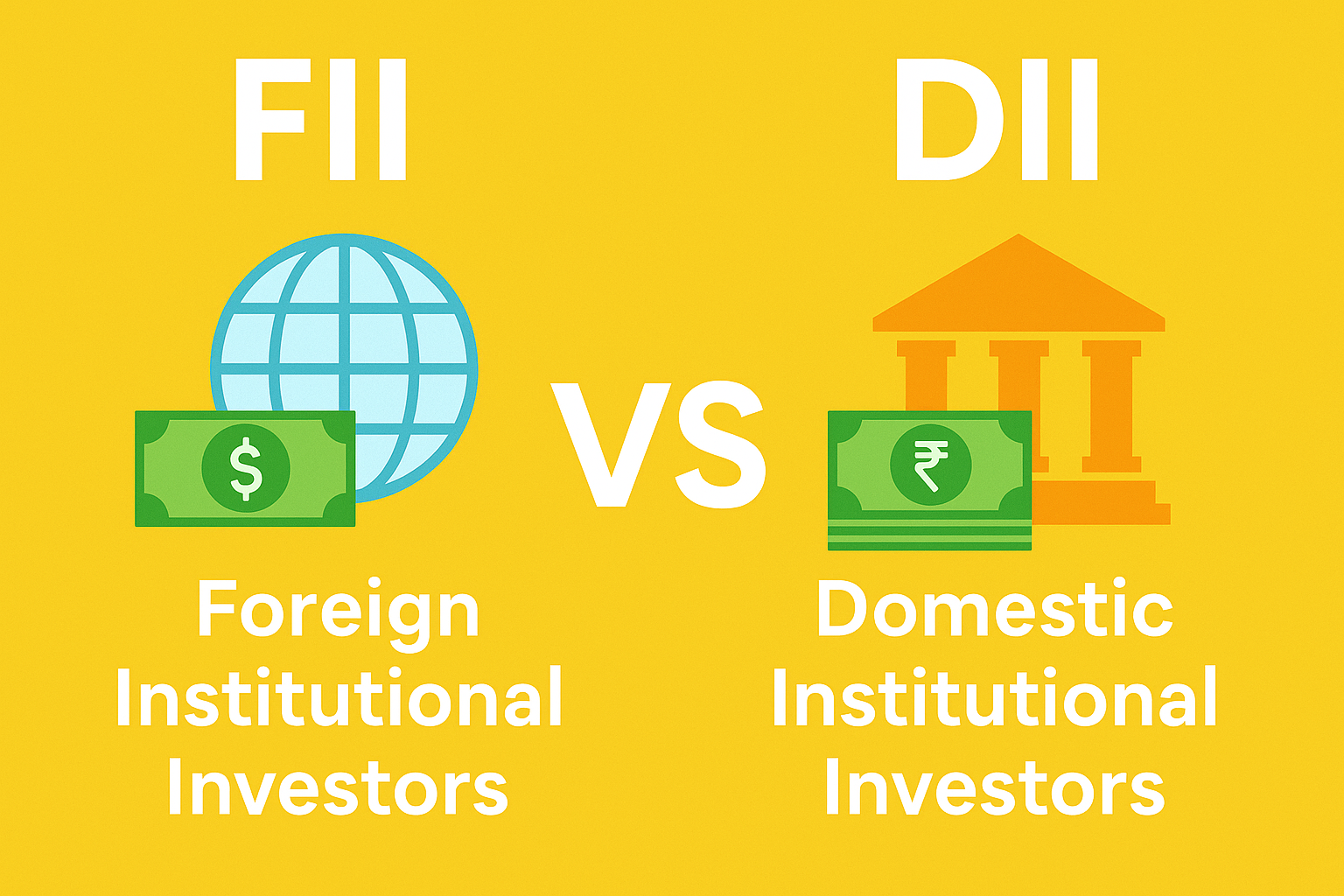
June 25 DIFFERENCE CHART Feature FII (Foreign Institutional Investors) DII (Domestic Institutional Investors) Definition Investors/institutions from outside India investing in Indian markets Indian institutions investing in Indian markets Examples JP Morgan, Morgan Stanley, BlackRock, Vanguard LIC, SBI Mutual Fund, ICICI Prudential, HDFC Mutual Fund Source of Funds Foreign countries or global funds Indian banks, insurance companies, mutual...
June 15 SUMMARY The Business Standard article reports that on June 14, 2025, gold and silver prices in India saw slight increases. Key details Gold Prices: The price of 24-carat gold rose by ₹10, with ten grams trading at ₹1,01,410, according to GoodReturns. The price of 22-carat gold also increased by ₹10, with ten grams selling at ₹92,960. In Mumbai, Kolkata, and Chennai, ten grams of 24-carat gold was priced at ₹1,01,410, while in Delhi, it was ₹1,01,560. Silver Prices: The price of...
June 13
June 08 SUMMARY The article from The Financial Express, published on June 8, 2025, titled "Foreign Investors are under invested in India by a trillion dollars," highlights the significant under-allocation of global institutional capital to India. Written by Arvind Chari, Chief Investment Strategist at Q India UK, Ltd, the piece notes that foreign investors hold less than 1% of their global portfolios in Indian public equities, despite India representing ~4% of global GDP and market capitalization....
June 06 SUMMARY The article from The Hindu BusinessLine, published on June 6, 2025, titled "US markets are no longer safe for investments, Carmignac says," reports concerns raised by Raphael Gallardo, chief economist at French asset manager Carmignac, about the U.S. as an investment destination. KEY POINTS Trump’s Tax and Spending Bill: Gallardo warns that President Donald Trump’s tax and spending bill, particularly Section 899 (dubbed the “revenge tax”), increases tax...

April 09 ECONOMIC TIMES It might be too early to say this, especially given that the tariff wars have just started and uncertainty rules the street. But then the markets are as much about possibility as they are about probability. So here it is: The time is probably ripe to put stocks from the banking sector on your watchlist. Just be sure that you are focusing on them for the right reasons. CLICK HERE FOR FULL NEWS

November 15 WHAT? Gold ETFs, or Gold Exchange-Traded Funds, are investment funds that trade on stock exchanges similar to individual stocks. These funds aim to track the performance of the price of gold. Investors can buy and sell shares of gold ETFs on the stock exchange through a brokerage account, providing a convenient way to gain exposure to the price movements of gold without actually having ownership of physical gold. The primary goal of gold ETFs is to replicate the performance of the price of gold. They typically hold gold bars in...
Comments
Write Comment