Government Schemes
What is India’s ULLAS Programme and FLNAT TEST?
ULLAS Programme
The ULLAS (Understanding of Lifelong Learning for All in Society) programme, also known as the New India Literacy Programme (Nav Bharat Saaksharta Karyakram or NILP), is a centrally sponsored initiative by the Government of India under the Ministry of Education.
Launched in April 2022, it aligns with the National Education Policy (NEP) 2020 and aims to promote lifelong learning, bridge literacy gaps, and empower non-literate adults aged 15 and above with foundational literacy, numeracy, and critical life skills.
The programme emphasizes volunteerism, social responsibility (Kartavyabodh), and experiential learning to make education accessible and culturally relevant.
FEATURES
- The ULLAS programme is designed to reach 5 crore learners over five years (2022–2027), targeting 1 crore annually, with a special emphasis on women, who make up roughly 65% of India’s non-literate population.
- By promoting foundational literacy, numeracy, and critical life skills—such as digital literacy, financial literacy, and vocational training—the initiative aims to empower individuals and communities.
- ULLAS is not just about reading and writing; it’s about enabling every Indian to thrive in a rapidly changing world.
- The programme’s community-driven approach, rooted in volunteerism and social responsibility (Kartavyabodh), ensures education is accessible, inclusive, and culturally relevant.
Key Objectives
- Cover all aspects of "Education for All" (previously known as Adult Education).
- Target 5 crore learners over FY 2022-27 (1 crore per year), focusing on non-literates, with a special emphasis on women (who constitute about 65% of the non-literate population).
- Provide foundational knowledge for personal and national development, including digital literacy, financial literacy, and vocational skills.
- Achieve full literacy in India by 2030, in line with SDG 4 (Sustainable Development Goal for Quality Education).
Implementation and Components
- Duration and Budget: Runs from FY 2022-23 to 2026-27 with a total outlay of ₹1,037.90 crore (₹700 crore central share, ₹337.90 crore state share).
- Approach: Community-driven, with schools as implementation units. It uses volunteer teachers (typically 200 hours of instruction per learner) and promotes multilingual content in regional languages.
- Digital Tools:
- ULLAS Mobile App: For learner registration, teaching, and assessment.
- DIKSHA Portal: Hosts online modules for foundational literacy and numeracy.
- OTLAS (Online Teaching, Learning and Assessment System): Developed in collaboration with NIC, NCERT, and NIOS for self-registration and tracking progress.
- Curriculum: Includes primers like "Ujaas" (developed by NCERT) and contextualized versions like "ULLAS" primers in 4 volumes, covering 13 themes relevant to learners' socio-economic contexts.
- Survey and Identification: Door-to-door surveys by trained surveyors (e.g., teachers, ASHA workers) to identify non-literates and volunteer teachers via the ULLAS portal.
Progress and Achievements (as of September 2025)
- States like Goa, Mizoram, Chandigarh, Puducherry, and Lakshadweep have achieved or approached 100% literacy under ULLAS.
- Mizoram became the first state to attain full functional literacy (98.20% rate per PLFS Survey 2023-24), defined as exceeding 95% literacy with reading, writing, and numeracy skills at a predetermined level.
- Andhra Pradesh is actively implementing the scheme, targeting 200 hours of teaching from November 2024 to March 2025.
- The programme has engaged millions through platforms like Akhil Bhartha Shiksha Samagam and translated curricula into 12 Indian languages to support mother-tongue learning.
FLNAT TEST
The Foundational Literacy and Numeracy Assessment Test (FLNAT) is a key component of the ULLAS programme, designed to evaluate learners' progress in basic reading, writing, and numeracy skills. It serves as a tool to measure the effectiveness of literacy interventions and certify achievement. Qualifying learners receive certificates from the National Institute of Open Schooling (NIOS), recognizing their foundational skills.
Key Features
- Purpose: Assess foundational competencies aligned with NEP 2020, focusing on multilingualism and mother-tongue instruction. It helps identify gaps and track towards full literacy.
- Format: Conducted in regional languages; multiple-choice or practical format, emphasizing practical skills over rote learning.
- Eligibility: Primarily for ULLAS participants aged 15+, especially non-literates enrolled in the programme.
- Certification: Successful completers get NIOS certification, which can aid in further education or employment.
Recent Conduct and Phases
- FLNAT is conducted nationwide in phases, often annually or as needed.
- 3rd Phase (2024): Held on March 17, 2024, across 23 states and UTs, including Ladakh (Leh district), where it aimed to cover the remaining 2% illiteracy to achieve 100% literacy—the first UT to potentially do so.
- FY 2024-25: Ongoing assessments, with declarations for states like Himachal Pradesh. UTs like Chandigarh, Puducherry, Lakshadweep, and Goa targeted 100% literacy through this test.
- The test is integrated with OTLAS for online registration and results, ensuring scalability.
FLNAT plays a crucial role in ULLAS by providing data-driven insights for programme refinement and celebrating milestones like full literacy in participating regions.
About author

Zinkpot — We Inform, You Perform.
Ask Anything, Know Better
अपना प्रश्न पूछें
-
India’s Education Triumph: IITs and IISc Make It to Asia’s Top University List
November 05 Backgrond India is celebrating a big win in education! In the latest QS Asia University Rankings 2026, five Indian Institutes of Technology (IITs), the Indian Institute of Science (IISc), and Delhi University (DU) have made it into the top 100 universities in Asia. This shows how India's higher education is getting stronger and more recognized worldwide. In this article, we'll explain what these rankings are, India's performance, the top Indian schools, why this matters, and more! What Are the QS Asia University...
-
All About the PM SHRI School Scheme
October 30 Overview PM SHRI School Scheme — full form Prime Minister Schools for Rising India — is a government initiative launched in 2022 by the Government of India. The PM SHRI School Scheme is a big plan by the Indian government to make schools better. It helps students learn in fun and modern ways.Under this scheme, more than 14,500 schools across India will be developed as PM SHRI Schools. These schools will serve as model schools, setting benchmarks for other government schools to follow. What is the PM SHRI...
-
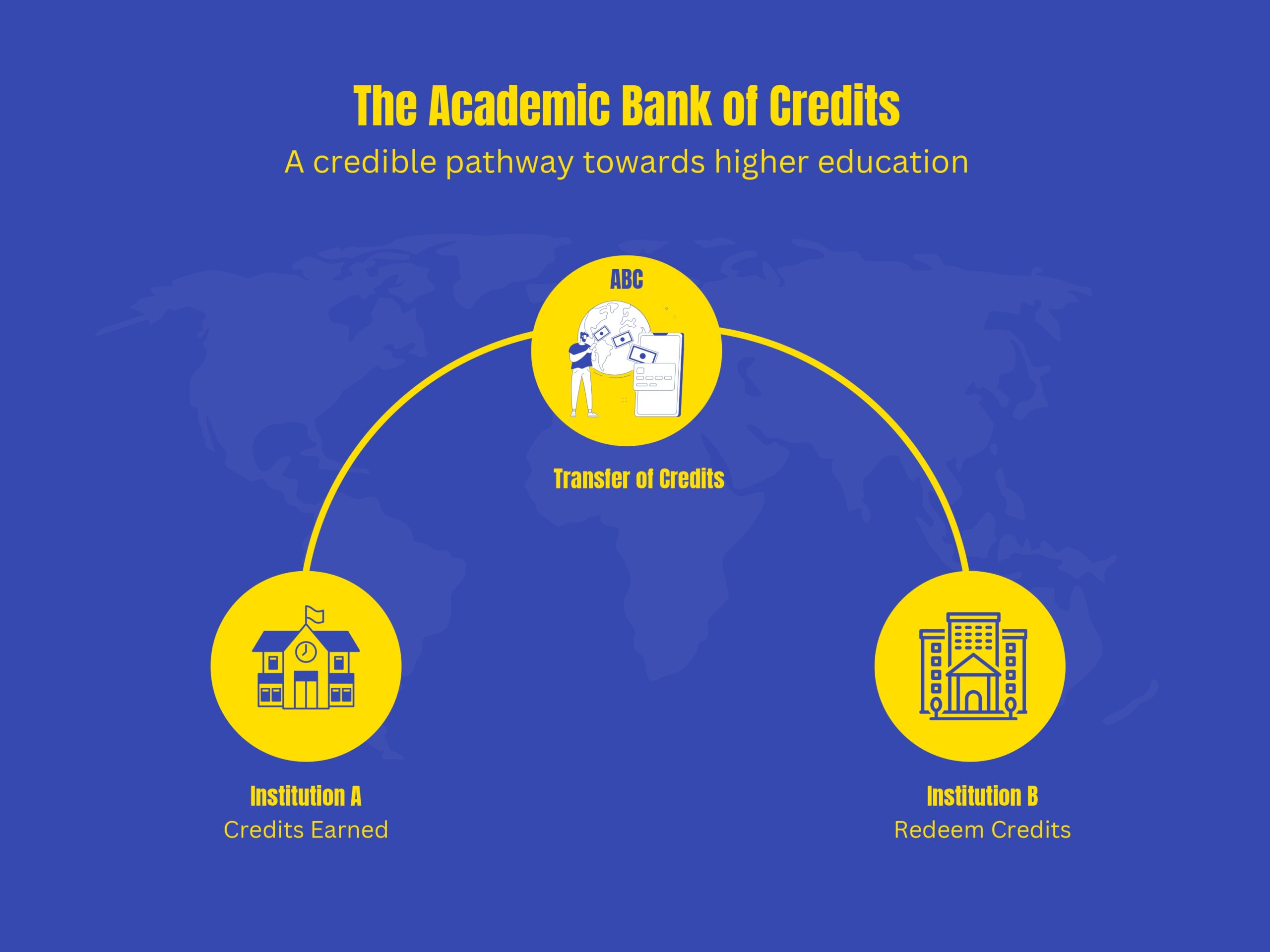
What is an Academic Bank of Credit (ABC)?
March 11 CONCEPT The Academic Bank of Credit (ABC) is a digital repository established by the University Grants Commission (UGC) under India's National Education Policy (NEP) 2020. It facilitates the storage and transfer of academic credits earned by students across various higher education institutions (HEIs), promoting flexibility and interdisciplinary learning. Over 2 crore students have registered on the ABC platform, marking substantial progress in its adoption. KEY FEATURES of the ABC...
Comments
Write Comment